
A junior engineer's Python script logs into SD-WAN Manager successfully, lists devices, then updates a device template. The device list call returns HTTP 401 with an empty body, while the template update returns HTTP 400 with a JSON message naming a field that is missing from the payload. Which interpretation of these two error responses should guide the next fix?
Select an answer to reveal the explanation.
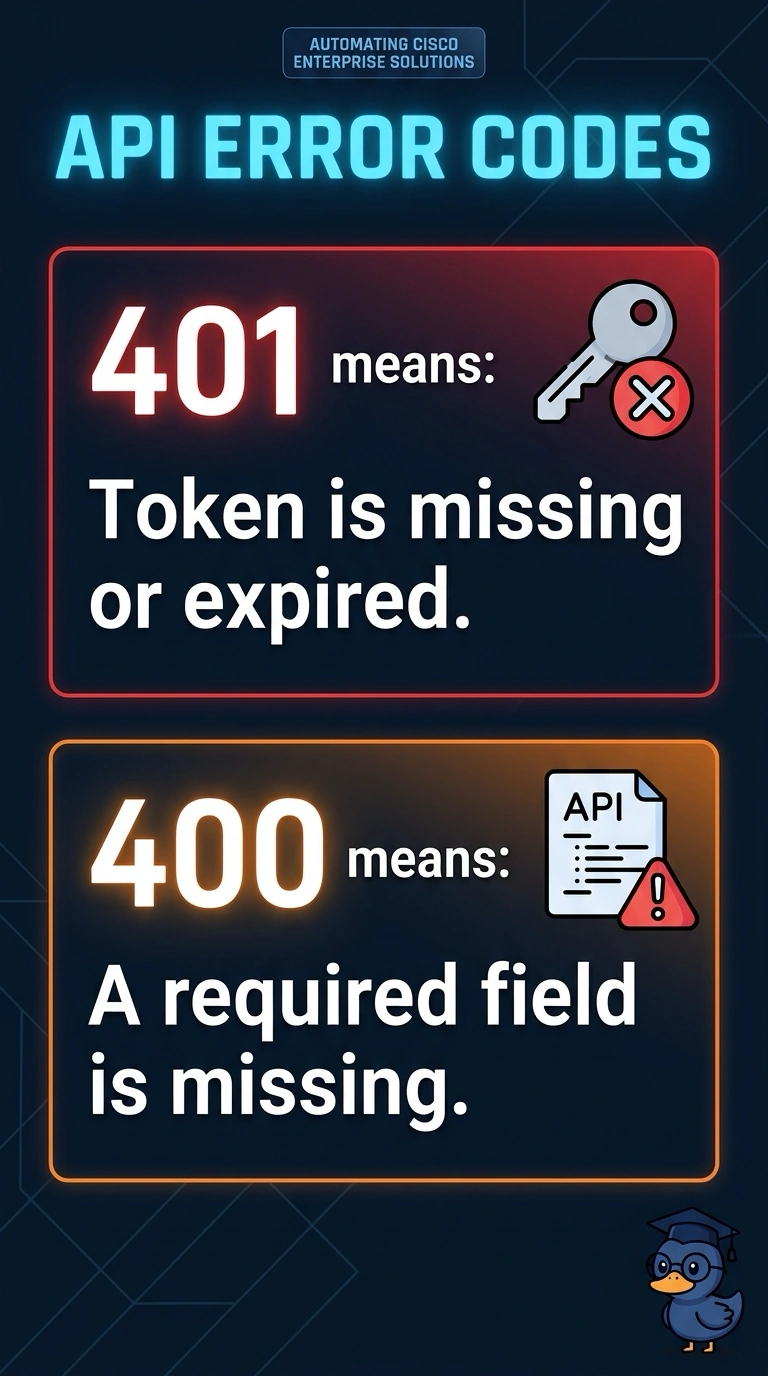
Short Explanation
You read the pair correctly, since the two codes point at different layers of the problem. A 401 indicates that authentication for that request failed, so check whether the session token was missing or expired; a 400 with a message naming a missing field points to a payload detail you can repair in your script. Permission denials are conventionally reported as 403, though API behavior can vary.
Full Explanation
Status codes tell you which layer failed, and the body tells you what to investigate. A 401 means authentication for that particular request did not succeed; in a script that logged in moments earlier, a session token that expired or was not attached to the call is a likely cause, so refreshing the session may fix it. A 403 conventionally indicates that the request was understood but the authenticated user is not permitted to perform the action, though API implementations can vary. A 400 means the request was rejected as invalid; here, because the JSON message names a missing field, check that your payload supplies it. Treating the 401 as rejected login credentials overlooks that the login succeeded, while reading the 400 as a reachability problem confuses request validation with connectivity. SD-WAN Manager, formerly vManage, can structure its error messages differently across releases, so parse the status code and body together. A practical check is to replay the failing request with the session header from the login flow and print both the status code and raw response body.