
A network engineer exposes a Python web endpoint that receives Meraki alert webhooks and starts remediation on switch ports. The endpoint is reachable from the internet, and forged or repeated deliveries must be stopped before any action runs. Which check should the script perform first to confirm the alert has the shared secret configured for their Meraki organization, before separately applying replay protection?
Select an answer to reveal the explanation.
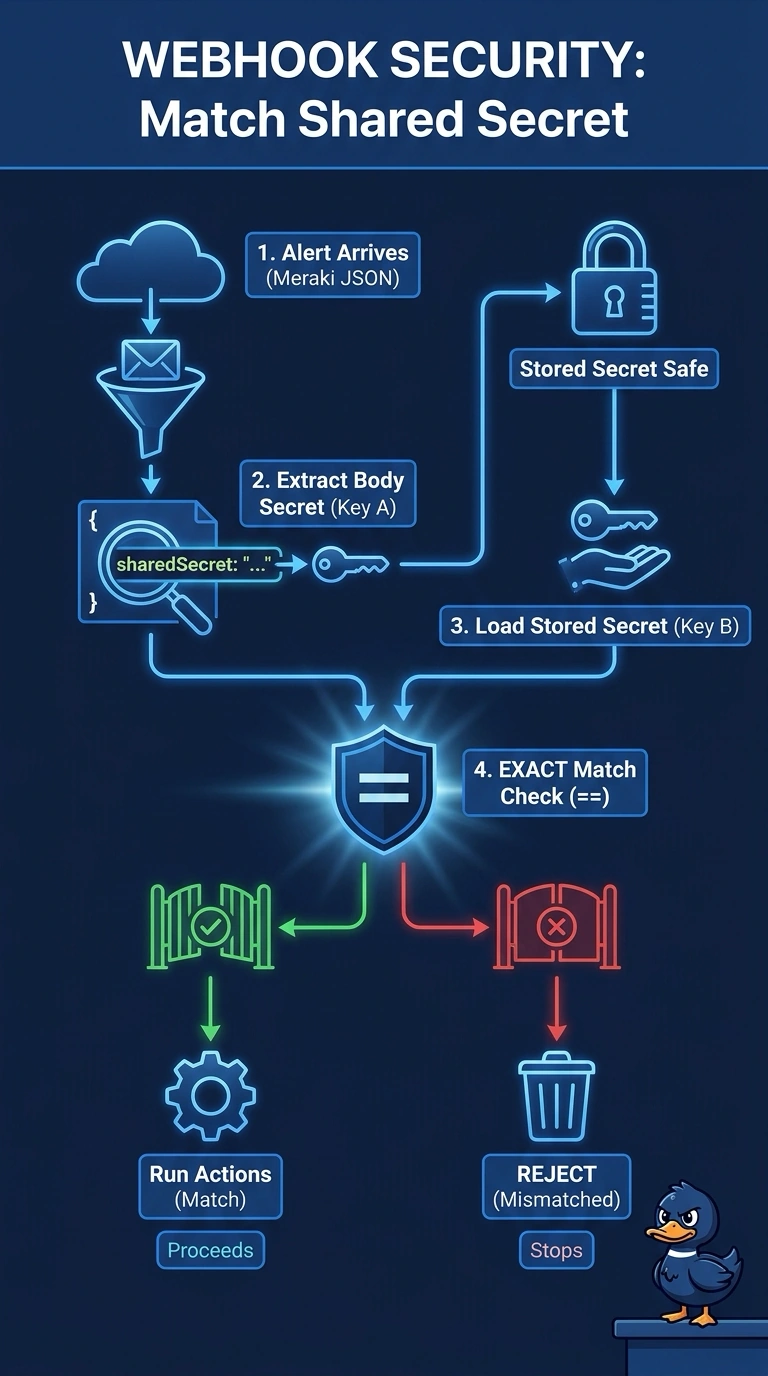
Short Explanation
The sharedSecret field is the shared string configured for your webhook receiver. Matching it is a basic authenticity check, but it does not prevent replay of a previously captured request; use separate replay protection as well. It is like checking a key before opening the door, not checking whether someone has used that key before.
Full Explanation
Meraki alert webhook payloads include a sharedSecret value that you can compare with the shared secret configured for your receiver. A match shows that the request contains the shared value, but it does not prove who sent the request if that value has been exposed, and it does not prevent replay of a captured payload. Check the secret before taking action, then apply replay protection, such as tracking alertId values according to your requirements. An address allowlist checks the network path rather than the message, and forwarded or proxied traffic may arrive from an address you did not record. Verifying your listener's TLS certificate authenticates your server to clients; it does not establish that a caller is a Meraki dashboard server. Treat the shared secret like a password, transmit it over HTTPS, and rotate it if exposed. Test rejection by changing one character in the secret, and test replay handling separately.