
Your deployment pipeline provisions SDA fabric resources through the Catalyst Center intent API: it creates a site, a virtual network and an SGT, then assigns a port. Each call returns in about a second while the fabric state settles a minute later, so the pipeline needs a trustworthy completion signal without sending the request a second time. Which API pattern should the script use to confirm each operation has completed?
Select an answer to reveal the explanation.
Short Explanation
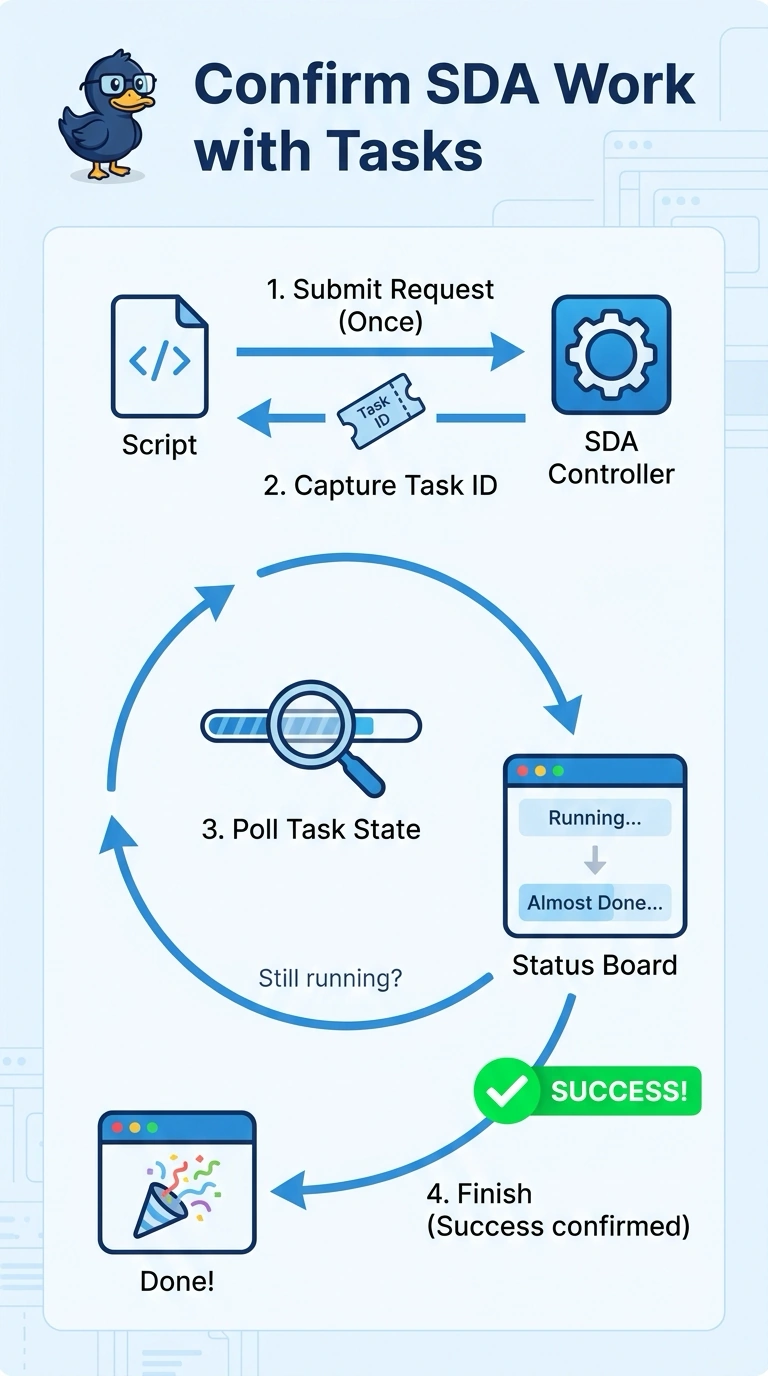
Catalyst Center does the heavy work in the background and provides a task identifier to follow, so polling that task is your reliable success signal. Re-sending the POST risks duplicate or conflicting submissions, and telemetry events describe device state rather than your request's progress. Checking that task is like watching a download bar: the request only kicked it off, and the task status tells you when it's finished.
Full Explanation
Catalyst Center's intent API can perform work asynchronously: when you ask it to create or change fabric resources, the controller returns a task identifier and continues processing after the connection closes. You follow that identifier at the task resource until the task indicates successful completion, which provides a completion signal without resubmitting the request. Re-sending the request on a timer risks duplicate or conflicting submissions, even if the API rejects some duplicates. Treating the HTTP reply as finished work ignores the gap between acceptance and completion, so a pipeline can report success while endpoints still miss the right virtual network. Watching controller telemetry is legitimate monitoring, but it reports observed device state rather than the lifecycle of the request you just sent, so it cannot confirm your operation. Exam caveat: the platform was long called DNA Center, so older docs name these resources differently, and response fields vary between releases; recognise the asynchronous task pattern rather than memorising a URL. Practical check: call the operation once, capture the returned identifier, query it, and only then let the pipeline advance.