
A retailer with a 12-switch SDA fabric wants its internal portal to create a user segment for a warehouse extension. The portal should express the outcome and let the controller coordinate the fabric changes instead of generating device configurations by hand. Which Catalyst Center API approach should the portal use to create that segment?
Select an answer to reveal the explanation.
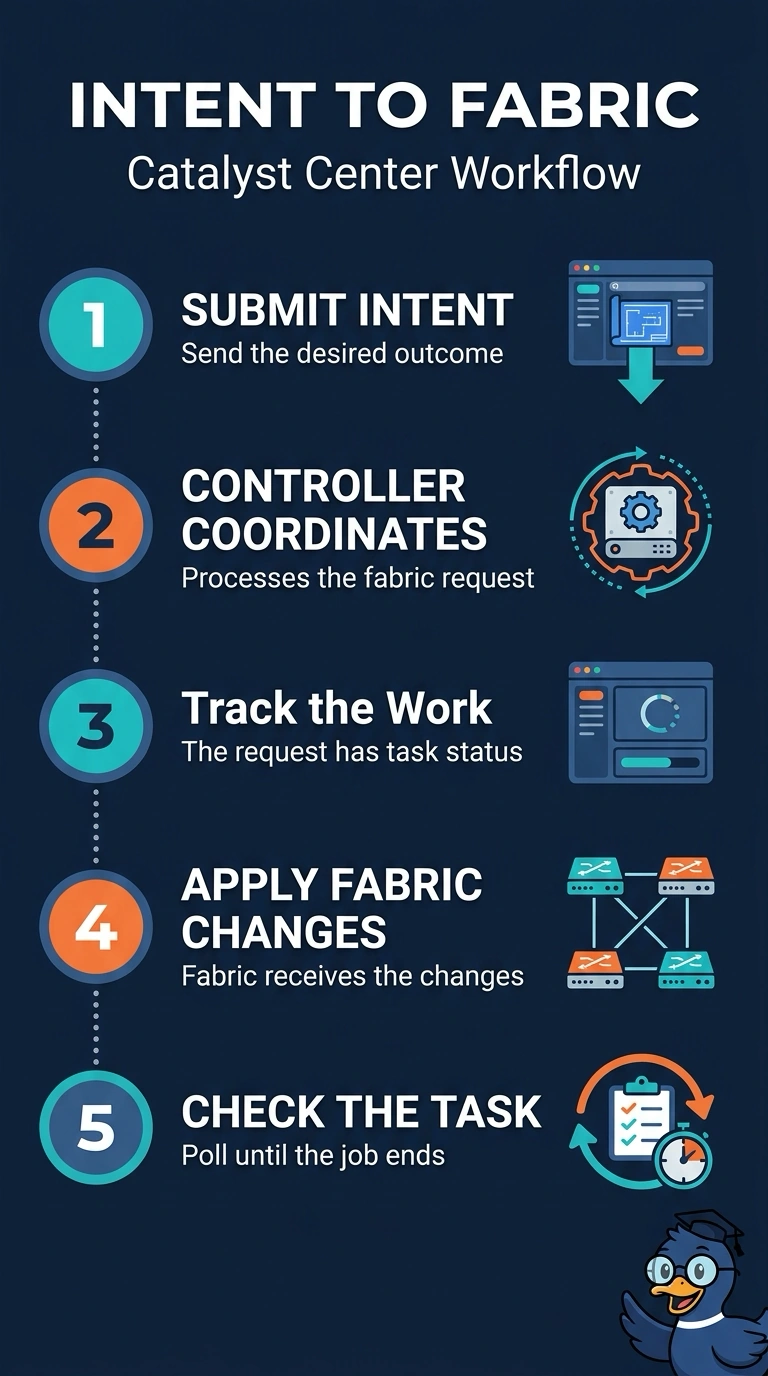
Short Explanation
You describe the segment you want, and the controller coordinates the fabric changes. Your portal sends an intent-oriented request instead of configuration to twelve devices. That's the intent layer doing the heavy lifting, like ordering a dish rather than sending the kitchen a recipe.
Full Explanation
The correct approach is to submit the requested segment as fabric intent through Catalyst Center’s fabric workflow. The portal specifies the desired outcome, while Catalyst Center coordinates the related changes across the fabric, avoiding device-by-device configuration generation. Creating a VLAN and IP pool through site-provisioning APIs is a legitimate way to establish network resources, but those resources alone do not create the requested SD-Access fabric segment through its fabric workflow. A reusable configuration template is a common way to standardize device configuration and can parameterize VLAN and gateway details, but it still deploys configuration to devices rather than asking the controller to coordinate fabric changes from segment intent. Cisco ISE APIs can create access policies and security groups for identity-based control, but those controls do not provision the warehouse’s fabric segment. Exam caveat: Catalyst Center exposes several API families, so an API being controller-hosted does not mean it represents fabric intent; distinguish resource setup or device configuration from fabric workflow operations. Practical check: verify that the portal’s API call creates the segment in the intended fabric site and that Catalyst Center reports the corresponding fabric deployment as successful across the required devices.