
A network team is extending an existing automation pipeline. The next release must push a configuration template to 40 access switches, place them into a new building site, then read device health scores, open issues, and client-health trends into a reporting dashboard. Which Catalyst Center API assignment covers both the provisioning work and the assurance work?
Select an answer to reveal the explanation.
Short Explanation
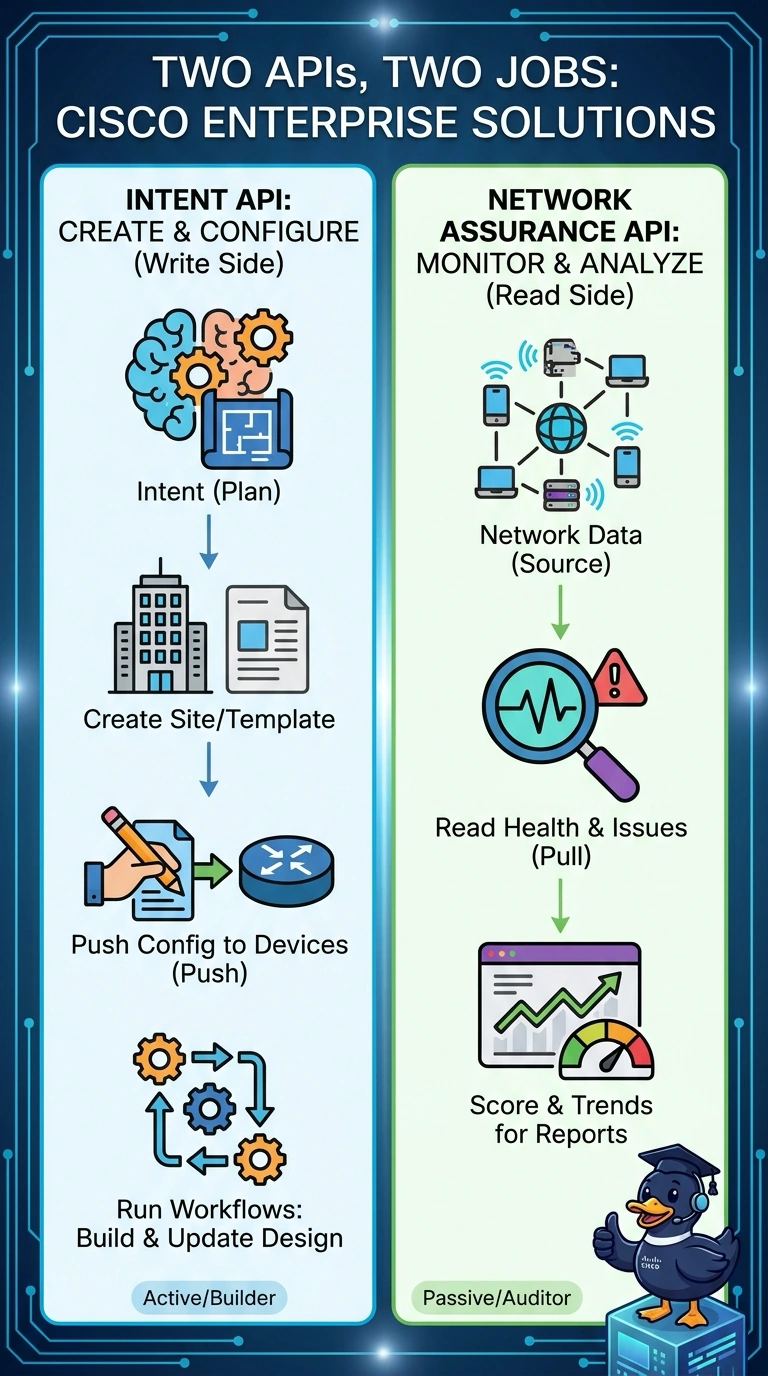
You've got a build job and a report job, and each one has its own API. The Intent API is the writing side that creates sites and applies templates, while the Network Assurance API only reads health and issue data back out.
Full Explanation
Both APIs authenticate with the same application token, so the real difference is the job each one is designed to do. The Intent API is the writing side: it creates sites and buildings, claims devices, builds configuration templates, and binds them to network devices, which is what a provisioning pipeline needs. The Network Assurance API is the reading side: it serves device and client health scores, issue and event data, and the trend series a dashboard wants. Treating assurance as the provisioning tool fails because it exposes telemetry-derived insight rather than configuration workflows, so a template push has nowhere to land. Treating the Intent API as the analytics source fails because health, issue, and trend data come from the assurance role, no matter how the token is obtained. Depending on webhooks alone fails because notifications announce that something changed but do not hand you a stored series for a chart. Caveat: endpoint naming has shifted between releases, so confirm the current API reference before you code. Practical check: call a health endpoint with your token, then attempt a template update and see which role answers.