
The operations team needs Catalyst Center to notify its incident system the moment a device is added or falls out of compliance. The endpoint accepts JSON posts and is reachable only from the Catalyst Center server, and polling scripts are banned during this change window. Which event outbound webhook setup in Catalyst Center delivers these device events?
Select an answer to reveal the explanation.
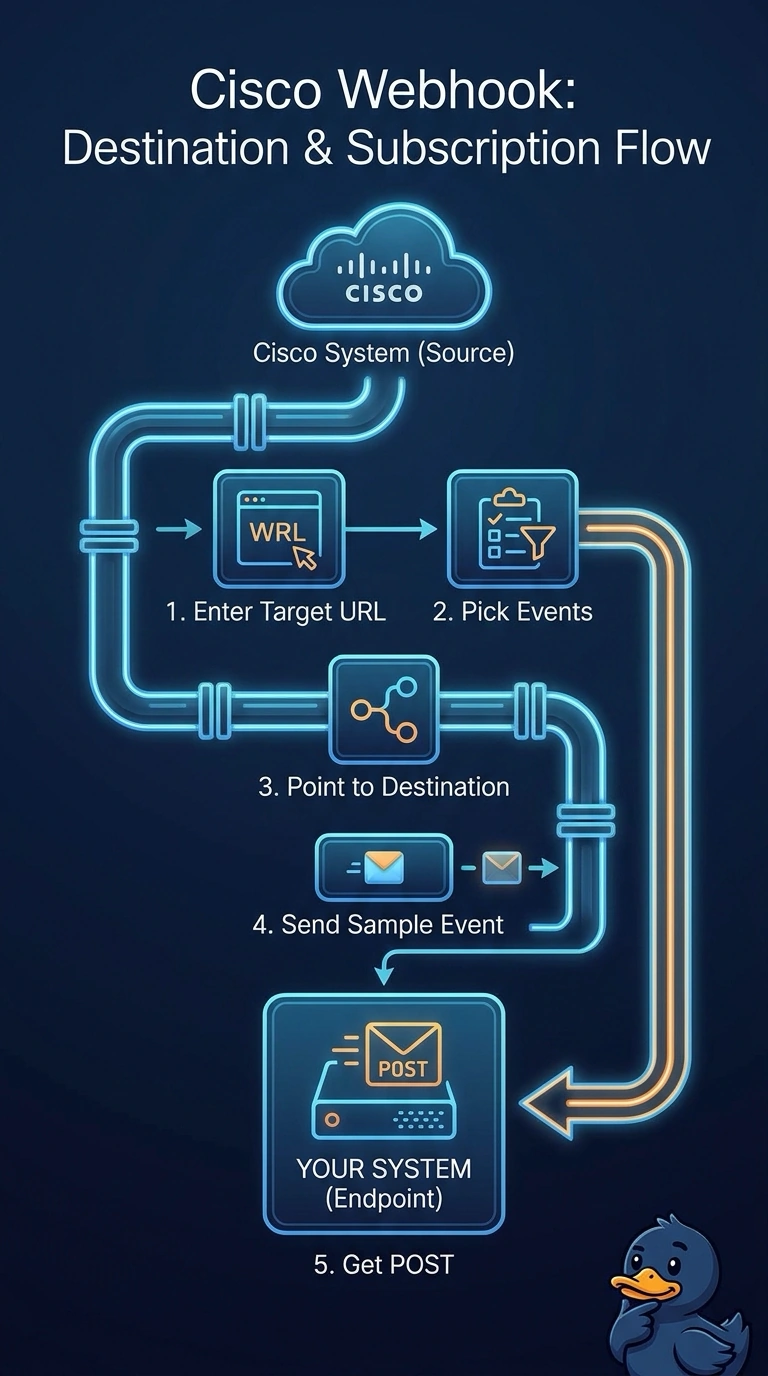
Short Explanation
Nice work: you register the address once as a webhook destination, then a subscription decides which events travel to it. It's the address book plus the guest list, and you need both for the alert to arrive. The subscription binds triggers to the destination.
Full Explanation
The correct setup uses an outbound webhook destination to hold the incident endpoint URL and a subscription to associate that destination with the device-added and compliance events. This is event-driven delivery: Catalyst Center sends notifications when the selected triggers occur, rather than waiting for a scheduled query, and the destination can post JSON directly to the endpoint. Batching matching notifications into a five-minute interval is a familiar way to reduce request volume, but it introduces deliberate delay, so it does not meet the requirement to notify the incident system immediately. Routing JSON through an integration gateway is also a common enterprise pattern, but an externally hosted gateway would need to reach the incident endpoint; that conflicts with the stated restriction that only the Catalyst Center server can reach it. Syslog forwarding is a standard way to centralize operational events, but it sends syslog messages rather than the JSON posts the endpoint accepts, so it is not an appropriate delivery method here. Exam caveat: available event names, subscription controls, and delivery behavior can vary by Catalyst Center release, so confirm the specific device triggers in the deployed version. Practical check: verify server-to-endpoint connectivity and authentication, then generate a test event and confirm that the endpoint receives the expected JSON promptly.