
A network engineer runs pyang -f tree on a vendor YANG module that models interfaces and posts the output to the team channel. The tree shows rw ifName as a leafref, ro ifIndex as a uint32, and a rw address list keyed by ip-address. The team wants to know which parts a NETCONF client may write. Which statement about the rw and ro flags in this pyang tree is correct?
Select an answer to reveal the explanation.
Short Explanation
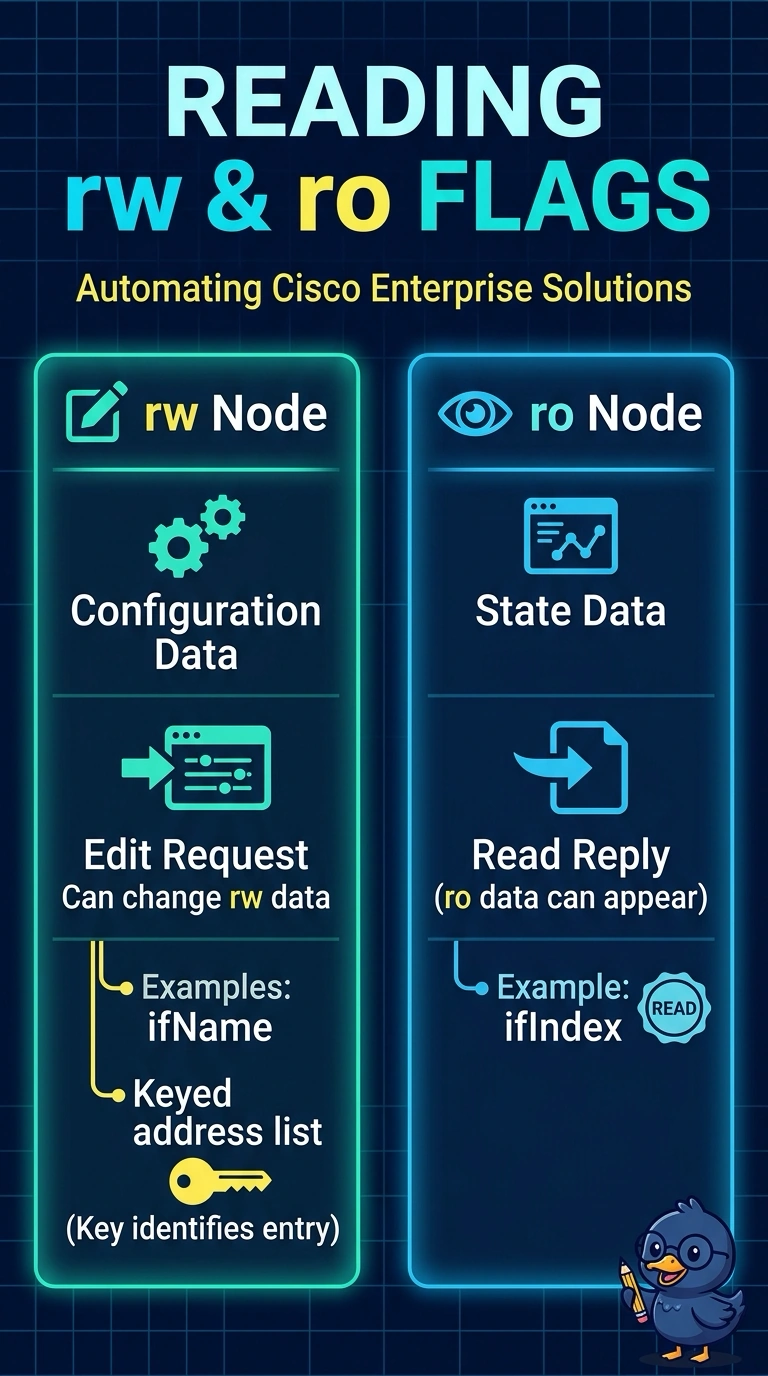
In the pyang tree, rw marks configuration data you may request to change, while ro marks read-only state data. It’s like a settings menu versus a status display: you can ask to update the ifName or address list, but not the ifIndex.
Full Explanation
RFC 8340's tree notation uses rw for configuration data and ro for state data. A NETCONF client may request changes to rw nodes, subject to access controls, constraints, and the operation's semantics; ro nodes are not configurable. Thus the shown ifName leaf and address list are configuration data, while ifIndex is state data. Configuration status is inherited: descendants of a config false node are also non-configurable, so an ro subtree cannot contain rw children. A list key identifies an entry, so an existing key cannot identify a second distinct row. With the default merge operation, an edit using that key addresses the existing entry rather than creating a second one. Ro data can still appear in a get response.