
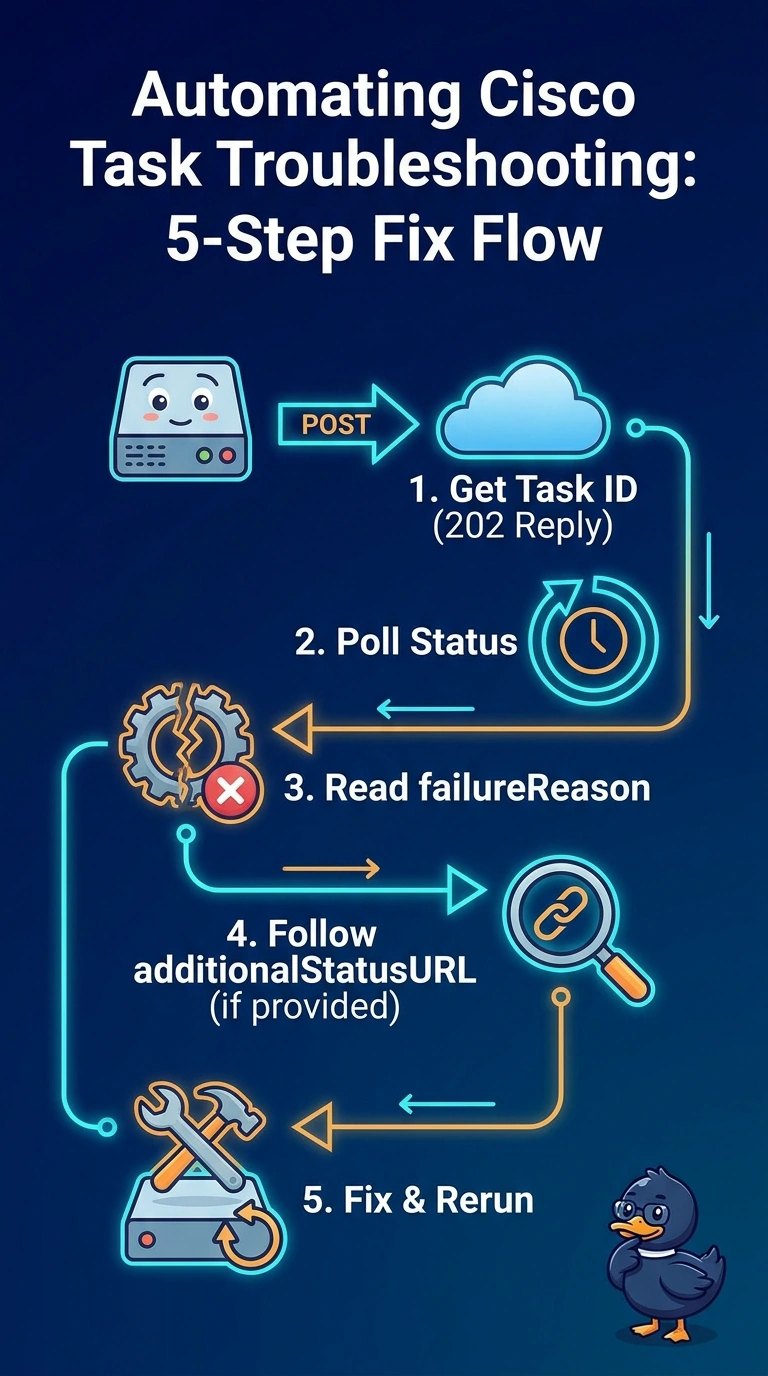
Your Python script POSTs a device template deployment to the Catalyst Center Intent API and receives a 202 response carrying a taskId. Polling the task URL shows the job finished in error while the progress text stays generic. Which part of the task response should the script read to explain the failure?
Select an answer to reveal the explanation.
Short Explanation
Read failureReason in the task response to understand why the deployment failed. If the response includes an additionalStatusURL, follow it for more diagnostic detail—it can provide the fuller story.
Full Explanation
The completed task response is the appropriate source for the failure diagnosis: when polling shows that the deployment finished in error, read failureReason to learn why the task failed. If the response includes an additionalStatusURL, follow it for further diagnostic detail; that information supplements the task response and should not be skipped. Reading failureReason while deliberately ignoring a supplied URL is incomplete because the linked detail may add useful context. Following additionalStatusURL without reading failureReason is also incomplete: the linked information does not replace the failure diagnosis in the task response. Correlating the task ID with deployment execution logs may help with operational troubleshooting, but it does not identify the requested part of the task response; logs are not a substitute for reading failureReason. Exam caveat: a 202 response means the request was accepted for asynchronous processing, not that the deployment succeeded, so diagnose the completed task result rather than the initial acknowledgement. Practical check: have your polling code read failureReason, follow additionalStatusURL when present, and preserve the task ID and returned details for troubleshooting.