
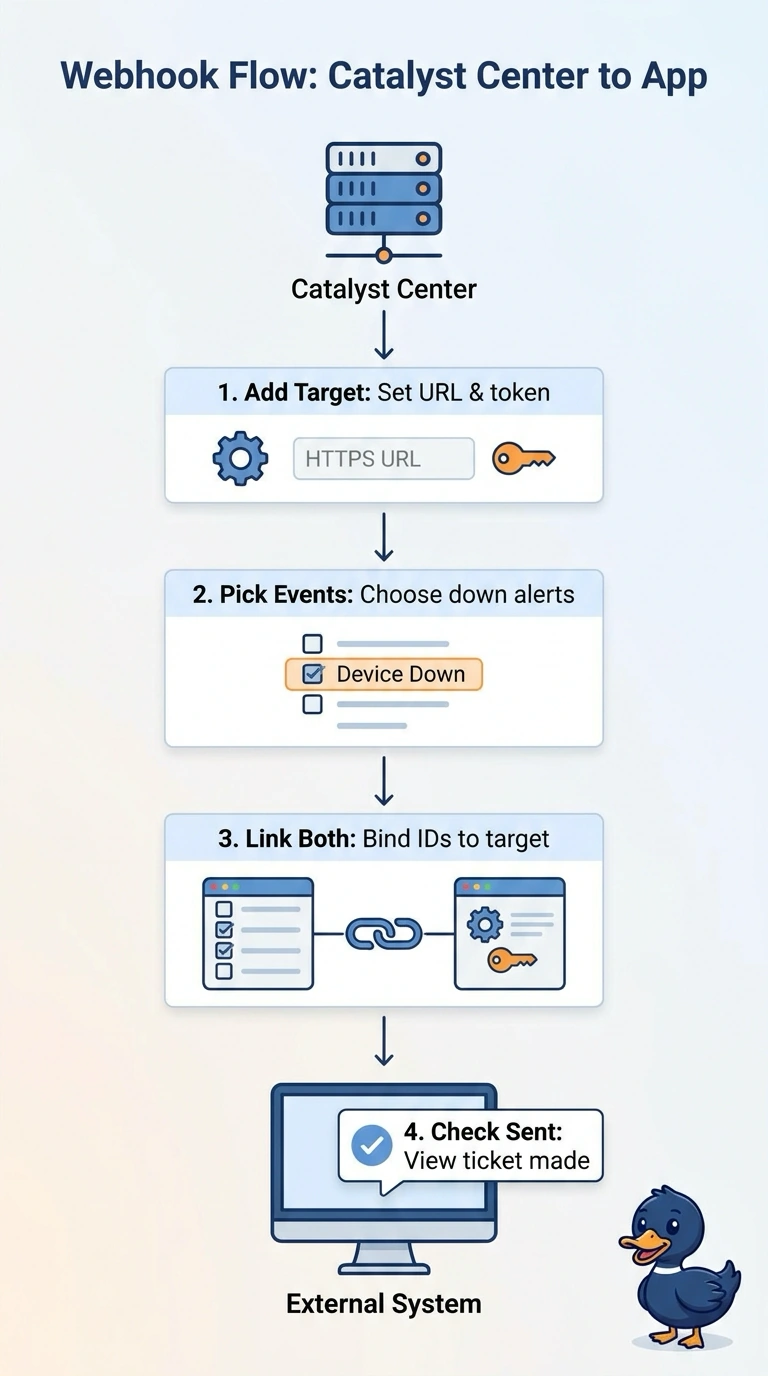
A hospital NOC uses Catalyst Center and ServiceNow where device-down and license events must create tickets within a minute through a secure HTTPS endpoint with token auth. The solution must survive reboots and show delivery status. Which outbound webhook design creates the event subscription and destination?
Select an answer to reveal the explanation.
Short Explanation
You're wiring alerts straight to tickets — no inbox spelunking. That subscription binding link is what makes every outage shout for help.
Full Explanation
Catalyst Center, formerly called DNA Center, implements outbound webhooks in two steps: define a webhook destination with URL, method and authentication headers, then create an event subscription that maps selected event IDs to that destination, with retry, status and persistence so delivery survives restarts and meets the one-minute ticketing goal. The syslog plus SWIM approach fails by concept because syslog forwarding is connectionless telemetry and SWIM schedules images, neither creates durable event-to-webhook mapping. The discovery approach fails by concept because discovery scans subnets for inventory and cannot bind assurance events to a webhook receiver. The email plus CLI approach fails by concept because SMTP mail and CLI templates push configuration, not structured HTTPS callbacks with per-event subscription state. Exam caveat is to separate destination creation from subscription and verify event IDs, and practical check is to trigger a test event, confirm 200 OK in delivery logs, then check ServiceNow ticket creation latency.