
A Python script pulls every network and access point status from the Meraki Dashboard for a 60-site rollout. The first burst of calls returned HTTP 429, so the team needs a pattern that uses the documented base address, authenticates correctly, and keeps the run going. Which request pattern handles the base address, authentication and throttling together?
Select an answer to reveal the explanation.
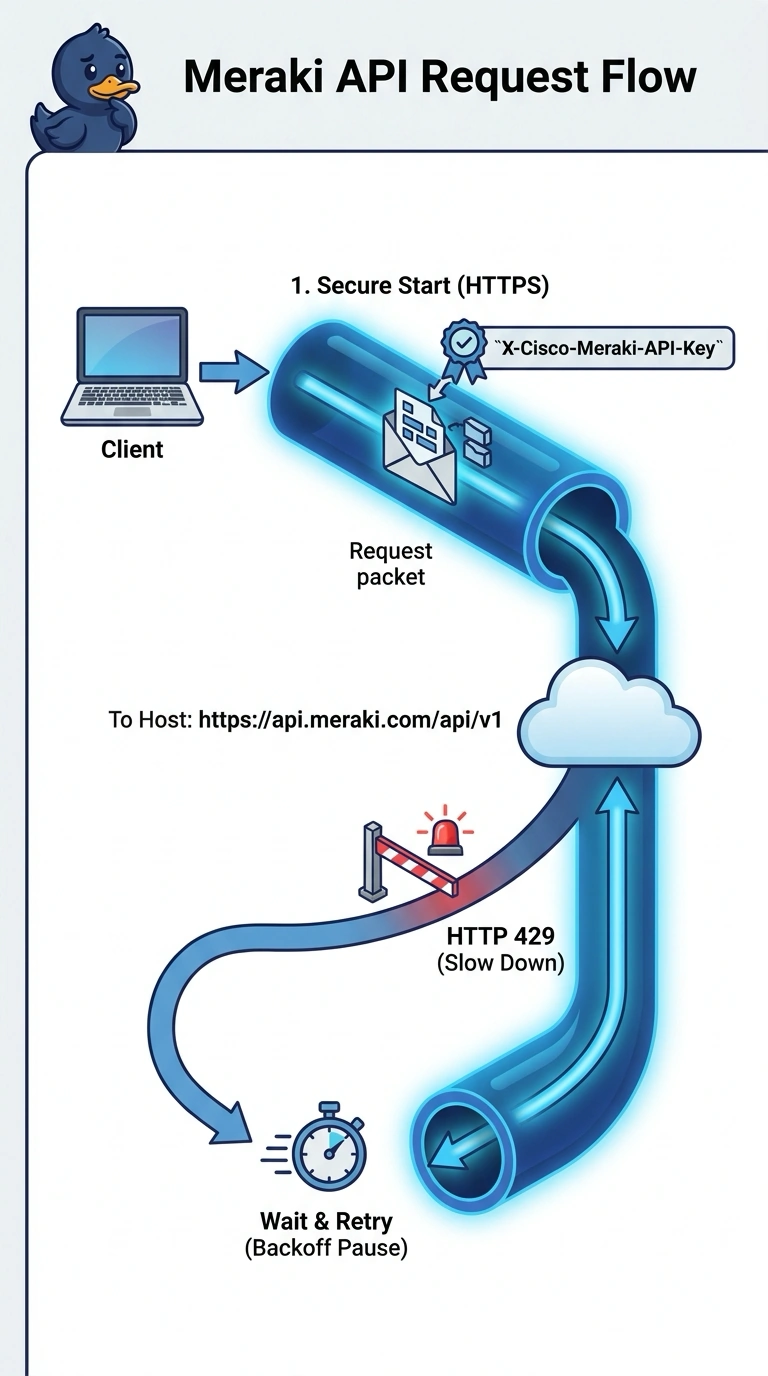
Short Explanation
The Dashboard API wants your key in the header, and it responds with 429 when you exceed its rate limit. Treat that status as a signal to wait, not as a dead end. It's the API equivalent of a bouncer checking your wristband and asking you to hold on a moment.
Full Explanation
The Meraki Dashboard API is a REST service reached at its documented base address, and requests authenticate with a key in the X-Cisco-Meraki-API-Key header. The service enforces request rate limits and can respond with HTTP 429 when a client exceeds them. Treating 429 as a signal to wait and then retry the request can help a long inventory sweep finish instead of stopping at the first rate-limit response. Putting the key inside a JSON body does not use the documented authentication method. The documented base address is api.meraki.com; dashboard.meraki.com is the web console host, not the documented API base address. Skipping pacing altogether risks further rate-limit responses, and this scenario already includes one. Check the current documentation for quota and retry guidance. Practical check: print the status of every response and confirm that a 429 leads to a wait followed by a successful retry.