
A retail chain uses Meraki MV smart cameras to measure queue length and needs anonymized counts every minute without storing video in its analytics app. The app must scale to 40 stores and respect privacy rules for no facial data. Which MV Sense API capability delivers the required camera analytics?
Select an answer to reveal the explanation.
Short Explanation
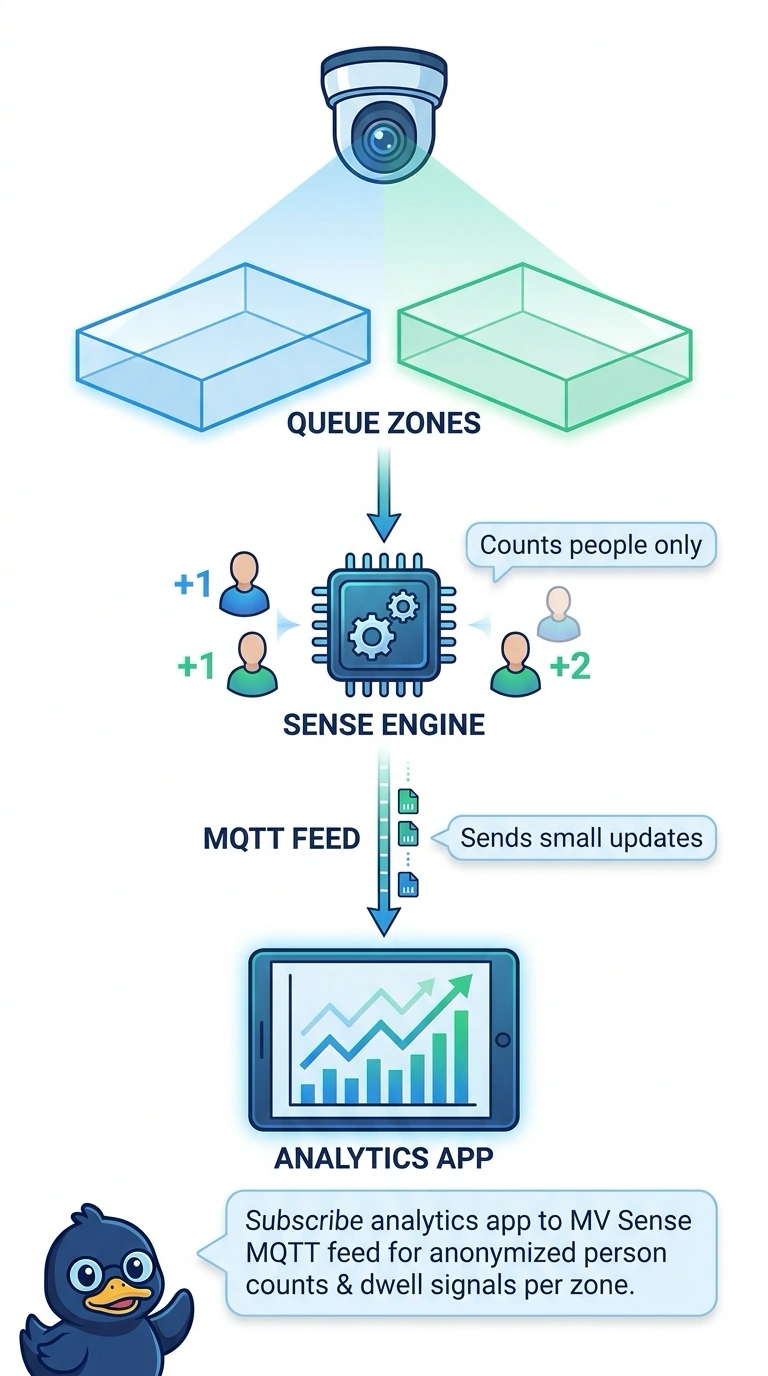
You’re spot-on to keep video out of your app. The MQTT feed gives you privacy-safe per-zone counts and dwell signals, like a tally counter at the door.
Full Explanation
The MV Sense MQTT feed provides camera-generated, anonymized person counts and dwell signals by zone, without requiring your analytics app to ingest or store video. By subscribing to the feed across the camera fleet, your app can use the events to measure queues every minute while avoiding facial data. Summing zone counts into one store-wide total also uses MQTT counts at the requested cadence, but loses the per-zone detail needed to measure queues in the relevant areas. Polling each camera’s Dashboard snapshot endpoint can estimate people by zone, but the app receives images that may contain faces, contrary to the no-facial-data requirement, even if it retains only totals. Delivering anonymized per-zone results every five minutes preserves zone detail and avoids video, but misses the required one-minute cadence. Exam caveat: distinguish camera-generated analytics from approaches that send image or video content to an application, even if the content is processed transiently. Practical check: verify MQTT topic configuration, zone mapping, timestamps, and end-to-end delivery intervals at representative stores before rolling out to all 40.