
A retail chain is automating Catalyst Center so each point-of-sale port joins the corporate virtual network when it comes up. The site is already in the fabric, the switch already holds the edge role, the corporate virtual network already exists, and the script knows the switch management address, the interface, the data pool name and the port authentication profile. Which SDA API should the script call to onboard those switch ports?
Select an answer to reveal the explanation.
Short Explanation
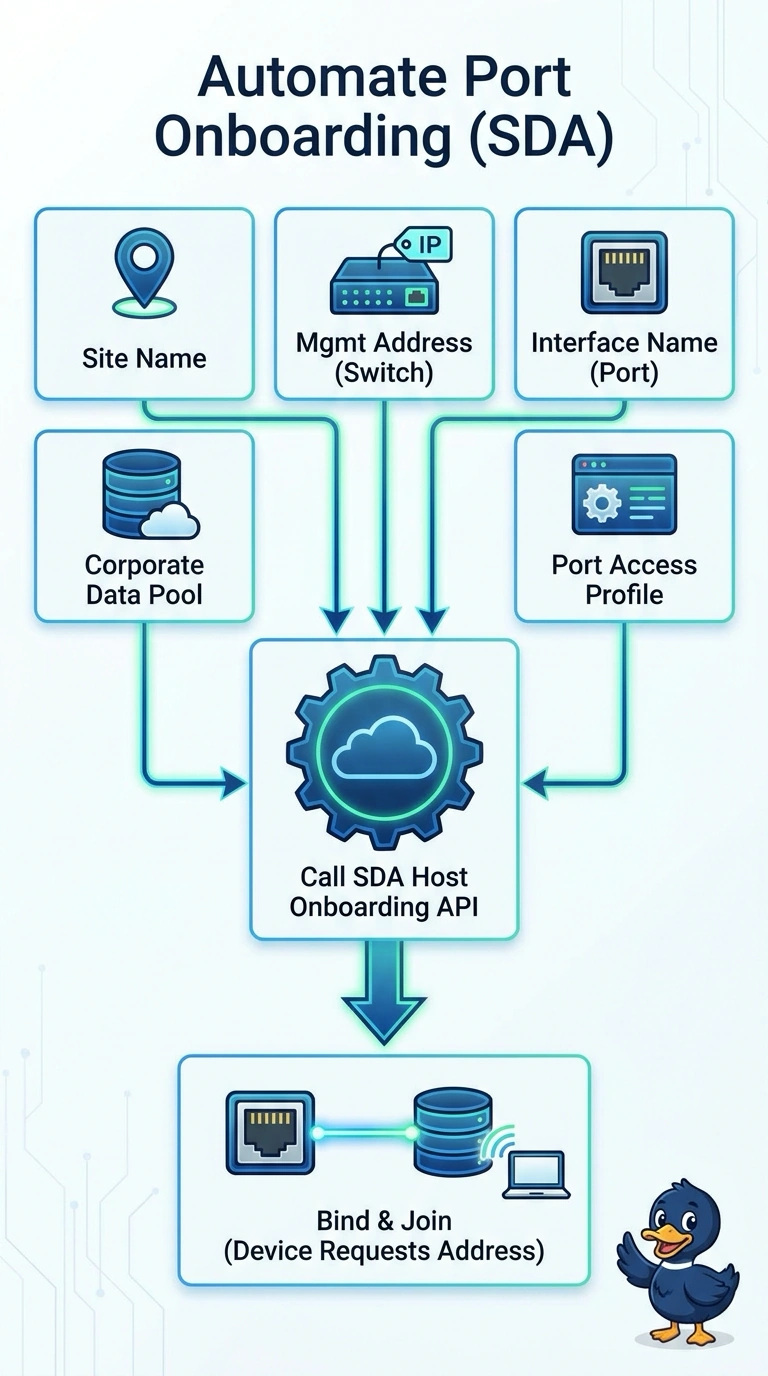
You need the host onboarding port assignment API to bind the switch interface to the corporate data pool—like assigning a parking spot to the right lot. Once the port is assigned there, a connecting device can join the corporate segment after successful authentication.
Full Explanation
The host onboarding port assignment API is the right operation because the site, corporate virtual network, and fabric-edge role are already in place; the script needs to assign the POS interface to the corporate data pool. This is an SDA host-port assignment, not a request to build the fabric or provision the switch. Setting an access VLAN and authentication profile through the device-interface configuration API may provision a conventional switch port, but it does not make the required SDA assignment to the corporate data pool; a VLAN setting alone is not the fabric virtual-network binding. Binding the interface to the default data pool uses the host onboarding API but places the port in the wrong pool. Binding it to the corporate data pool without applying the supplied authentication profile makes the network association but leaves the port’s required authentication behavior unconfigured. Exam caveat: distinguish host port assignment from fabric setup or device provisioning, which apply when creating the fabric, onboarding the edge device, or changing its role—not when assigning a host-facing port on an already provisioned edge. Practical check: after the API call, inspect the port assignment and authentication settings in Catalyst Center, then verify with a test POS endpoint that it receives the intended corporate network and access policy.