
A fabric built with Catalyst Center raises an assurance event when a fabric edge node drops off the network. The team's chat workflow must fire within seconds, hand a script structured device and timestamp fields to parse, and the chat server only accepts inbound HTTPS posts. Which Catalyst Center notification capability fits this event workflow?
Select an answer to reveal the explanation.
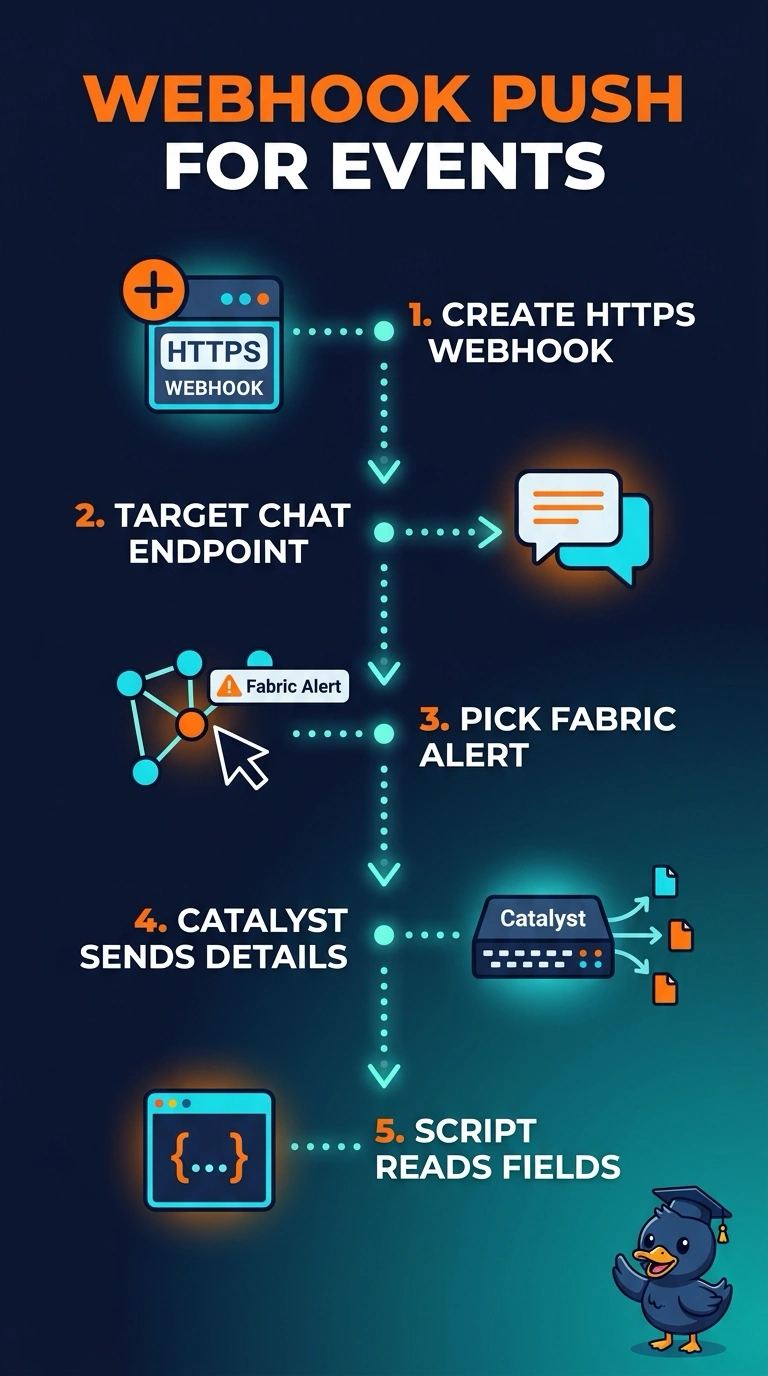
Short Explanation
Your chat workflow needs a push directly to its HTTPS endpoint, with structured event fields your script can parse. An HTTPS webhook notification channel fits this hand-off without adding an SNMP receiver or a batching bridge.
Full Explanation
An HTTPS webhook notification channel fits because Catalyst Center can post the subscribed fabric-edge assurance event directly to the chat endpoint over HTTPS, with device and timestamp values available as structured fields for the script to consume. This event-driven delivery supports the seconds-level requirement without a protocol-conversion service. An SNMP trap can quickly carry structured event data to a monitoring manager, but the chat server accepts inbound HTTPS posts, not SNMP traps, so it does not provide the required direct delivery. An HTTPS webhook that posts a readable summary can reach chat promptly using the permitted protocol, but values embedded in prose do not meet the requirement for structured fields that a script can parse. A mail-to-chat bridge can convert an alert to HTTPS, but batching delivery once per minute misses the required response time. Exam caveat: distinguish the protocol accepted by the destination from the protocol used to notify an intermediate system; a gateway helps only if the added path meets the timing and data-format requirements. Practical check: trigger a real edge-node event and verify the HTTPS request’s arrival time, content type, and parseable device and timestamp fields.