
A NetDevOps pair is splitting the work for a fresh Catalyst Center deployment. One script must create the campus site, claim twelve new access switches, and push the gold configuration template, while the second must pull hourly health scores and open assurance issues for those switches to feed a Grafana board. Which API pairing correctly matches each script to its Catalyst Center API role?
Select an answer to reveal the explanation.
Short Explanation
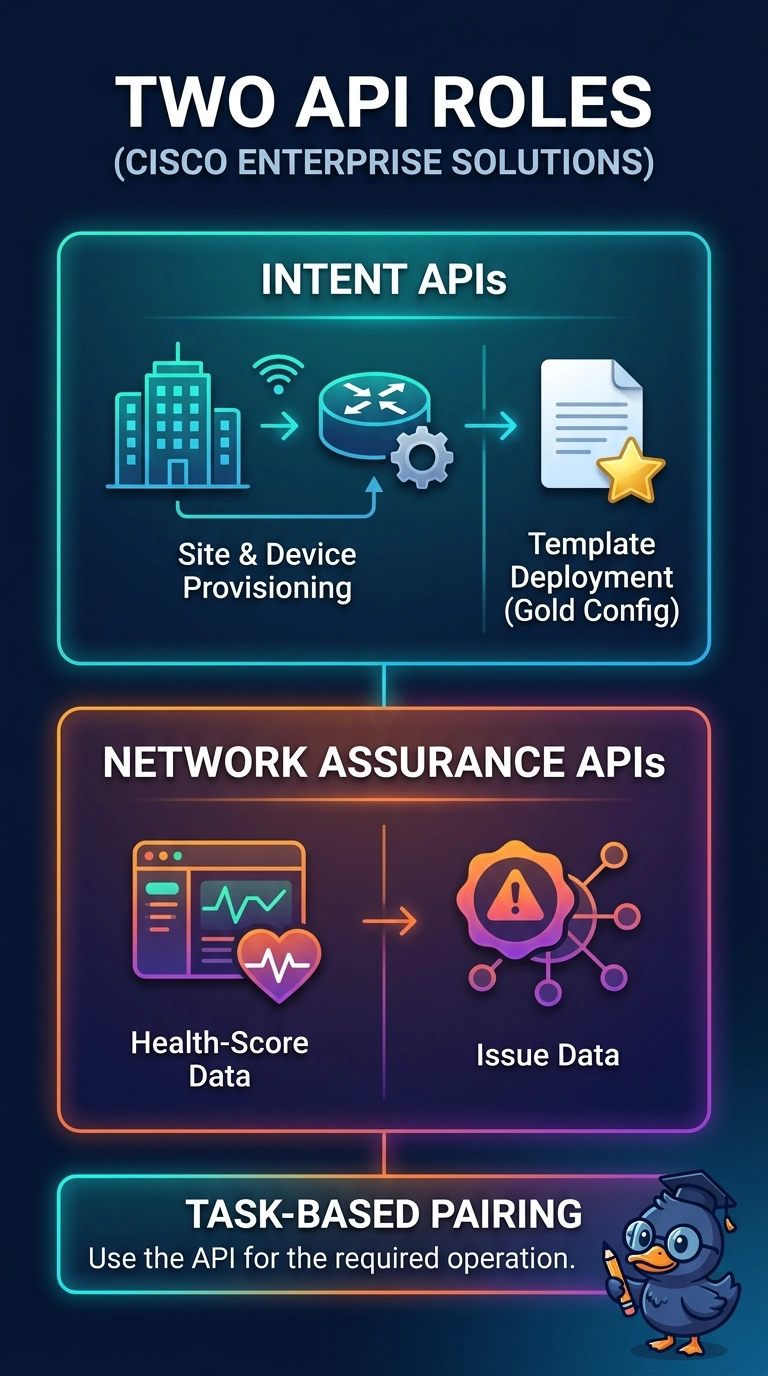
Use the Intent APIs to create the site, claim switches, and deploy the gold template; use the Network Assurance APIs to fetch health scores and issues for your Grafana board. They’re like two specialized toolkits, not a simple split between writing and reading.
Full Explanation
The correct pairing follows the APIs’ intended roles: Intent APIs let automation express and carry out network changes, so creating the campus site, claiming the twelve access switches, and deploying the gold configuration template belong in the provisioning script’s Intent API calls. Network Assurance APIs expose operational and assurance information, so the reporting script should use them to retrieve hourly health scores and open issues for Grafana. The all-Intent approach fails because it assigns assurance-data retrieval to an API role intended for network automation; it does not make Intent the universal choice for every task. The all-Assurance approach fails because assurance data APIs are not the appropriate role for site creation, device claiming, or template deployment. The reversed mapping fails for the same conceptual reason in both directions: it uses assurance APIs for provisioning and Intent APIs for assurance reporting. Exam caveat: this is not a universal write-versus-read distinction—Intent APIs can also offer read operations, and capabilities depend on the endpoint. Practical check: consult the current Catalyst Center API reference and confirm the endpoint and supported version for each specific operation before implementing the scripts.