
A retail chain has 80 small stores on a single ISP link with LTE backup, while two distribution centers use two ISPs and dual routers to sustain outages and maintenance. Store outages remain isolated but cost must stay low. Which WAN resilience comparison guides single-homed versus dual-homed branch design for failure domains?
Select an answer to reveal the explanation.
Short Explanation
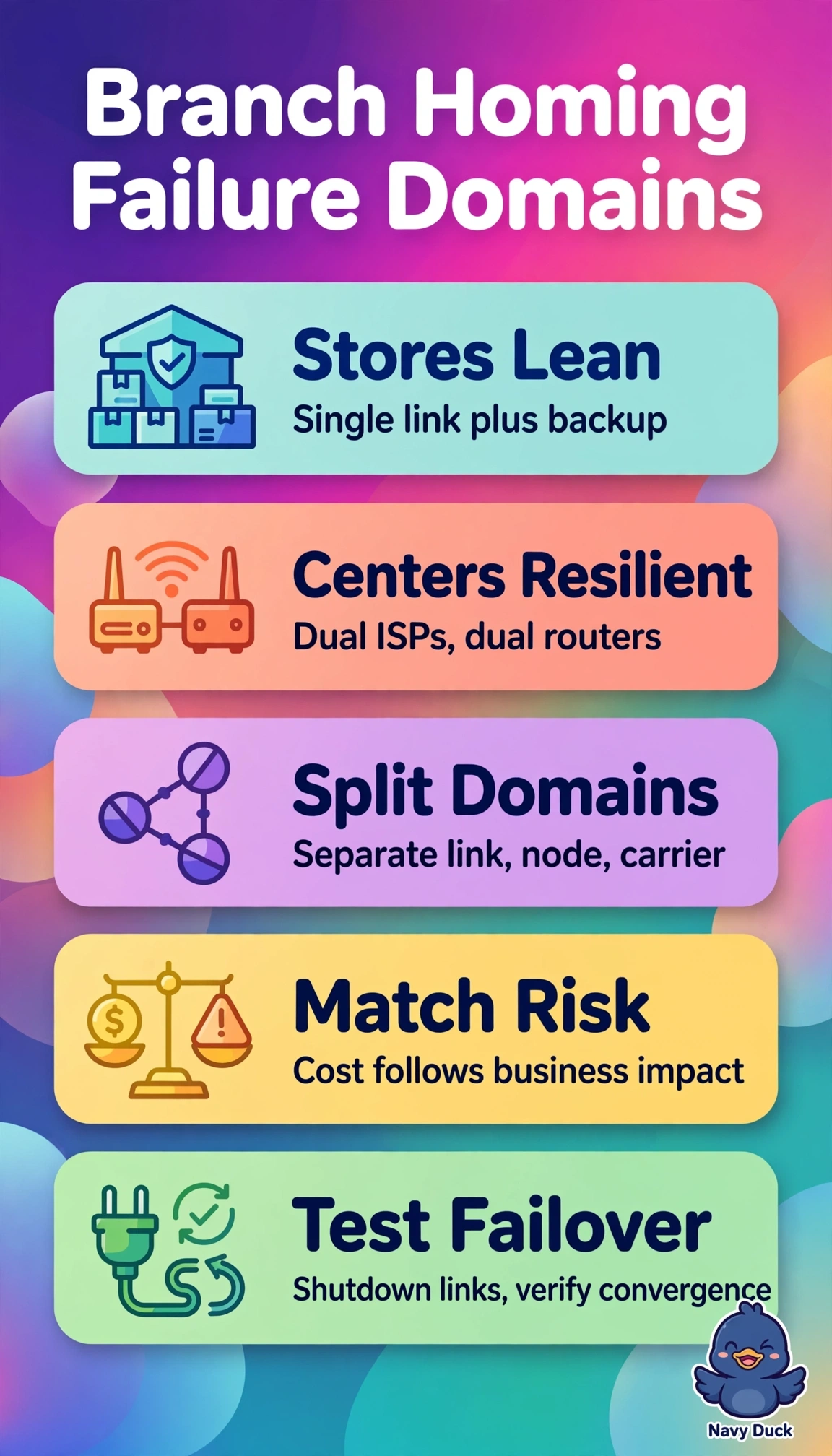
You are matching dollars to downtime risk, and not every site deserves the same armor. Right-sizing with failure domains keeps cheap stores lean while protecting the centers that hurt most.
Full Explanation
Single-homed with LTE backup confines a store failure domain to one access link and device while meeting low-cost goals for 80 sites, whereas dual-homed dual-router designs at distribution centers split carrier, link, and node failure domains so maintenance or ISP loss does not halt regional operations. Universal dual-homing fails by concept because deploying dual ISPs and routers to every small store removes failure domains but explodes recurring cost and operational complexity beyond business value. Universal single-homing fails by concept because it minimizes cost but leaves distribution centers exposed to single link and node failures that propagate impact to many dependent stores. Hub-based VPN centralization fails by concept because backhauling everything through one hub creates a larger shared fate domain and does not provide true ISP or node diversity at critical sites. For the exam, distinguish link, node, and carrier failure domains when comparing designs, and in practice validate failover with link shutdown tests and track carrier diversity per site.