
A hospital must prioritize voice, video consults, clinical signaling, and normal data across a congested WAN. Voice needs minimal delay, interactive video needs assured bandwidth, signaling needs preservation, and data uses remaining capacity. Which PHB mapping best meets this traffic-class requirement?
Select an answer to reveal the explanation.
Short Explanation
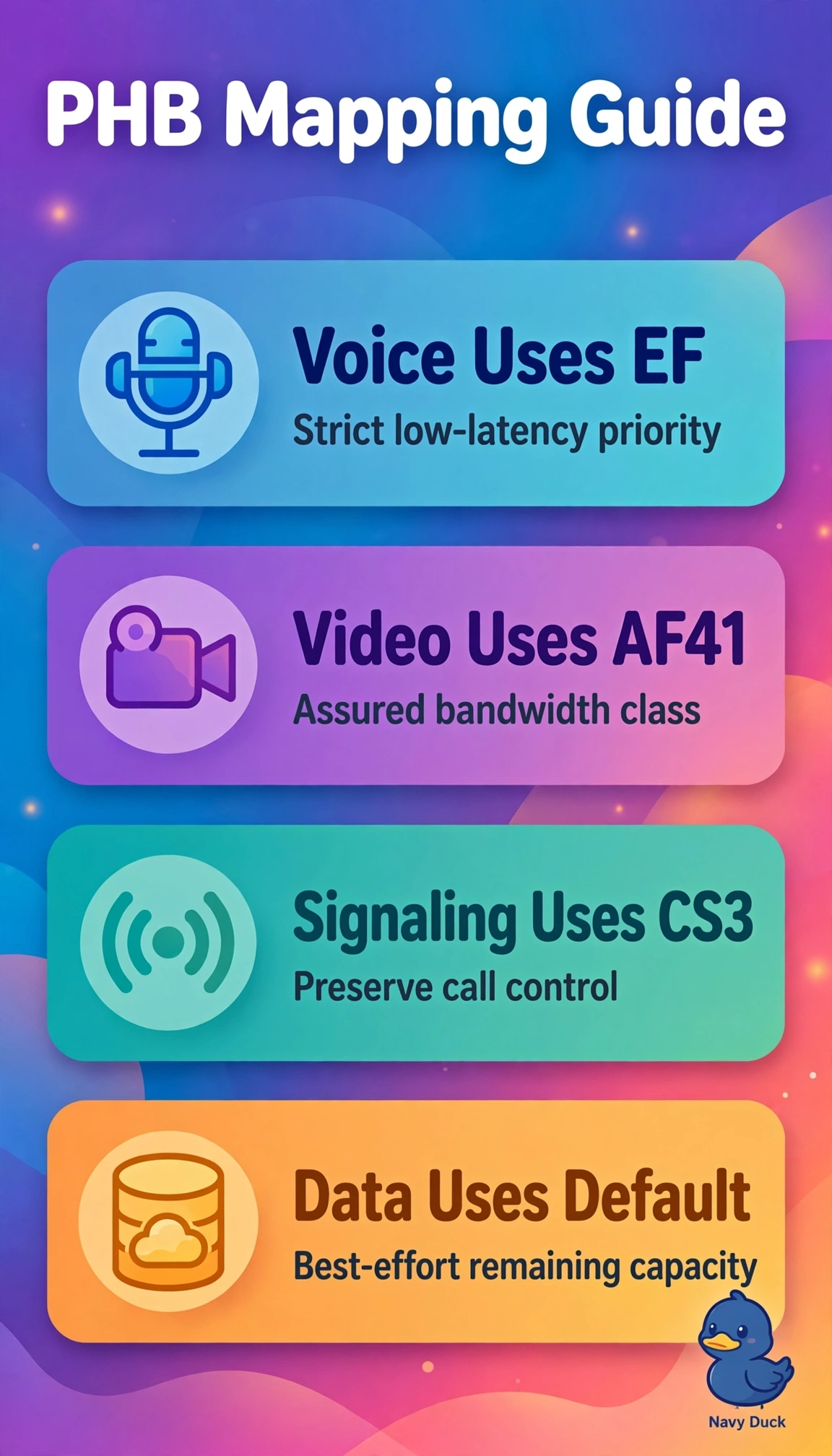
You've got your busiest ER hallway, so you'll let voice cut straight through while video keeps its own steady lane. That's why EF marks voice for instant service, AF41 keeps video smooth, CS3 protects signaling, and Default leaves the rest to fill in.
Full Explanation
The correct mapping matches DiffServ PHB behavior to application need: EF uses strict-priority low-latency queuing for voice with minimal delay and jitter, AF41 uses Assured Forwarding class 4 low drop precedence for assured bandwidth for interactive video, CS3 preserves call and clinical signaling for reliable delivery without priority-queue overhead, and Default carries normal data as best effort using remaining capacity. The variant marking video AF31 is field-proven for streaming and on-demand multimedia but fails this scenario because AF31 belongs to class 3 with lower scheduling assurance than class 4 reserved for interactive conferencing, so consults lose bandwidth guarantee under congestion. The variant marking signaling CS6 is widely used to protect network control yet fails preservation logic because CS6 is reserved for routing and internetwork control in the strictest queue, so call signaling would contend with routing and face aggressive policing. The variant marking data AF21 with assured allocation is common to protect business data yet fails the remaining-capacity fact because any AF class reserves bandwidth and drop protection, preventing data from scavenging only leftover bandwidth and distorting queuing. Exam caveat: separate AF class priority from drop precedence and CS3 signaling from CS6 control, since exams use those similar numbers as traps. Practical check: confirm DSCP with captures and show policy-map interface for priority use, drops, and queue fairness under load.