
A NetOps engineer must automate VLAN changes on IOS XE using a model-driven API over HTTPS, retrieving configs as structured resources and applying partial updates without replacing whole files. The script should use standard verbs against predictable URIs. Which RESTCONF characteristic with HTTP methods and resource model should the engineer apply?
Select an answer to reveal the explanation.
Short Explanation
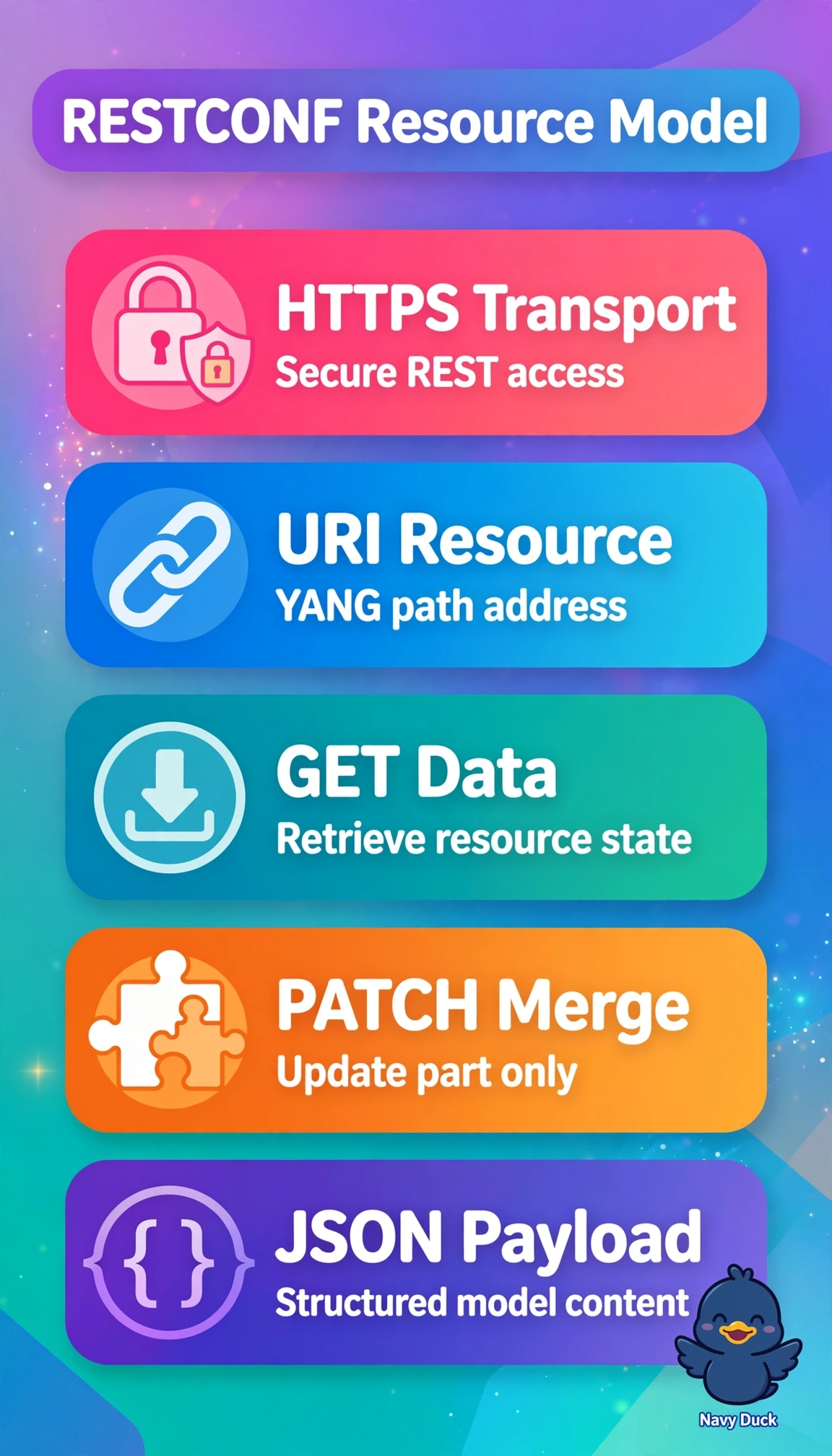
You can treat network configuration as structured resources at predictable URLs, rather than as files to replace wholesale. RESTCONF over HTTPS uses familiar verbs such as GET and PATCH with YANG-modeled resources, so you can retrieve data and update just the VLAN details you intend.
Full Explanation
RESTCONF on IOS XE is the fit because it exposes YANG-modeled data as predictable HTTPS URI resources: GET retrieves structured state, and PATCH applies a targeted fragment without replacing the whole resource. This supports model-driven retrieval, partial VLAN updates, and standard HTTP verbs. Replacing configurations with PUT snapshots fails when only part of a resource needs changing: PUT replaces the target resource, potentially overwriting other changes and using more bandwidth. Catalyst Center REST APIs are controller interfaces for inventory and policy objects, not device-native RESTCONF resources addressed through YANG-derived paths; sharing GET and PATCH does not make their resource models interchangeable. Ad hoc JSON without YANG also falls short: HTTP verbs and URIs do not supply a schema, typing, or validation, which YANG provides as a machine-readable contract for consistent parsing and tool reuse. An exam caveat is to assess transport, operations, and data model together: RESTCONF over HTTPS differs from NETCONF over SSH and from proprietary device or controller APIs, even when they use similar verbs. For a practical check, send HTTPS GET to restconf/data with Accept: application/yang-data+json, confirm the response contains YANG-modeled VLAN data, then PATCH a minimal fragment and verify that only the intended VLAN changes.