
An enterprise with an 8-class campus QoS model buys an MPLS VPN that offers only four provider classes with DSCP remarking at the PE. Voice must stay low-latency, video must not mix with bulk data, and markings must survive across the WAN. Which enterprise-to-provider mapping strategy should the designer specify for consistent end-to-end treatment?
Select an answer to reveal the explanation.
Short Explanation
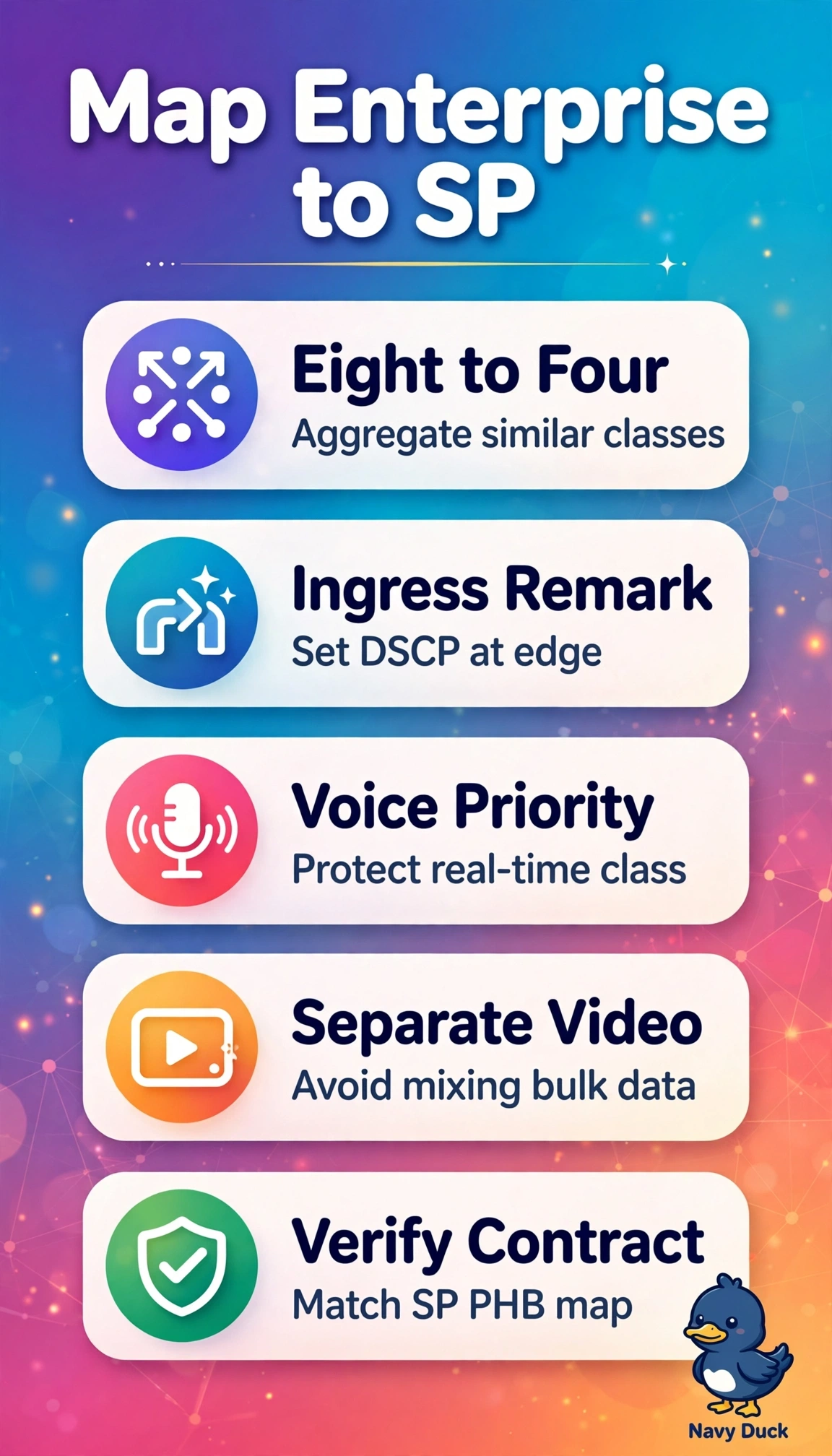
You cannot fit eight suitcases into four overhead bins unchanged. Class aggregation packs similar traffic together and relabels clearly at the door. Map once at ingress, honor everywhere after.
Full Explanation
The correct design aggregates eight campus classes into four provider classes at ingress and rewrites DSCP to provider values, preserving voice in a low-latency queue, isolating video from bulk data, and surviving PE remarking for consistent treatment. Transparently trusting enterprise DSCP across the WAN fails on class alignment because the provider honors only four code-point sets and will re-mark excess values, so eight markings cannot retain intended behavior. Grouping video with bulk data in one provider queue fails on separation because bursty file transfers inflate delay and loss for video despite protecting voice. Aggregating without DSCP remarking fails on preservation because PE DSCP-to-EXP mapping rewrites unaligned values, so markings emerge altered and policy breaks. As an exam caveat, separate campus trust where DSCP is honored from provider ingress where contracted remarking governs. As a practical check, verify voice queue mapping and capture DSCP before and after the PE both ways to confirm survival.