
A university is refreshing a 48-port access floor for 28 PoE+ IP phones, 10 PoE+ cameras and 24 overnight PCs needing Wake-on-LAN after power outages. The design must power all endpoints concurrently, keep sleeping PCs reachable for magic packets, and restore power quickly after a switch reload. Which PoE budget and Wake-on-LAN switch design meets all requirements?
Select an answer to reveal the explanation.
Short Explanation
Late-night wake-ups fail when links nap or power lags. You'll nail it with full-budget power, perpetual PoE through reloads, and EEE off so magic packets still get heard.
Full Explanation
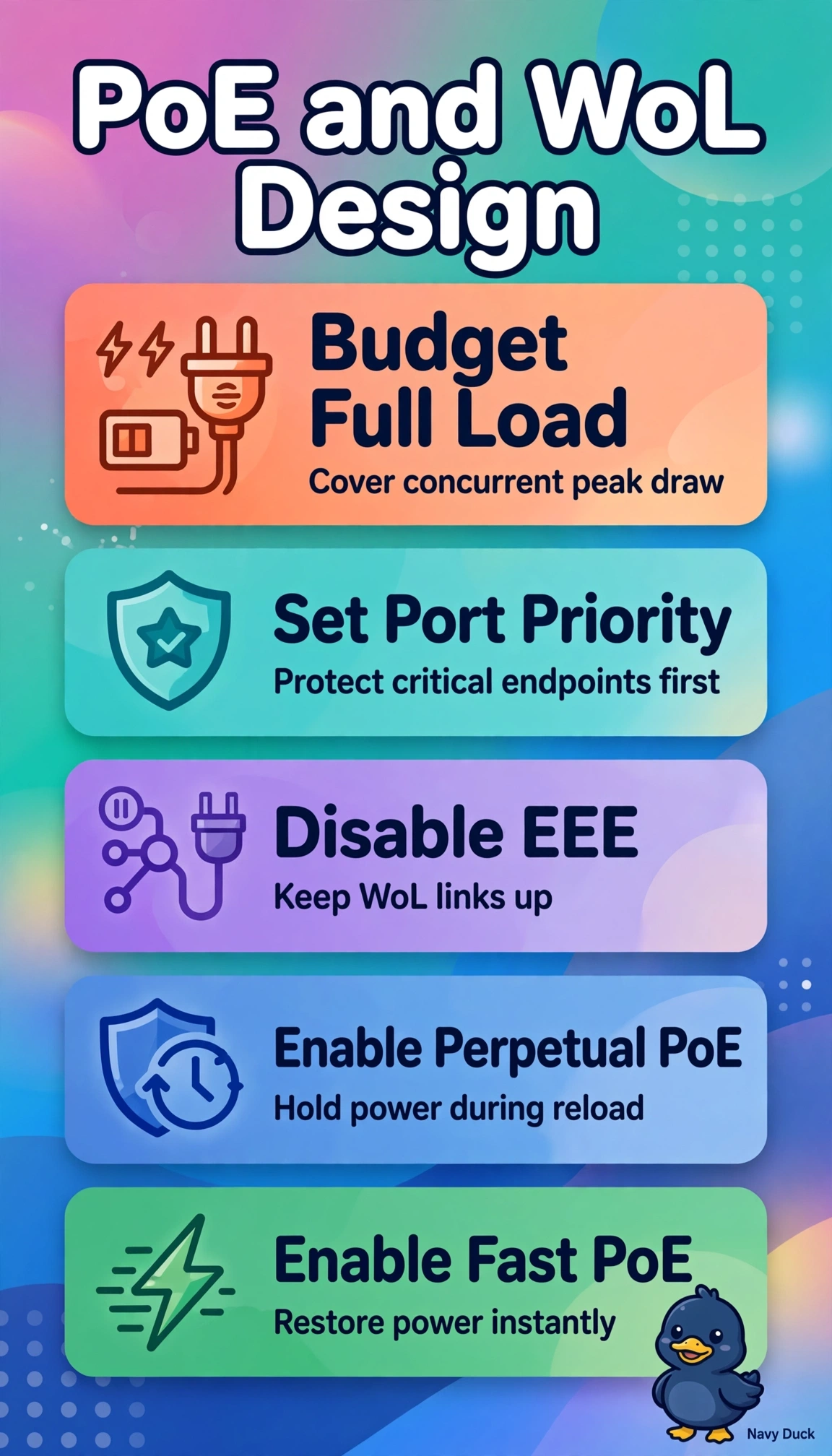
The correct design succeeds because sizing the power budget and power supplies for full concurrent draw with port priority guarantees phones, cameras and PCs all receive power under peak load, disabling Energy Efficient Ethernet on Wake-on-LAN ports keeps the link up so sleeping NICs can detect magic packets, and perpetual plus fast PoE maintains power during a switch reload and restores it immediately on boot for fast recovery. Sizing for average load fails by concept because statistical power planning will shed or deny power when all endpoints draw at once despite correct EEE and reload behavior. Scheduling nightly PoE shutdown fails by concept because removing power or using time-based denial defeats Wake-on-LAN reachability even with correct budget and EEE settings. Enabling EEE with standard negotiation fails by concept because low-power idle can delay or drop link detection for sleeping hosts and standard PoE adds negotiation delay after outages. For the exam, remember Wake-on-LAN requires Layer 2 adjacency and link state, not routability, and in practice validate total wattage, priority, EEE status and WoL VLAN reachability with a sleep and reload test.