
A 400-site retailer uses model-driven telemetry to a central collector over limited WAN links. Engineers need interface counters every five minutes but want immediate notice of link flaps without flooding the WAN. Which periodic versus on-change telemetry publication design best controls network load impact?
Select an answer to reveal the explanation.
Short Explanation
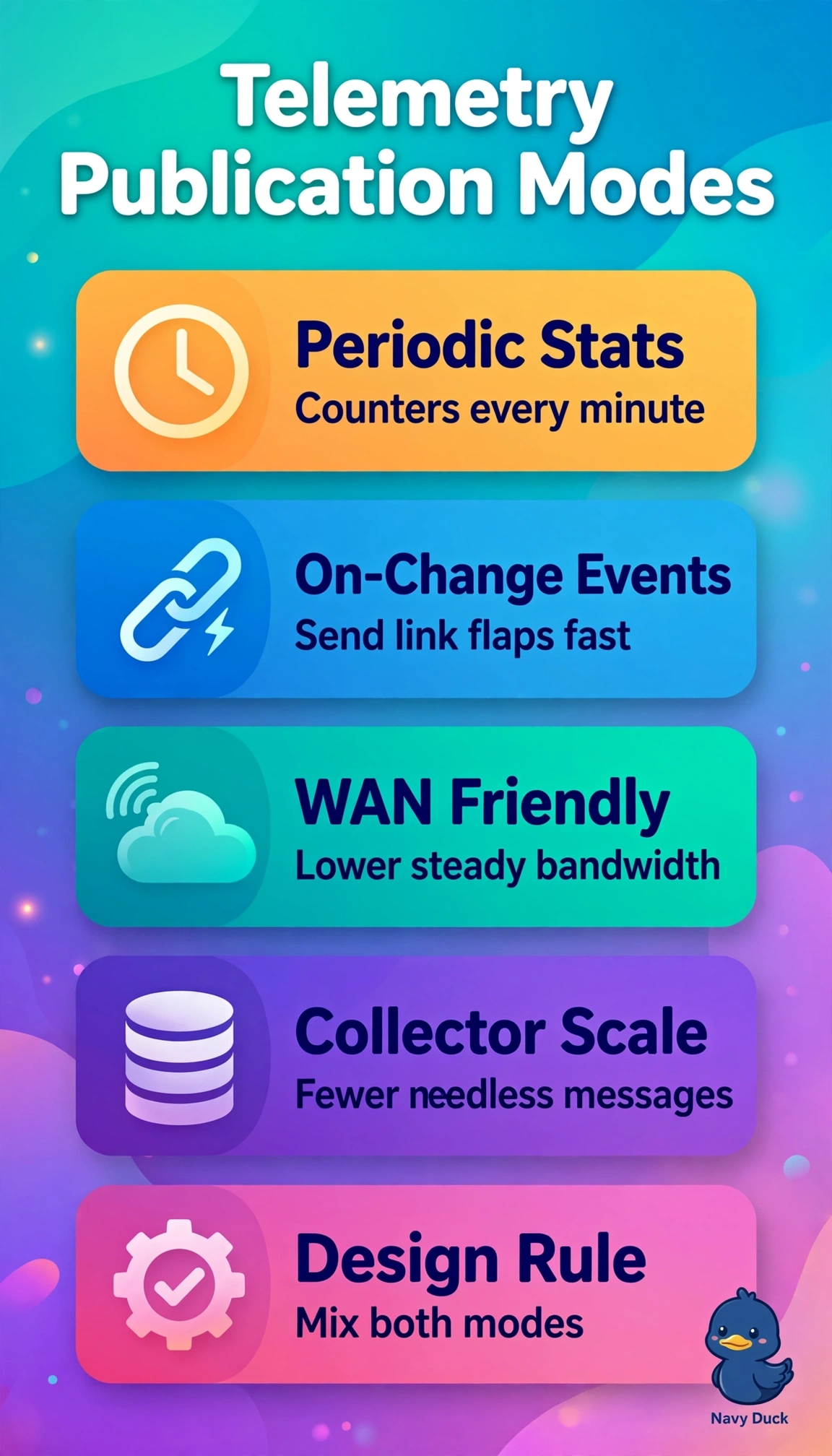
You're balancing steady heartbeat with instant alerts here. A slow rhythm for stats plus event triggers is your cadence sweet spot, keeping WAN use predictable yet responsive.
Full Explanation
Model-driven telemetry supports periodic publication for steady-state counters and on-change publication for discrete events, so combining a moderate interval for statistics with event-driven updates for link state delivers timely fault detection while bounding background load. Streaming everything on a short periodic timer multiplies messages across hundreds of sites and wastes WAN bandwidth on unchanged data, while reverting to SNMP polling reintroduces frequent request-response overhead and slower detection. Subscribing on-change for all counters fails conceptually because counters increment constantly and would either flap excessively or miss trends if dampened, defeating the purpose of baseline monitoring. For the exam, associate periodic with scale-efficient baselines and on-change with critical state transitions, and in practice validate subscription paths, flap dampening, and collector capacity before rollout.