
A logistics company must onboard 150 WAN Edge routers to Cisco SD-WAN with minimal site visits, strict serial-number authorization, and centralized templates applied after authentication. Some sites sit behind NAT with no public reachability. Which SD-WAN onboarding and provisioning approach meets zero-touch, authorization, and NAT needs?
Select an answer to reveal the explanation.
Short Explanation
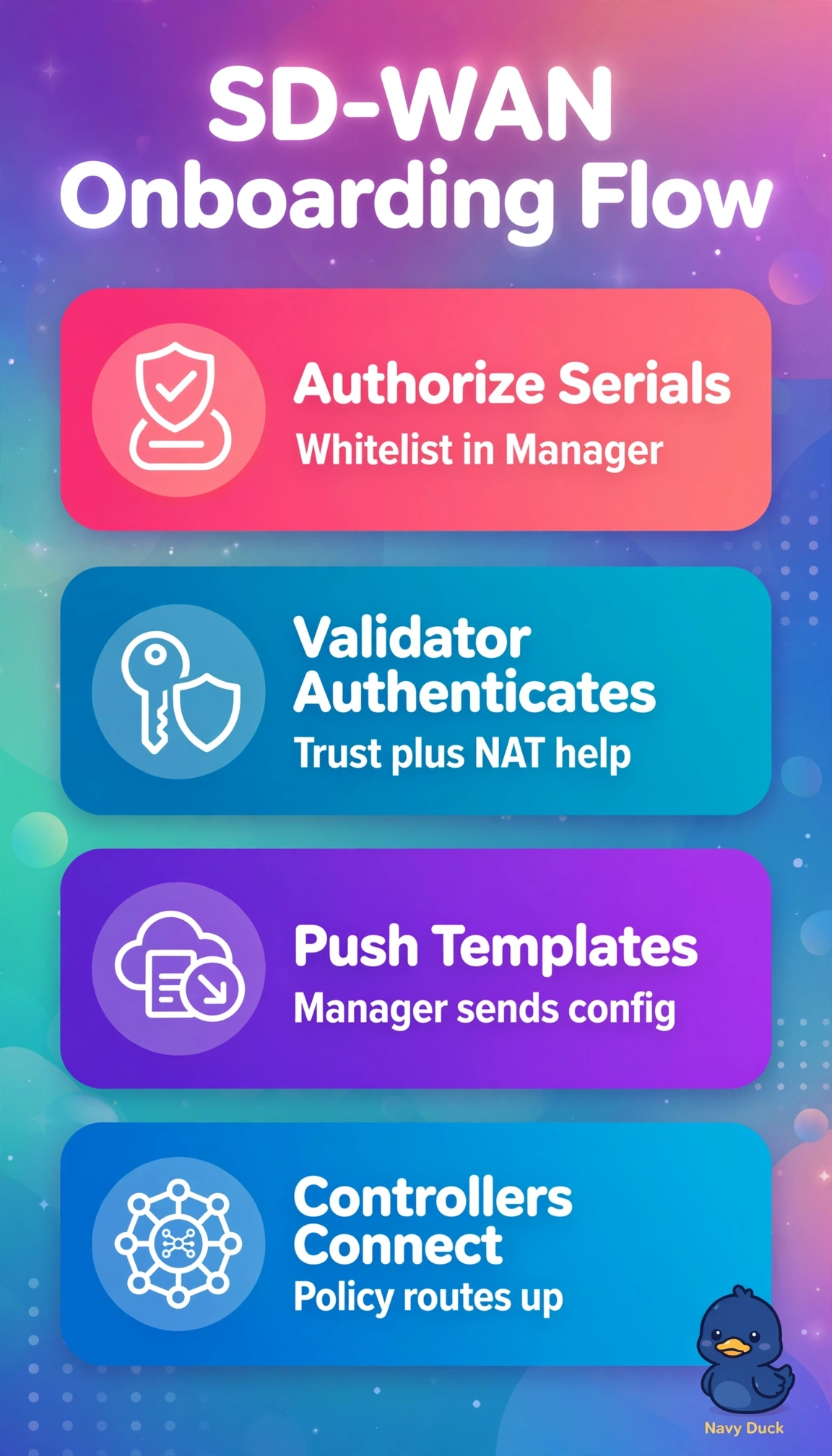
You're shipping boxes to faraway warehouses with no techs on site to help. Zero-touch onboarding lets each router phone home, prove its identity, and download its full config automatically.
Full Explanation
SD-WAN onboarding uses Plug-and-Play with device serials authorized in Manager, Validator performing authentication and NAT traversal coordination, then Manager applying device and feature templates and Controllers establishing control connections for policy and OMP. On-site preconfiguration with Controller authentication fails because Controllers do not authenticate new devices and manual staging breaks zero-touch scale and NAT traversal flow. License authorization in Controller with Manager authentication fails because authorization lives with Manager and Plug-and-Play service while authentication is an orchestration Validator role, not management. Open Internet with Edge authentication and cloning fails because it bypasses serial authorization and template governance, violating strict authorization and centralized provisioning requirements. Exam caveat is to sequence authorization, authentication via Validator, then template provisioning via Manager. Practical check is to upload serials, verify Validator reachability, and confirm NAT traversal before shipping devices.