
A service provider automation team must push consistent MPLS configs with error checking, validate changes before committing, and operate over a secure session using structured remote calls instead of web URLs. Which NETCONF characteristic supports this transactional automation requirement?
Select an answer to reveal the explanation.
Short Explanation
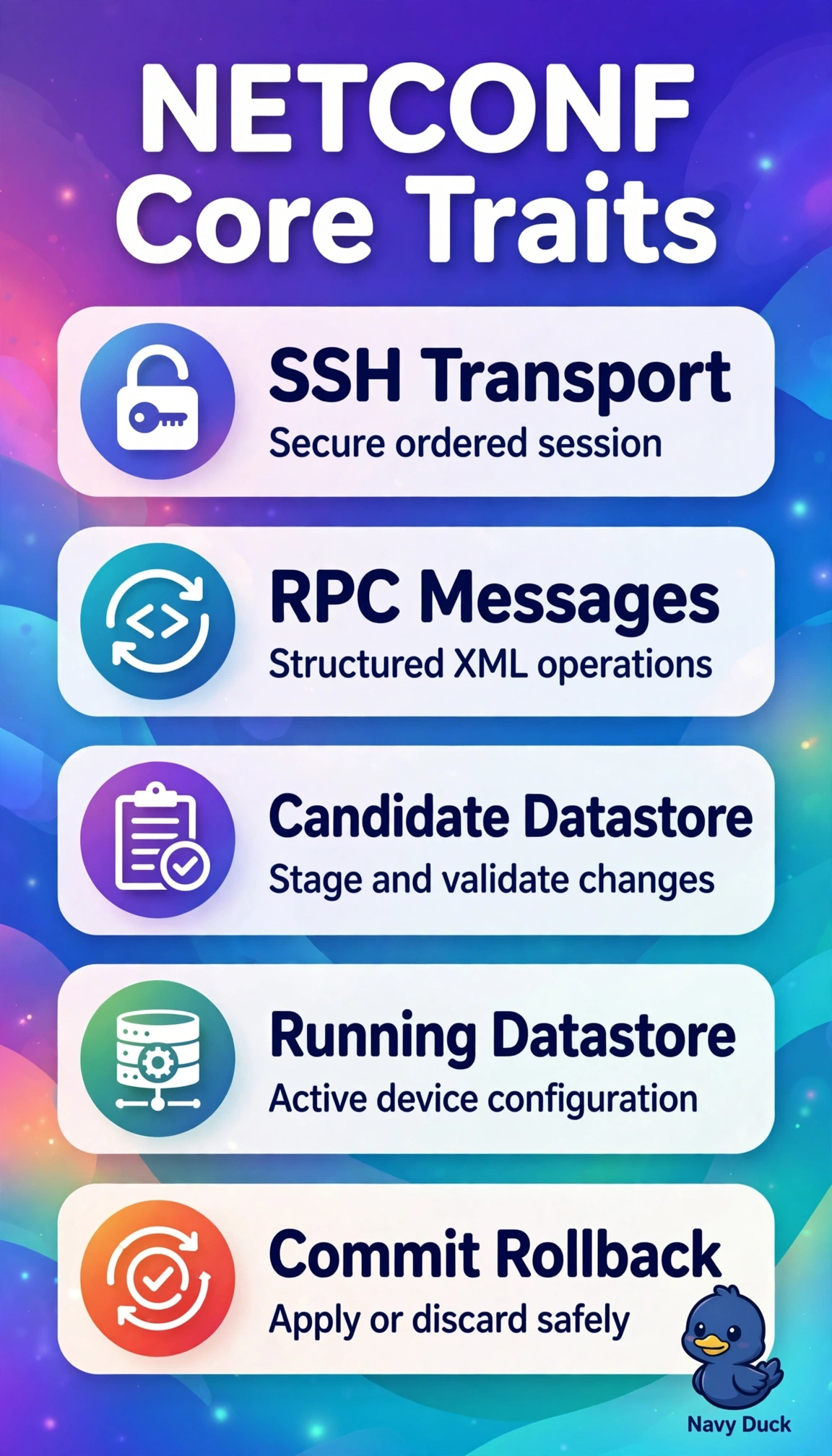
You need draft, review, then commit, not just fire-and-forget clicks. Datastores give you that safety net with candidate and running copies over SSH RPCs, like editing a contract in track changes. Web-style RESTCONF works differently.
Full Explanation
NETCONF is defined by SSH transport, XML-encoded RPC message exchange, and distinct datastores such as running, candidate, and startup that enable locking, validation, and commit or rollback semantics, which directly supports transactional configuration with error checking. RESTCONF over HTTPS fails by concept because although it models YANG data, it uses REST verbs and URIs without native NETCONF datastore transactions and sessions. SNMP over UDP fails by concept because polling and setting MIB objects lacks structured transactions, candidate validation, and secure RPC semantics for complex configuration workflows. gRPC streaming telemetry fails by concept because its strength is efficient operational data collection and subscription, not transactional configuration with candidate commit. For the exam, anchor on transport plus operations plus data modeling: NETCONF equals SSH plus RPCs plus datastores. In practice check device YANG support, lock handling, and confirm commit before closing the session.