
A bank automates Cisco campus switches plus third-party routers with NETCONF, needing common interface models where possible but also full access to Cisco-only platform knobs. The team debates which YANG sources to consume for portable versus platform-specific automation. Which differentiation of YANG models should the architect apply to guide model selection?
Select an answer to reveal the explanation.
Short Explanation
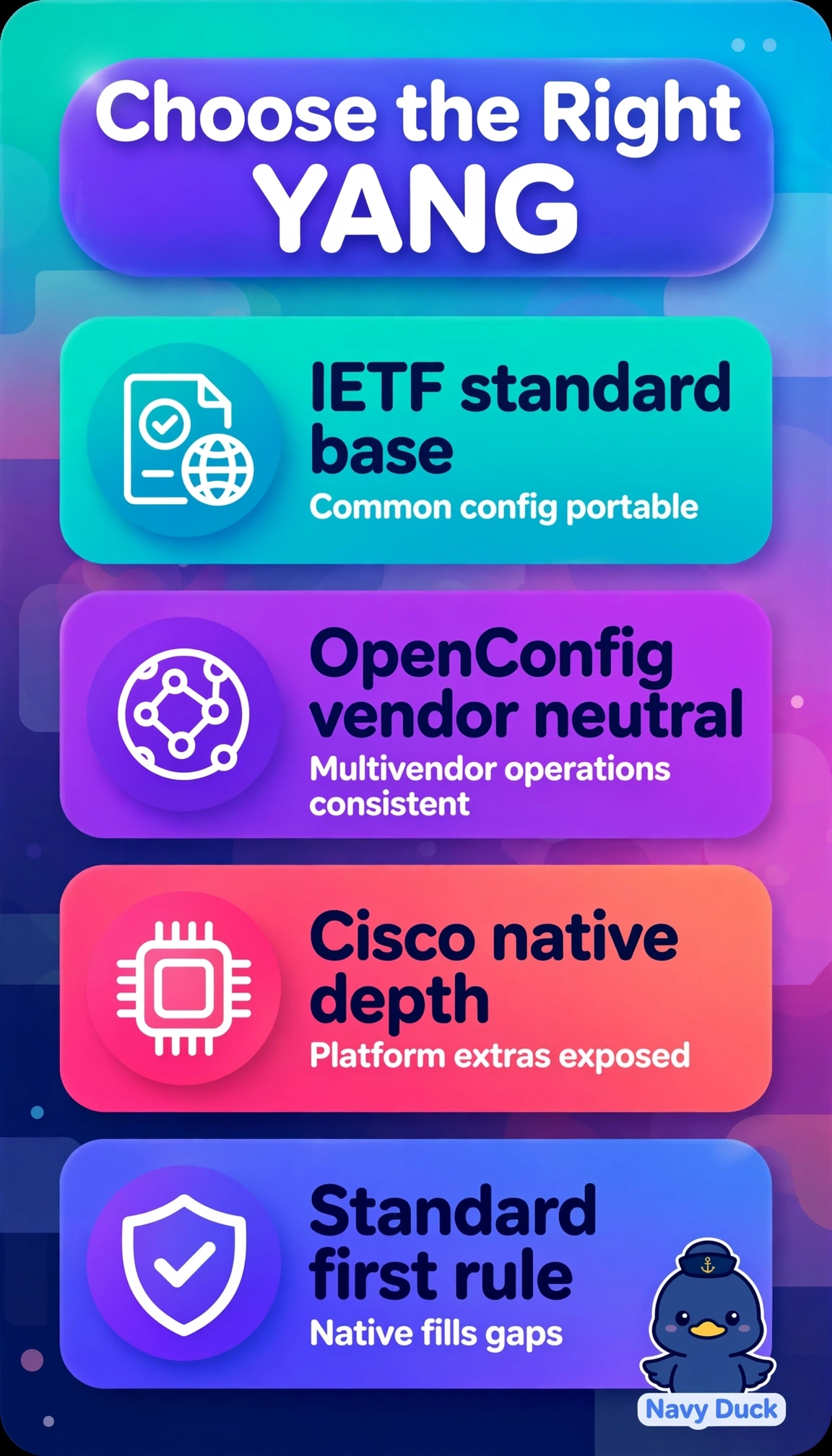
Portable where you can, specific where you must — that's the balance. Standards carry the common config while native models unlock extras, and scope tells you which to grab.
Full Explanation
The correct differentiation reflects layered YANG use for NETCONF automation: IETF models standardize common interface configuration and OpenConfig offers vendor-neutral structures usable across Cisco and third-party devices, maximizing template reuse, while Cisco native models expose complete platform-specific knobs, state and operations that standards intentionally omit. Extending IETF and OpenConfig to cover Cisco platform features fails because standards model the common denominator and cannot represent proprietary hardware, queuing, stacking or security extensions, leaving full platform access unmet despite good portability. Confining IETF models to third-party routers while configuring Cisco switches entirely with native models fails portability where possible because common interfaces would use divergent schemas, doubling template maintenance and preventing consistent validation across the estate. Keeping IETF for portable interfaces but using CLI automation for Cisco-specific features fails model-driven intent because CLI lacks YANG schema, structured datastores and NETCONF transactional semantics, reducing automation reliability and observability compared to native models. As an exam caveat, distinguish portable versus complete coverage rather than assuming newer or vendor-specific always replaces standards, and watch for wording like where possible signaling hybrid design. As a practical check, inspect advertised NETCONF capabilities and Cisco YANG Suite coverage, validate shared interface payloads on both vendors, then add native models strictly for gaps.