
A 500-person manufacturer is moving email to a hosted suite, building custom logistics code on a hosted platform, and keeping legacy ERP on virtual machines it manages in a public cloud. Leadership wants clear ownership for patching, scaling, and WAN capacity planning. Which cloud responsibility mapping guides network design for these three workloads?
Select an answer to reveal the explanation.
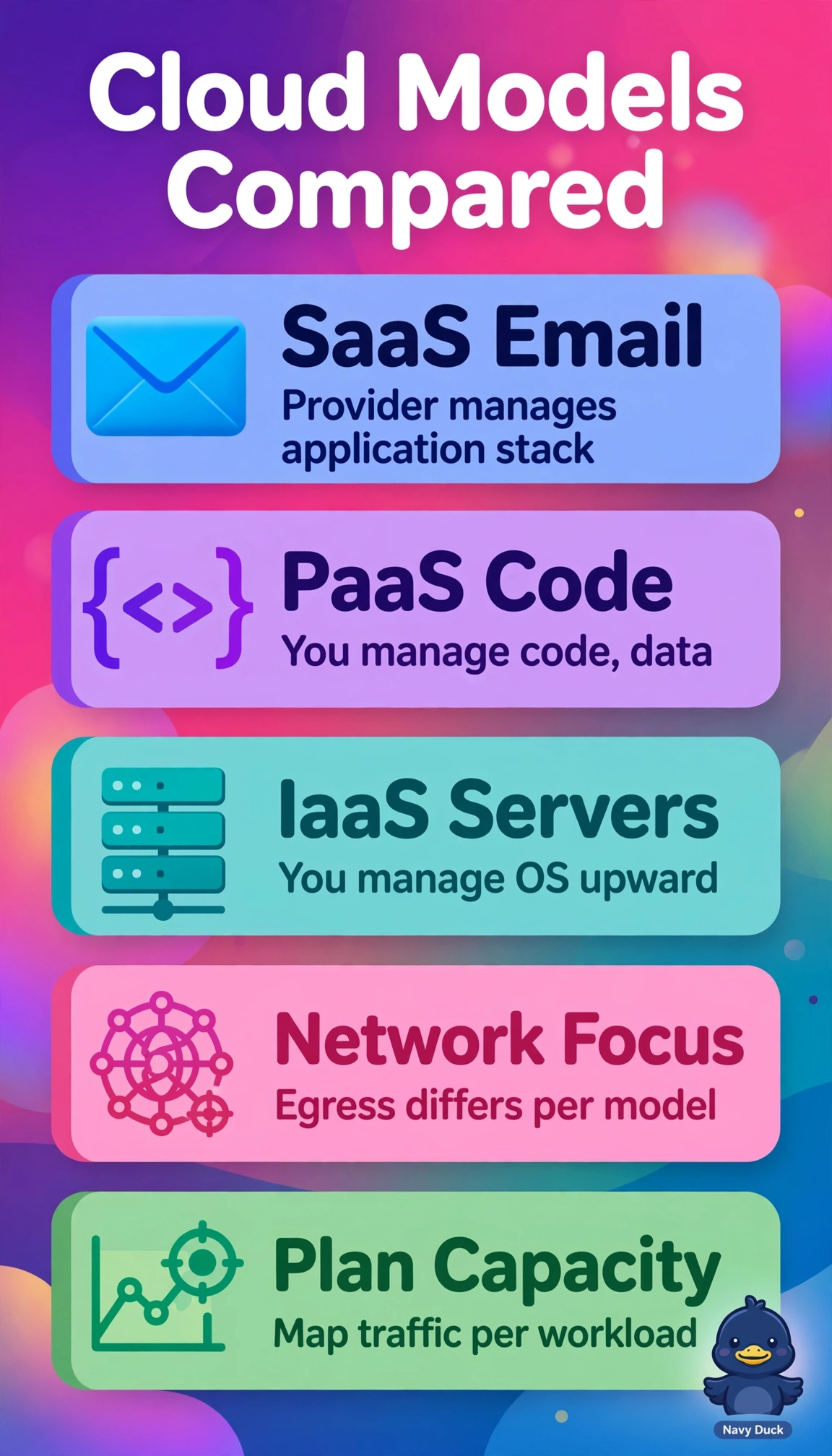
Short Explanation
You're sorting who cooks, who provides the kitchen, and who just rents the building. Nailing the boundaries tells you where your WAN and security duties start and stop.
Full Explanation
SaaS shifts application and platform management to the provider so enterprise network design focuses on Internet egress, performance, and access security for email, PaaS shares responsibility with the provider managing the platform while the customer manages code and data so design focuses on API and database connectivity for logistics, and IaaS leaves operating system and application responsibility with the customer so design must address virtual networking, addressing, and hybrid connectivity for ERP. Treating everything as SaaS fails by concept because it misassigns control and ignores customer duties for custom code and virtual machines. Treating everything as IaaS fails by concept because it overstates customer control and leads to overdesigned management and patching for consumed services. Swapping the labels fails by concept because it reverses actual responsibility and produces wrong design priorities for email, platform code, and virtual machines. For the exam, link each model to who patches what, then validate traffic patterns and direct versus Internet egress needs for each workload.