
A regional hospital runs an eight-class enterprise QoS model with voice, video, clinical apps, and bulk backup, but its MPLS provider supports only four classes with DSCP-based ingress policing that re-marks out-of-profile traffic. Voice must stay priority and clinical apps must beat bulk backup after handoff. Which enterprise-to-provider mapping approach preserves intent across the WAN?
Select an answer to reveal the explanation.
Short Explanation
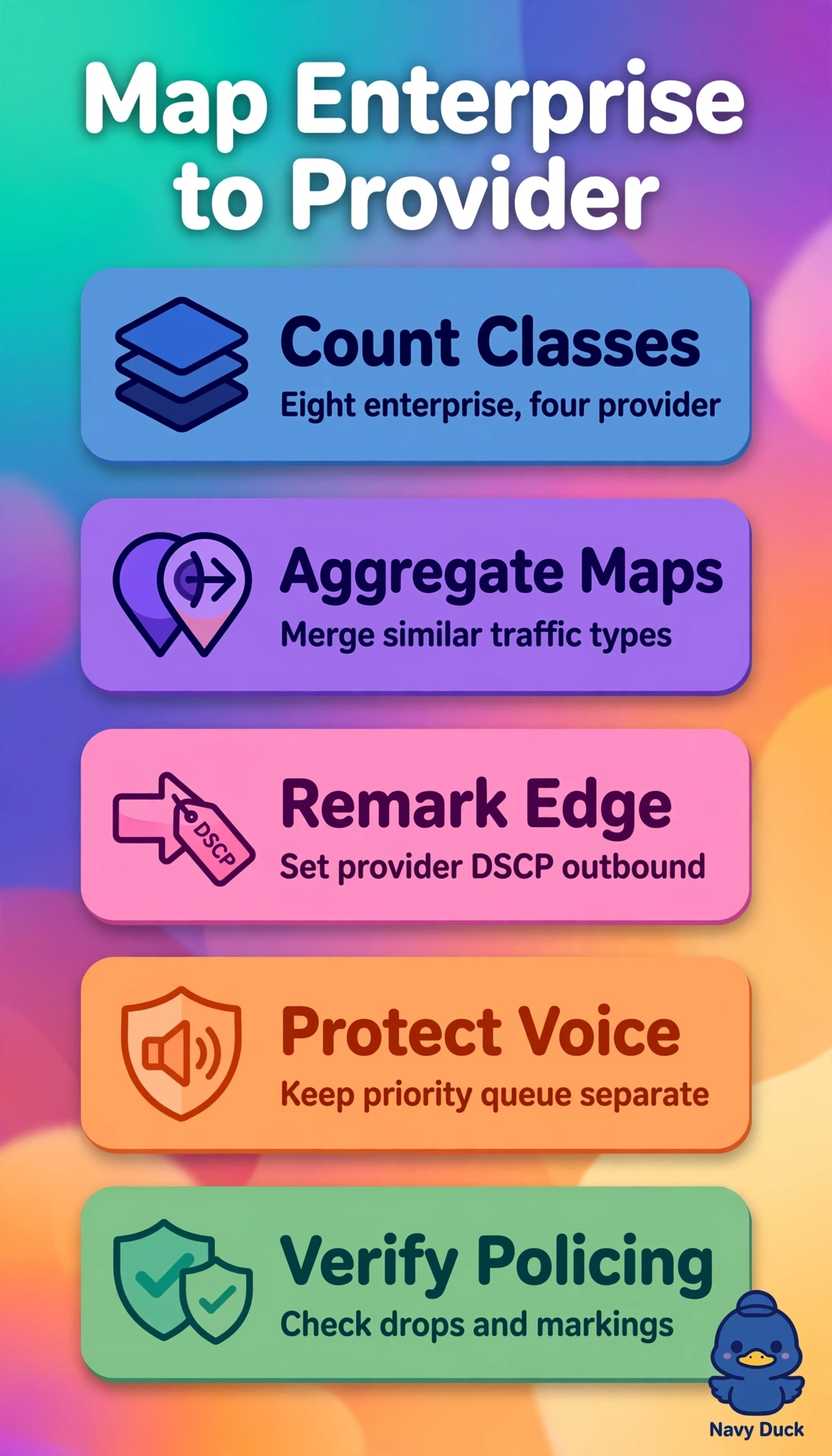
You've got more flavors than the carrier sells, so you blend them at the counter. Merging your aggregation plan at the edge keeps voice first and backup last, just with fewer buckets.
Full Explanation
Enterprise QoS commonly uses more granular classes than a service provider offers, so the design must aggregate multiple enterprise classes into fewer provider classes at the enterprise-managed egress edge with explicit DSCP remarking that aligns to the contracted model, preserving relative priority for voice and critical apps while accepting that some classes share a provider queue. Trusting DSCP end-to-end fails by concept because the provider polices and re-marks anything outside its model, so excess classes lose their intended treatment. Marking everything critical as priority fails by concept because it inverts proper classification and causes policer drops plus starvation of real-time traffic. Relying on encryption with provider inference fails by concept because encrypted headers hide application identity and providers cannot classify without the agreed DSCP marking. For the exam, remember the mapping is done on the enterprise edge, not inside the provider core, and always verify the provider class definitions and policer behavior with a traffic capture showing egress DSCP values.