
A hospital deploys SD-WAN with isolated traffic for clinical devices, guest Wi-Fi, transport underlay, and router management, requiring separation even if overlays fail. Engineers must assign VPNs correctly on WAN Edge routers. Which assignment of service VPNs, VPN 0 and VPN 512 reflects their roles?
Select an answer to reveal the explanation.
Short Explanation
Wards, hallways, and staff-only closets each need their own doors. VPN roles keep user segments separate from transport and management. Mix them up and isolation falls apart when you need it most.
Full Explanation
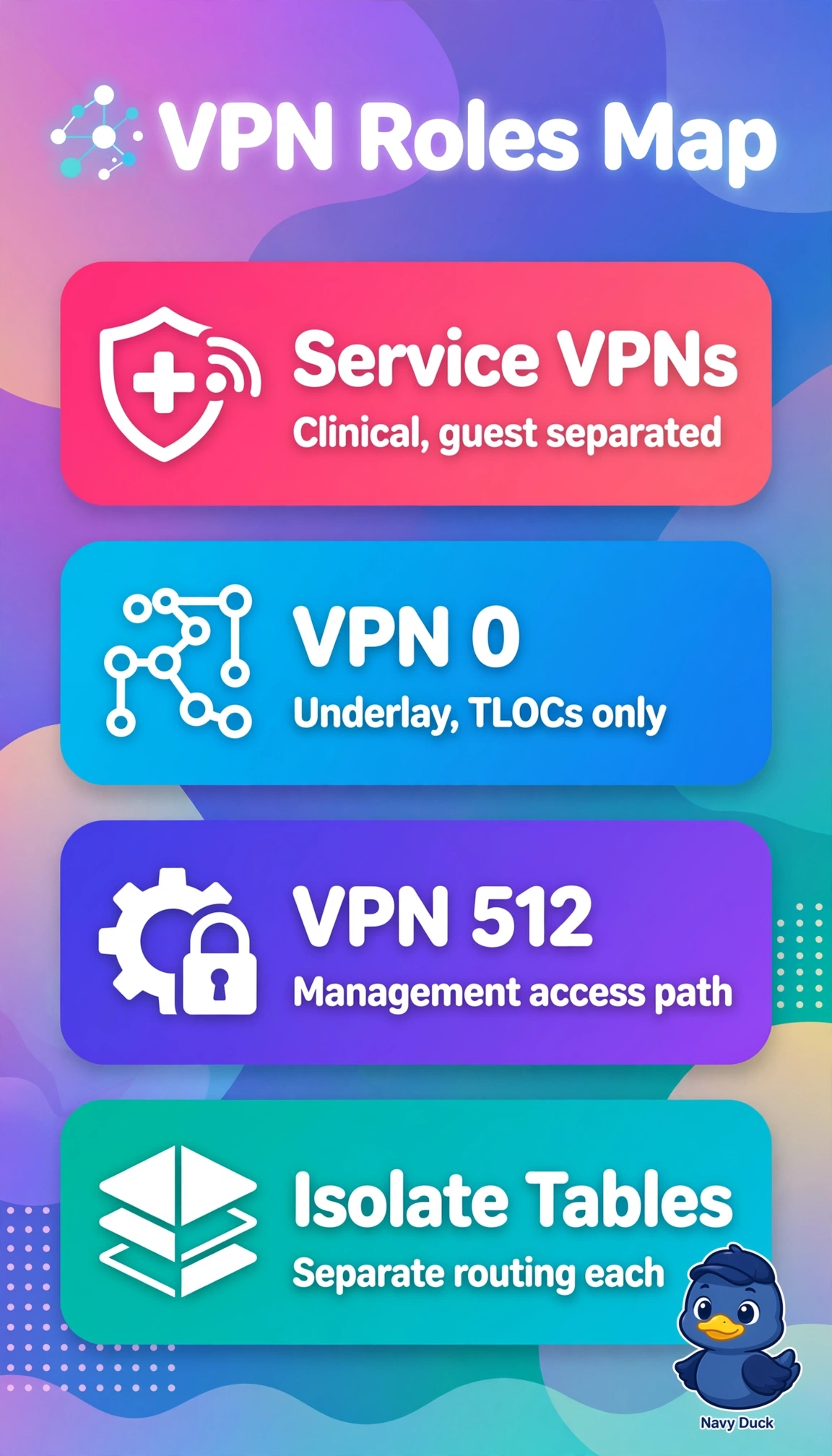
Service VPNs, typically numbered 1 and higher, carry user and application traffic with isolated routing tables per segment such as clinical and guest, while VPN 0 is always the transport VPN containing WAN underlay interfaces and TLOCs for control and IPsec, and VPN 512 is always the out-of-band management VPN for interfaces and processes reachable by SD-WAN Manager, preserving management access even when overlay data fails. Using VPN 0 for clinical and guest fails because transport interfaces and internet routes would mix with sensitive LANs, using VPN 512 for clinical transport fails because the management VPN is not designed for user forwarding or overlay TLOCs, and using service VPNs for underlay transport fails because TLOCs and control connections must reside in VPN 0 while management must stay in 512. Exam caveat: memorize that 0 equals transport and 512 equals management, everything else is service segmentation. Practical check: show running VPNs on the Edge and confirm WAN interfaces sit in VPN 0, management interface in 512, and clinical and guest subnets in distinct service VPNs.