
An MSP manages 500 WAN Edge routers and needs nightly inventory, tunnel statistics and alarm history exported to its dashboard without manual clicks in SD-WAN Manager. Scripts must scale and reuse authentication efficiently. Which REST API monitoring approach should the engineer implement to satisfy bulk automation needs?
Select an answer to reveal the explanation.
Short Explanation
You need a conveyor belt, not hand-carrying boxes nightly. Authenticated API-pagination pulls inventory and stats in bulk reliably for your dashboard.
Full Explanation
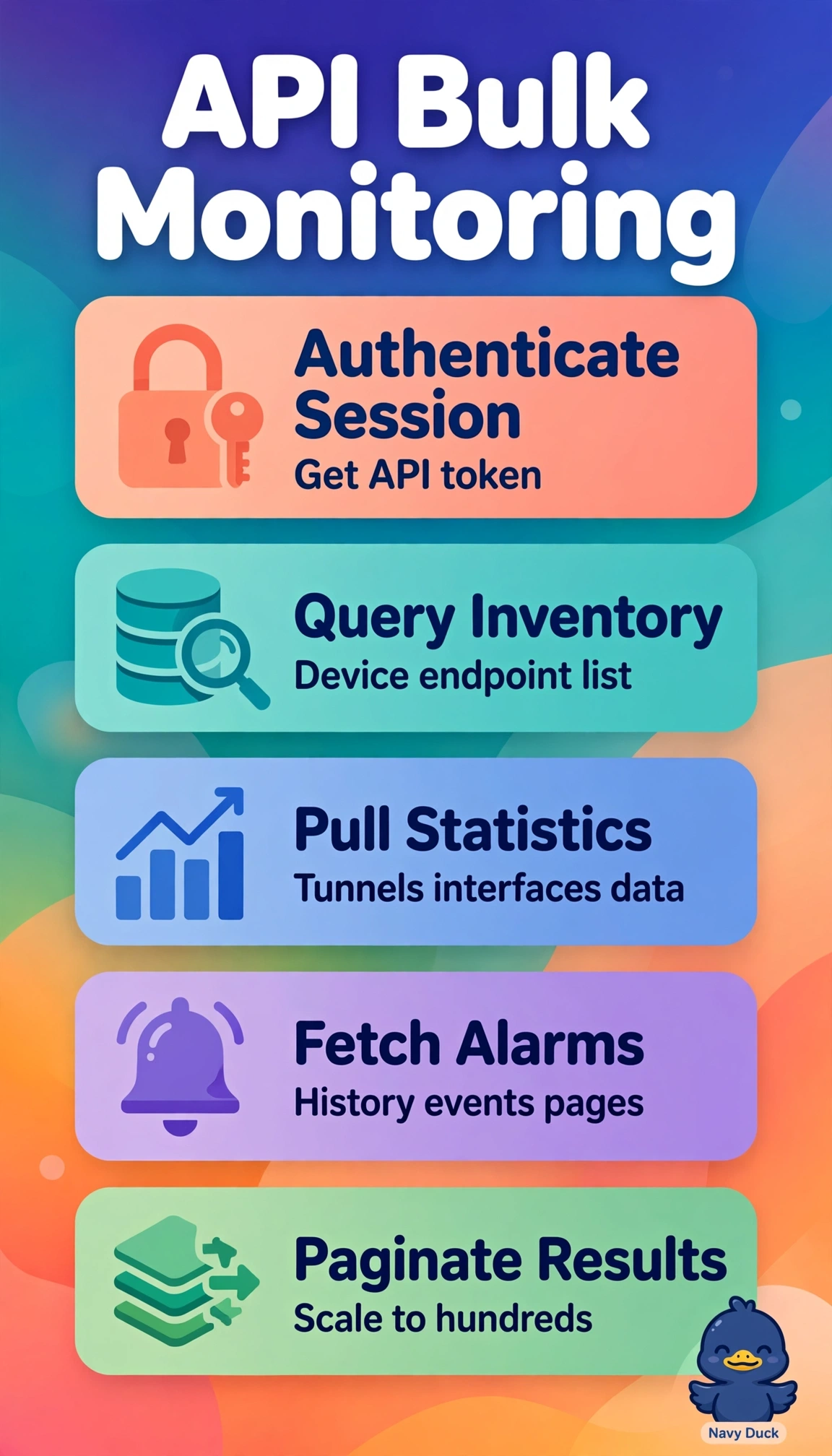
The correct approach succeeds because a persistent authenticated session minimizes login overhead while targeted queries against device, statistics, and alarm endpoints deliver all three required datasets, with pagination ensuring reliable bulk retrieval across 500 routers for unattended nightly export. A single bulk response without paginated iteration is common in small labs and looks efficient, yet it fails scalability because SD-WAN Manager limits payload size, so large inventories cause timeouts, truncation, or memory errors without paging. Generating a fresh login token for each paginated call reflects a valid stateless security pattern, yet it fails efficiency because repeated authentication increases controller load, risks throttling or lockout, and slows scheduled jobs versus reusing one session cookie. Collecting inventory and tunnel statistics for capacity trending is widely automated and operationally valuable, yet it fails completeness because alarm history archives are explicitly required for troubleshooting and dashboard reporting. For exam purposes, distinguish nightly historical bulk collection from real-time polling or single-device troubleshooting, as words like nightly, bulk, and history signal paginated archive queries. As a practical check, verify in the lab that one login supports repeated calls, that scroll-based or paged queries return complete result sets, and that the merged export contains device, tunnel, and alarm data.