
A call center marks voice EF and signaling AF31 at phones, but the MPLS provider re-marks all inbound traffic to default and Internet traffic arrives untrusted. The WAN Edge must enforce enterprise markings outbound and restore them on return traffic consistently. Which QoS DSCP marking and remarking approach on the Edge achieves this requirement?
Select an answer to reveal the explanation.
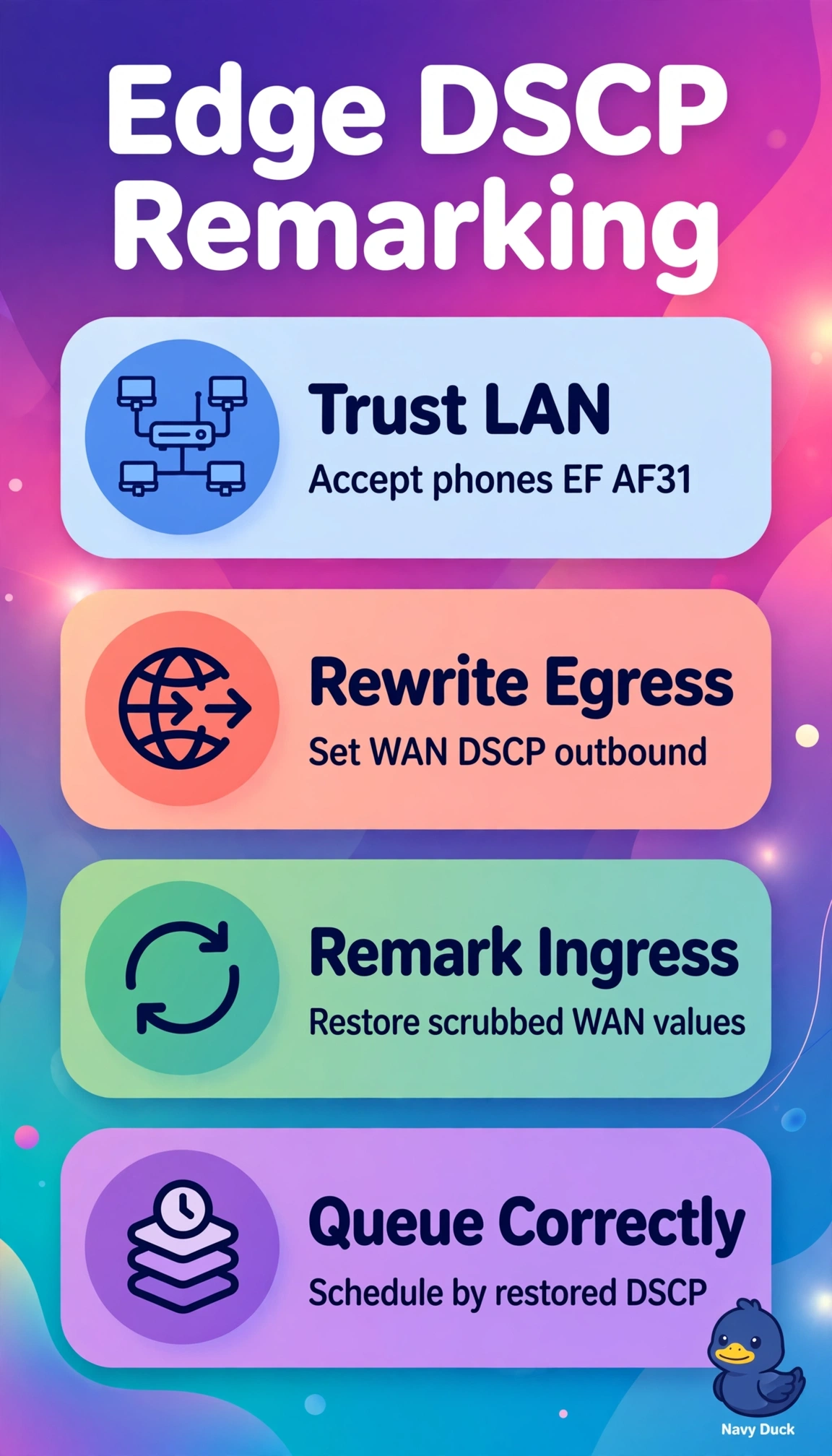
Short Explanation
You preserve the phones’ voice and signaling markings as they leave the LAN, then rebuild them after the provider resets them. That clear trust boundary keeps enterprise priorities consistent in both directions without trusting untrusted Internet markings.
Full Explanation
Trusting inbound LAN markings preserves the phones’ EF voice and AF31 signaling classifications, while egress rewrite rules ensure the DSCP values sent toward the provider reflect enterprise policy. Explicit WAN ingress remarking maps return traffic back to EF and AF31 after the MPLS provider has reset its markings to default, restoring the intended priorities. By contrast, trusting WAN DSCP whenever it is non-default relies on markings the provider may have erased, so default-marked return traffic remains unclassified. Remapping both voice and signaling to EF fails because it collapses the distinct AF31 signaling class into the voice class, potentially disrupting per-class treatment and queue behavior. Restoring EF and AF31 on all MPLS and Internet ingress fails because Internet traffic is untrusted; applying those markings indiscriminately could elevate arbitrary traffic into priority queues. An exam caveat: distinguish trusting a received marking from rewriting DSCP on egress and remarking ingress traffic after bleaching; the policy must also avoid granting priority to untrusted Internet traffic. In practice, inspect the interface policy counters with show policy-map interface and use pre- and post-Edge captures to confirm outbound EF/AF31, restored MPLS return markings, and appropriate handling of Internet traffic.