
A bank manages 300 branches with legacy device templates attached per device, and every WAN interface change forces a full template re-push. The team wants modular reusable blocks for system, transport and service VPNs with separate variables. Which configuration approach should the architect choose to replace legacy device templates?
Select an answer to reveal the explanation.
Short Explanation
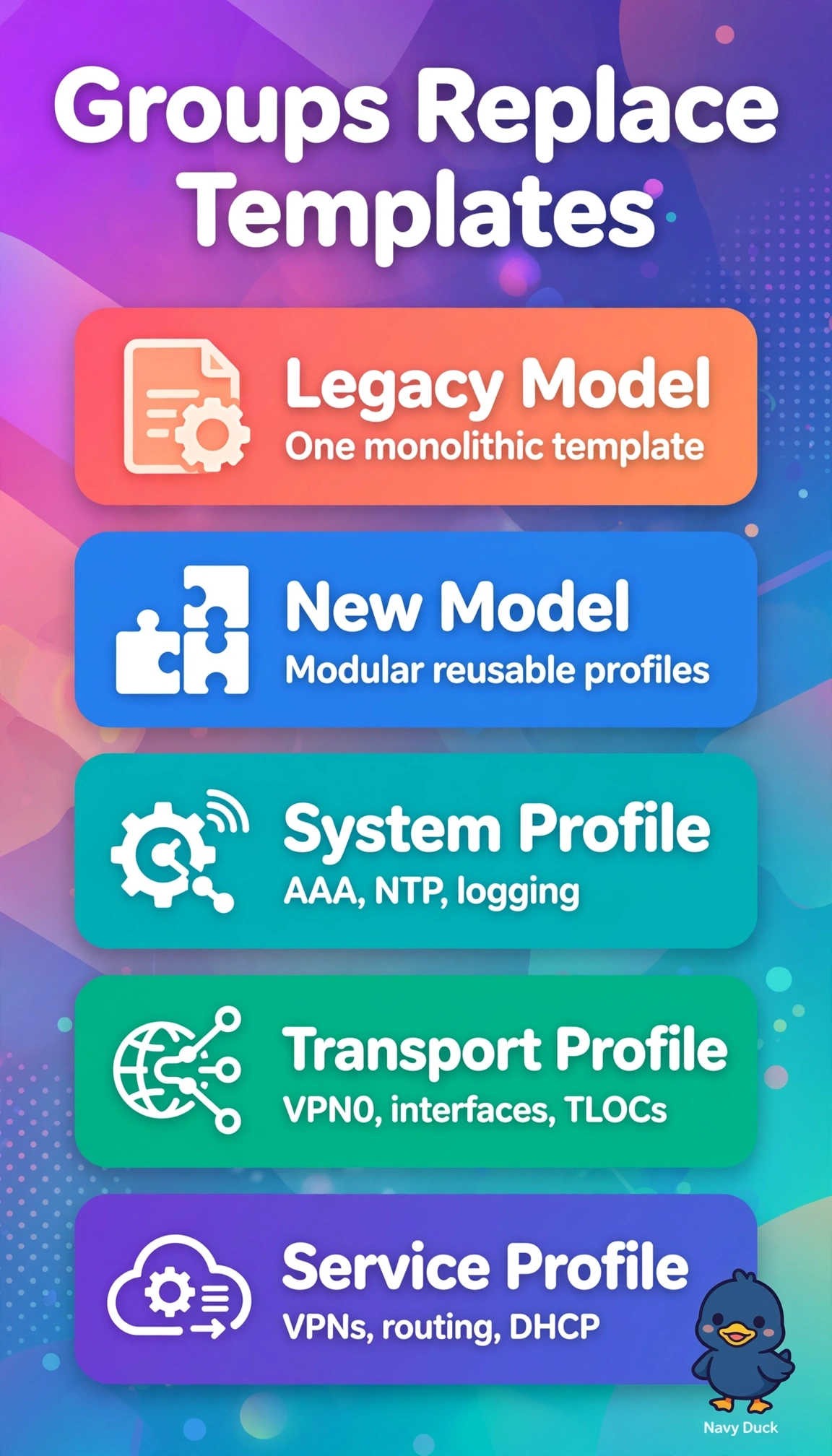
You're moving from one giant blueprint to snap-together bricks. Feature profiles let you reuse system, transport and service blocks across many sites.
Full Explanation
Legacy device templates bind feature templates to a device template as a monolithic object, so a small WAN change often requires editing and reattaching the whole template. Configuration groups decouple intent using feature profiles for System, Transport and Management, Service, and Other, plus associated policy, allowing the same profile to be shared across sites with site-specific variables and day-N provisioning. CLI templates with variables remain device-CLI attachments and do not provide the Manager UI modular profile hierarchy or scoped inheritance. Policy groups handle centralized data, AAR and security intent, not device feature configuration for interfaces and system. Security groups and zones define segmentation enforcement, not reusable device configuration blocks. For the exam, associate configuration groups with modern modular deployment and device templates with legacy monolithic deployment; in SD-WAN Manager check Configuration > Configuration Groups to see profiles split by System, Transport and Service.