
A campus has IOS XE routers running traditional routing that must join the SD-WAN overlay, while one router must stay on classic CLI routing for a legacy lab. Which operating mode distinction allows fabric membership versus standalone routing on these platforms?
Select an answer to reveal the explanation.
Short Explanation
You're threading old and new together well — controller mode joins the fabric. Like switching a phone from offline to cloud-managed, mode decides who orchestrates.
Full Explanation
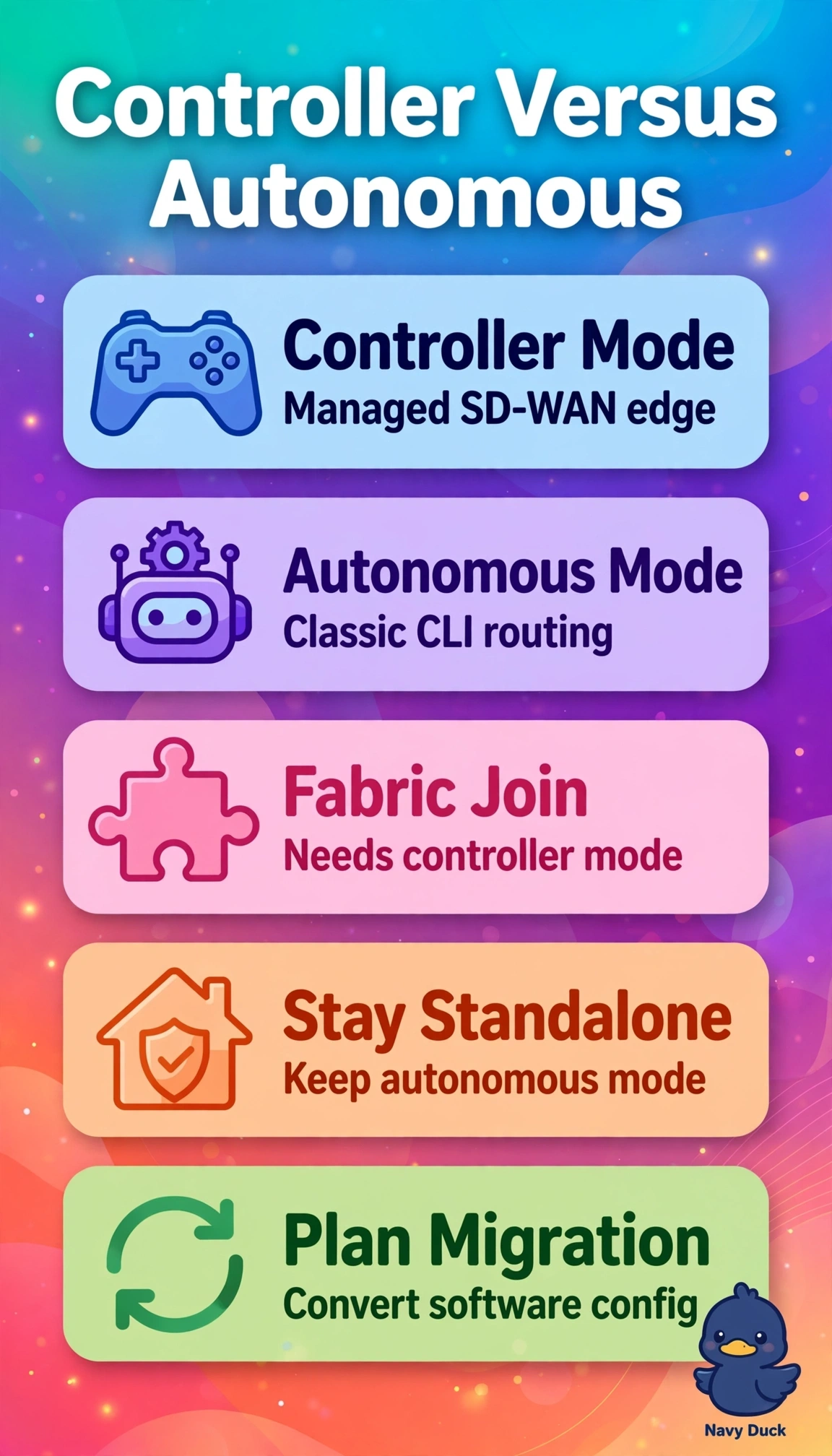
IOS XE SD-WAN-capable routers operate in controller mode when managed as SD-WAN edges by SD-WAN Manager and SD-WAN Controller (formerly vManage and vSmart) with overlay control connections, versus autonomous mode for traditional IOS XE routing with classic CLI, so fabric members need controller mode while the legacy lab stays autonomous. The reversed mode approach fails because autonomous devices cannot form SD-WAN control connections and controller-mode devices are not standalone classic routers. The ROM monitor approach fails because ROMMON is a bootstrap recovery state, not a routing operating mode for production forwarding. The all-controller without management approach fails because controller mode inherently implies centralized management, so disabling it contradicts fabric membership. Exam caveat: changing modes typically requires software and configuration migration planning, not just a hostname change. Practical check: check the operating mode shown in show version and bootstrap readiness before migrating each router.