
A logistics firm uses app-aware routing for barcode scanners over LTE and broadband with strict loss and latency limits, but remote sites occasionally lose both preferred paths during storms. Operations requires scanners to keep working on the single best available path. Which fallback behavior applies when no tunnel meets the SLA class?
Select an answer to reveal the explanation.
Short Explanation
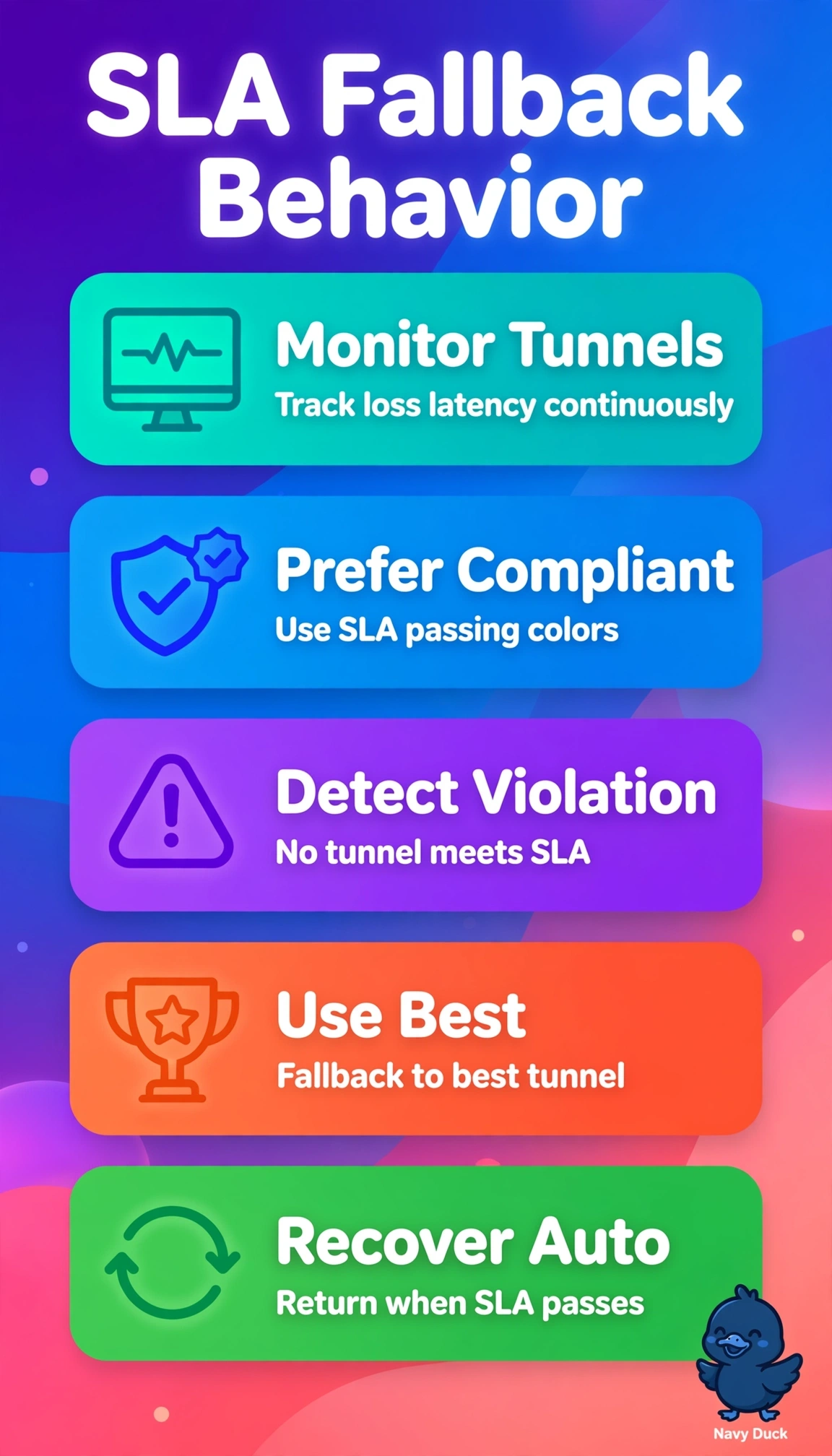
You’re keeping critical scanners moving when every path misses its SLA thresholds. Best-tunnel fallback chooses the least-bad available route instead of making you wait or dropping traffic.
Full Explanation
When no tunnel meets the SLA class, app-aware routing can still keep critical scanners working by forwarding traffic over the single best available tunnel, even though that path violates the class thresholds. The router continues to measure loss and latency, selects the best remaining path, and can log the violation; the SLA guides preference but does not force traffic to stop. Spreading scanner sessions across all remaining tunnels may increase total capacity, but it conflicts with the requirement to use one best path and can cause reordering for transactional scanner flows. Queuing traffic at the edge until an SLA-compliant tunnel returns may suit delay-tolerant synchronization, but it pauses scanner service instead of maintaining continuity. Strictly policing loss- and latency-exceeding packets preserves the thresholds by dropping traffic, which defeats the required fallback availability. Exam caveat: distinguish tolerating a threshold breach within the existing SLA class from creating a relaxed class or requiring every path to comply; fallback retains measurement and path preference while accepting a breach. Practical check: inspect the policy for best-path fallback, verify its tie-breakers and violation logging, then simulate failure of all compliant tunnels and confirm scanners continue over one optimal tunnel without spreading, queuing, or being dropped by strict policers.