
A hospital runs app-aware routing for telehealth over two transports with BFD at 500 ms and app-route poll at 5 minutes, but failover to the better path takes minutes after brownout and clinicians complain. Loss starts suddenly while BFD stays up briefly. Which tuning of BFD and app-route polling best speeds application-aware convergence for this brownout case?
Select an answer to reveal the explanation.
Short Explanation
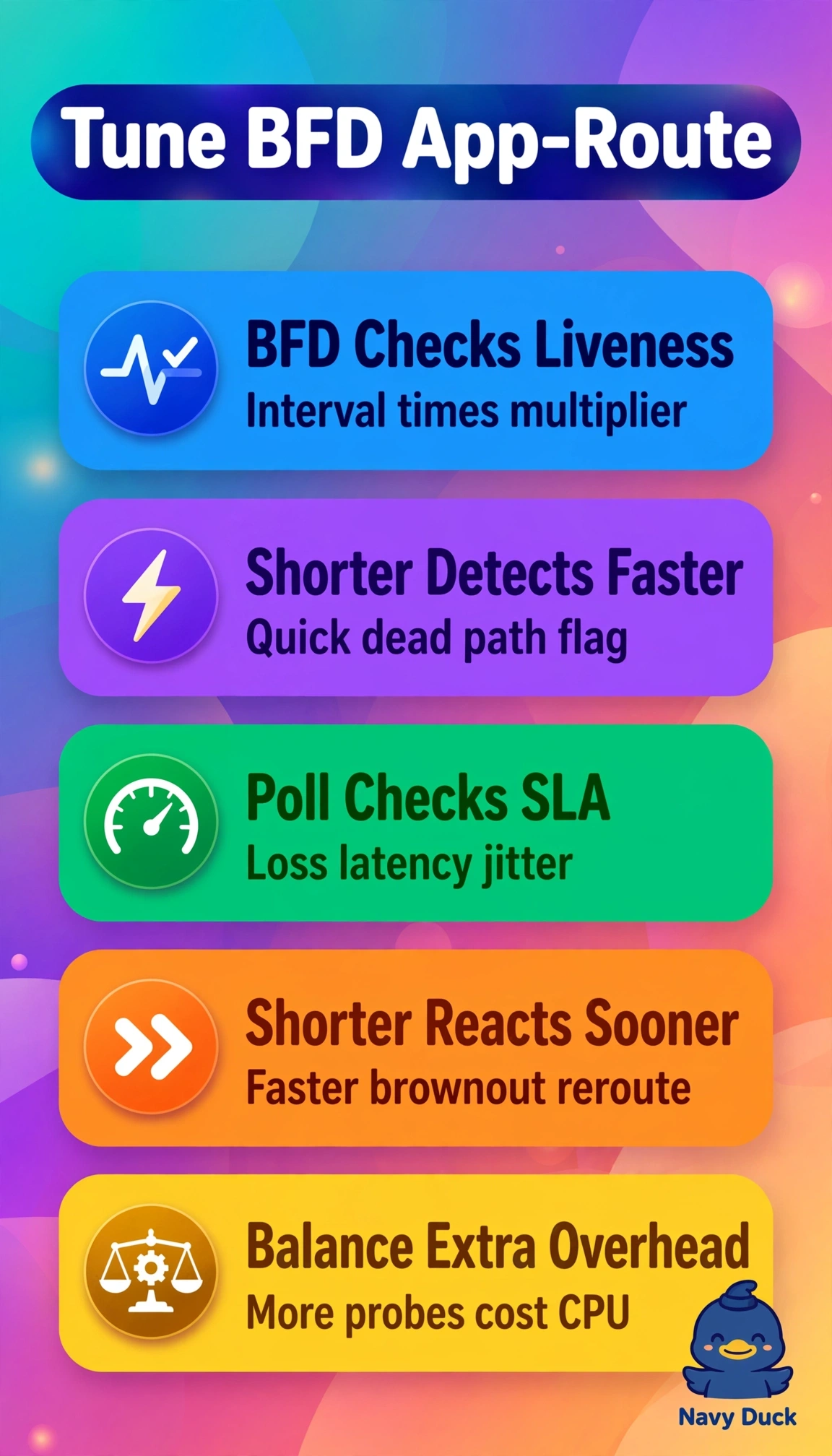
Your alarms are napping while the clinic needs a sprint, so tighten both tripwires. Faster probing catches dead paths quickly and frequent SLA checks reroute telehealth sooner.
Full Explanation
BFD interval times multiplier sets dead-path detection speed on each tunnel, so shorter values detect hard failures faster at cost of overhead, while the app-route poll interval controls how often edge devices sample SLA metrics like loss, latency and jitter for application-aware routing decisions, so shorter polling reacts to brownouts sooner at cost of more measurements. Lengthening BFD delays failure detection despite faster SLA sampling, lengthening app-route polling leaves SLA-based rerouting sluggish despite fast BFD, and lengthening both prioritizes stability and overhead over convergence and prolongs poor quality. For the exam remember BFD governs tunnel liveness and app-route polling governs SLA re-evaluation, and verify with SD-WAN Manager (formerly vManage) BFD sessions and app-route SLA history plus configured timers under the BFD and SLA templates.