
A healthcare network runs voice and EHR over MPLS and broadband, and clinicians report choppy calls when broadband degrades while EHR must stay stable. The design needs voice to prefer low loss, latency and jitter paths and move if SLA fails. Which app-aware routing configuration enforces voice SLA criteria and preferred colors?
Select an answer to reveal the explanation.
Short Explanation
You're protecting voice from wobbly links while letting EHR ride along. An SLA-class works like a health check that only lets strong tunnels carry the call.
Full Explanation
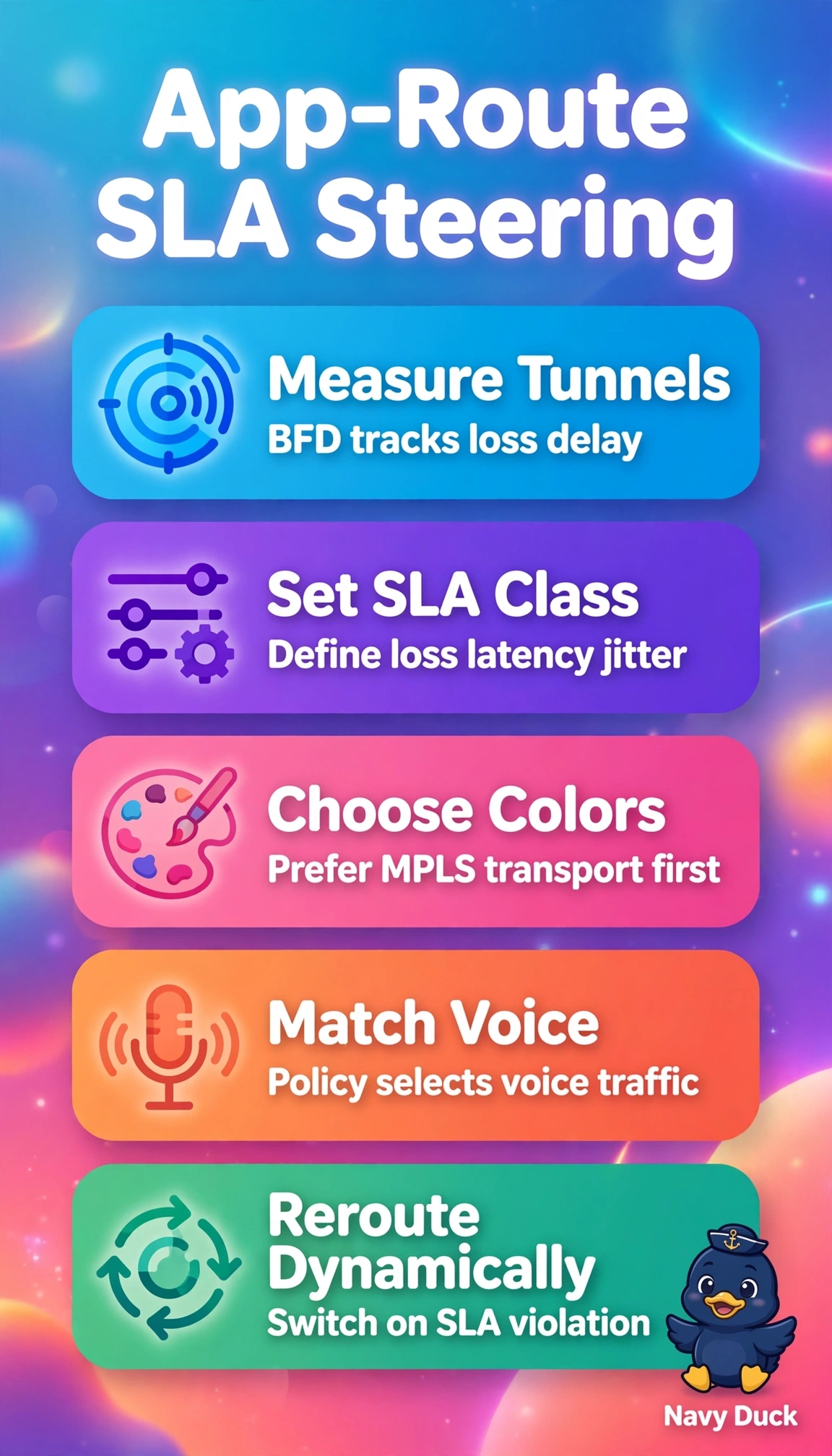
Application-aware routing measures per-tunnel loss, latency and jitter with BFD and compares results to an SLA class referenced by a centralized policy sequence, forwarding matching applications over preferred colors only while those tunnels remain compliant and moving traffic when violations occur. The SLA class with preferred colors is correct because it directly encodes voice tolerances and transport preference into the control decision distributed by SD-WAN Controller (formerly vSmart) to WAN Edges. A QoS map fails by concept because queuing and scheduling prioritize packets within an interface but do not select or switch tunnels based on measured path SLA. Using backup OMP routes fails by concept because OMP route preference controls control-plane advertisement, not dynamic data-plane tunnel selection based on real-time measurements. A data prefix-list fails by concept because it only matches destination prefixes and cannot express performance thresholds or measurement logic. Exam caveat is that app-route requires DIA or multiple colors to have effect and SLA values only set thresholds rather than guarantee bandwidth, and practical check is to monitor tunnel SLA status and app-route changes in SD-WAN Manager.