
A healthcare network runs voice over MPLS and broadband with requirements of under 150 ms latency, under 30 ms jitter and under 1% loss, preferring MPLS but failing over to broadband on violation. Which app-route policy design enforces SLA-class criteria with preferred colors for voice traffic?
Select an answer to reveal the explanation.
Short Explanation
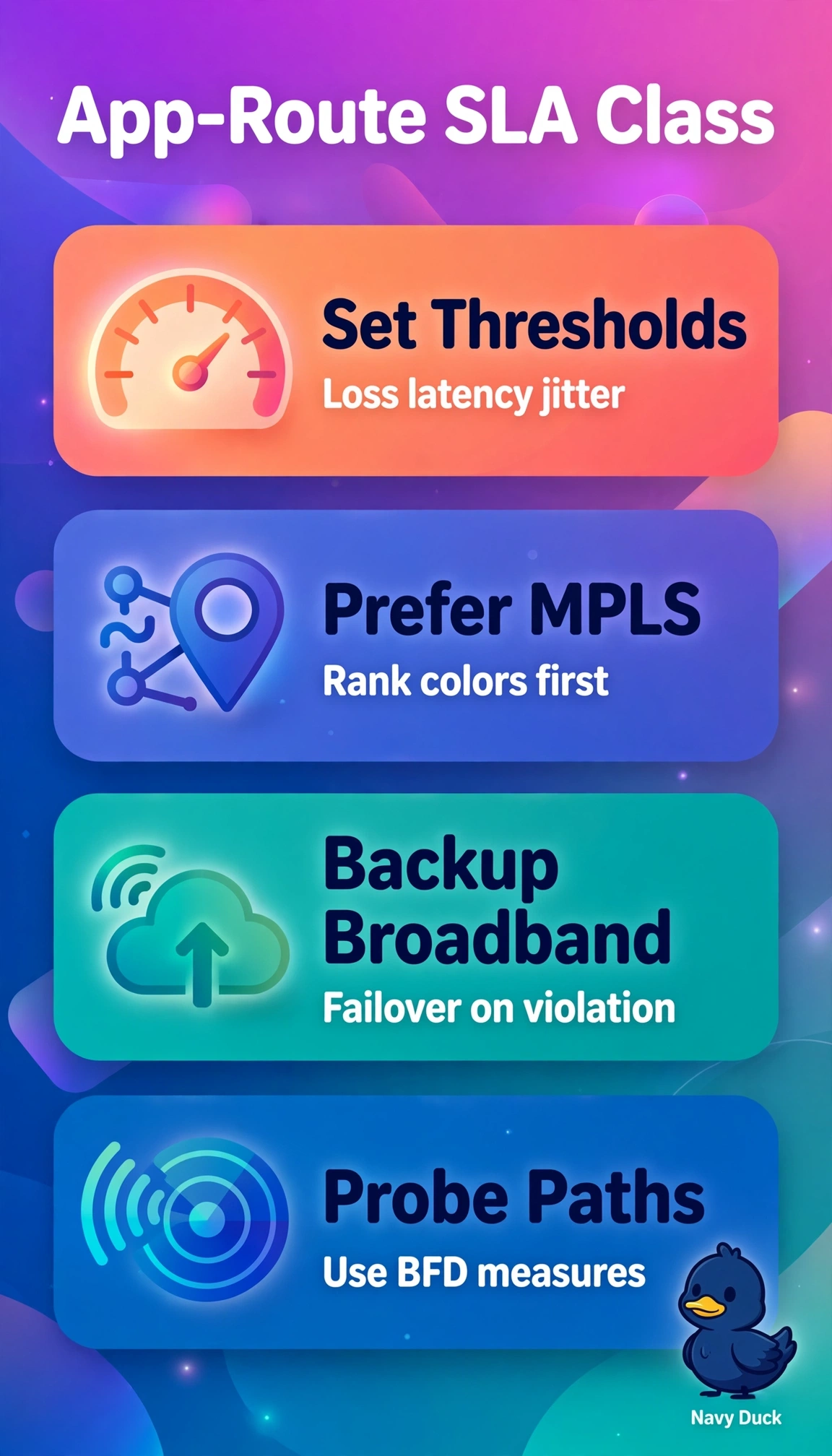
You keep voice crisp by measuring the right service targets and ranking paths. An SLA class with latency, jitter, and loss thresholds plus preferred MPLS colors and broadband backup steers calls while preserving failover.
Full Explanation
The design with an SLA class covering latency, jitter, and loss, plus preferred MPLS colors and broadband backup, matches the voice targets: under 150 ms latency, under 30 ms jitter, and under 1 percent loss. Traffic uses MPLS while it meets those criteria and can fail over to broadband when it violates them, providing both performance assurance and resilience. An SLA class that measures only latency and loss omits jitter, which matters because variation in packet arrival can make voice choppy even when average latency and loss seem acceptable. A design with all three thresholds that strictly pins voice to MPLS has no failover, so calls may degrade during an MPLS brownout instead of rerouting. A design using 250 ms latency with 30 ms jitter and 1 percent loss sets a more permissive latency target than the stated voice requirement; its preferred-path backup logic cannot make that relaxed threshold suitable. Exam caveat: application-aware routing needs both an SLA class and distinct preferred and backup color actions; missing a metric or backup action undermines the policy. Practical check: verify the class matches the voice service agreement, then inject latency, jitter, or loss to confirm traffic moves to broadband and returns when MPLS recovers.