
A company needs ten rugged branches, fifty retail sites with local compute, and bursting cloud workloads in AWS. The architect must balance ruggedization, virtualization and cloud integration while keeping centralized management. Which WAN Edge platform mix best matches hardware, virtual and cloud-hosted capabilities?
Select an answer to reveal the explanation.
Short Explanation
You match the platform to the place when rugged meets retail meets cloud. Hardware for harsh sites plus virtual and cloud-hosted edges covers every need centrally.
Full Explanation
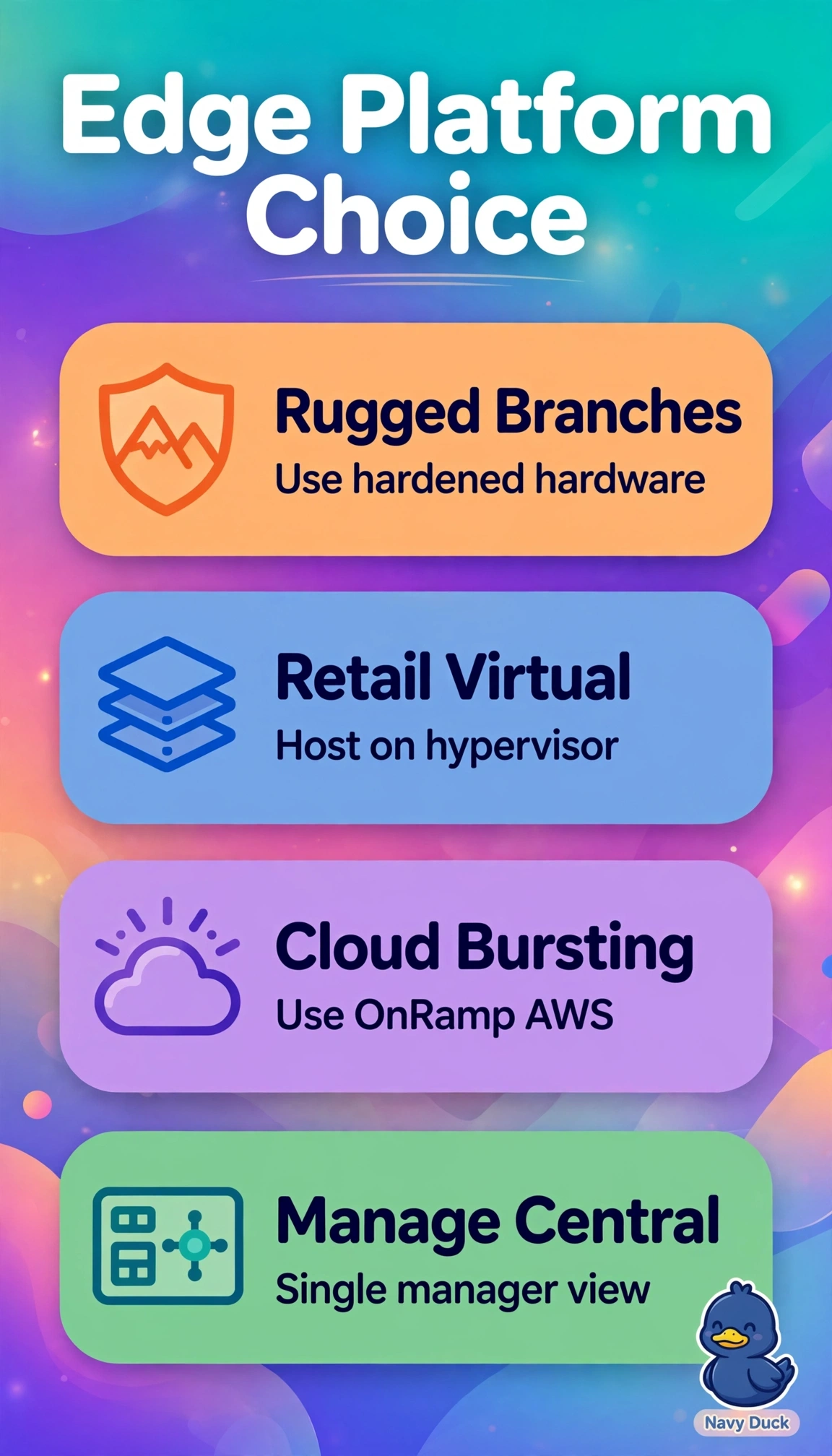
The correct mix aligns each platform to its environment while preserving centralized policy through SD-WAN Manager: ruggedized Catalyst IR routers tolerate temperature, vibration, dust and power variability at industrial branches, Catalyst 8000V virtual edges run on existing retail hypervisors to consolidate routing with local compute without extra boxes, and Cloud OnRamp automates secure optimized connectivity for bursting workloads in AWS. A design using standard routers at harsh sites supports virtualization and cloud well but fails on ruggedization because commercial temperature ranges, enclosures and certifications do not meet industrial requirements. A design using physical appliances at all fifty retail stores supports rugged and cloud needs but fails on virtualization economics because it ignores available hypervisor capacity and increases footprint and sparing. A design retaining rugged and virtual edges but using manual data-center backhaul to AWS provides basic connectivity but fails on cloud integration because it lacks automated gateway provisioning, SLA-based steering and direct offload, adding latency and overhead. Note that the older vEdge platforms, including vEdge Cloud, are end-of-sale, so current designs use IOS XE SD-WAN devices such as Catalyst 8000-series and IR-series. In practice, verify rugged SKU ratings, confirm KVM or VMware sizing for virtual edges, and validate AWS regions, gateway licensing and Manager templates.