
A university backs up research data nightly over a constrained 20-Mbps MPLS link with highly repetitive file transfers, while interactive browsing shares the same path. Leaders want lower backup time without buying bandwidth. Which App-QoE data redundancy elimination use best reduces repeated bytes where it helps most?
Select an answer to reveal the explanation.
Short Explanation
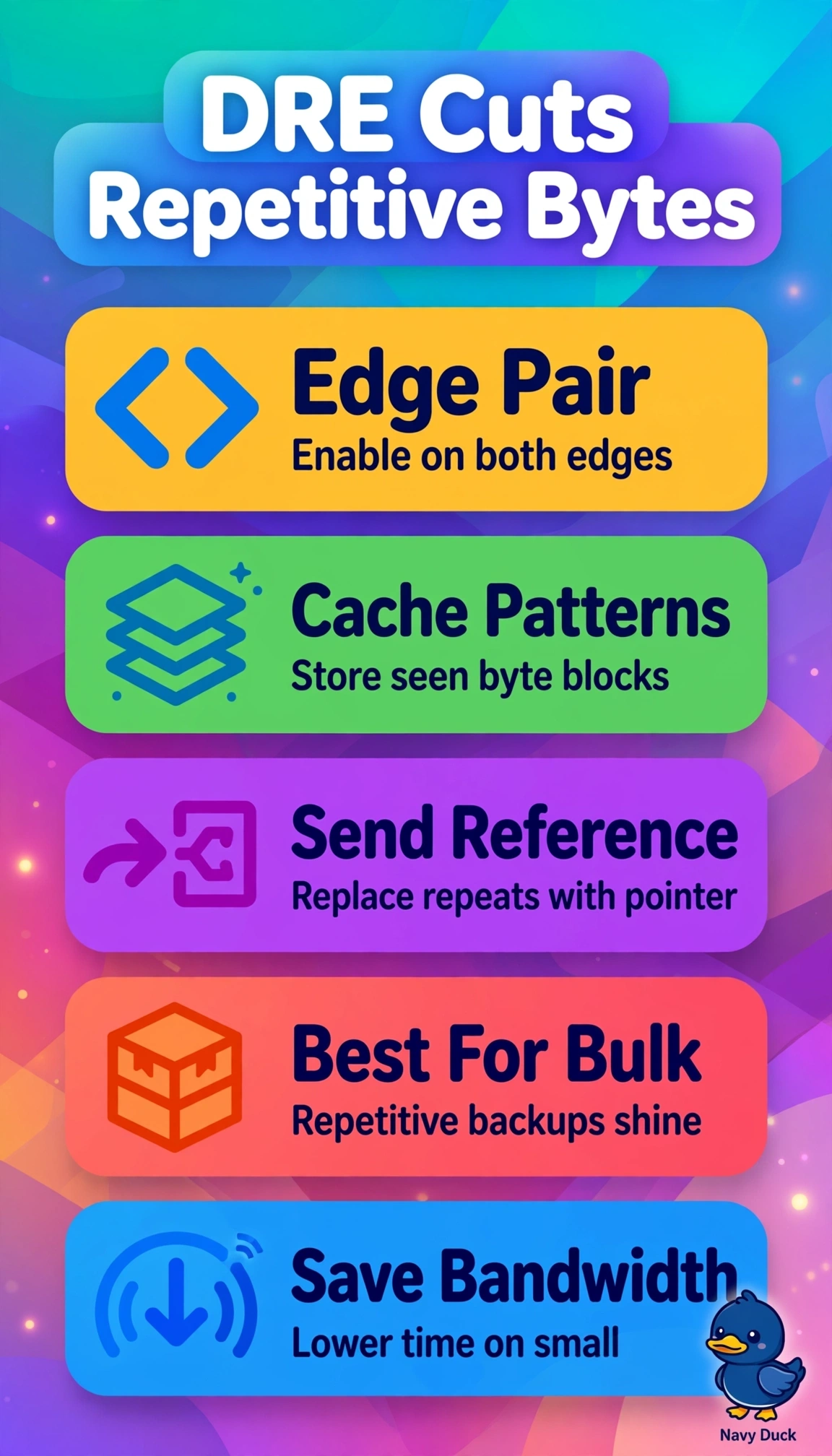
Repetitive backups are perfect for caching tricks — deduplication spots repeats and sends pointers instead. You save the skinny link for truly new data.
Full Explanation
Application Quality of Experience data redundancy elimination performs byte-level deduplication and compression on the WAN Edge data plane, where one edge replaces previously seen byte patterns with small references and the peer reconstructs them, which helps most on low-bandwidth links carrying repetitive transfers like nightly backups; it is configured as part of App-QoE on the edge pair handling that flow. TCP optimization on the Controller fails by concept because Controllers handle OMP control, not data-plane payload optimization, which must occur on edges in the forwarding path. Forward error correction on Manager fails by concept because Manager is management and FEC adds redundancy to recover loss, the opposite of eliminating redundant bytes. Packet duplication fails by concept because duplication sends extra copies to combat loss and increases bandwidth, not decreases it. Exam caveat: distinguish DRE for repetitive bulk data from FEC or duplication for lossy real-time traffic. Practical check: compare pre- and post-optimization byte counters for the backup application class.