
A manufacturing overlay sees new WAN Edge routers stuck with private addresses behind branch NAT that cannot establish DTLS to the Controller. The design relies on a reachable orchestrator to authenticate devices and help peers discover public mappings. Which SD-WAN Validator behavior provides initial authentication, orchestration, and NAT discovery?
Select an answer to reveal the explanation.
Short Explanation
You're meeting a matchmaker who verifies IDs and shares contacts. Proper orchestration lets strangers behind NAT find each other safely afterward.
Full Explanation
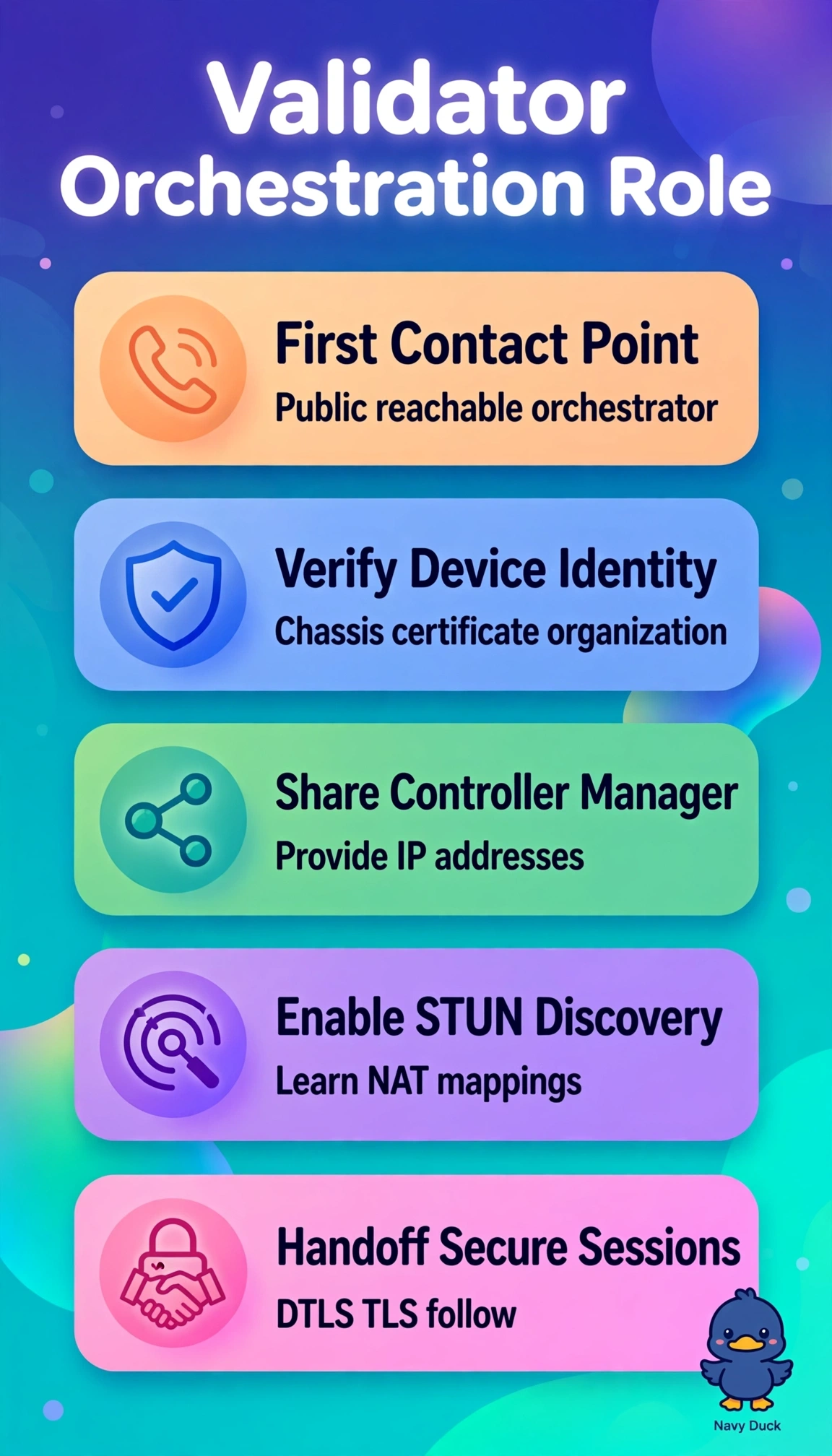
The SD-WAN Validator (formerly vBond) is the first contact orchestrator that authenticates chassis, certificate and organization, authorizes the device into the overlay, provides the addresses of the SD-WAN Manager and SD-WAN Controller, and facilitates NAT discovery through STUN so edges and controllers learn public mappings before building DTLS or TLS and later IPsec. Distributing OMP routes and TLOC selection fails by concept because that is the control-plane function of the controller after orchestration completes, not the validator which does not maintain full routing tables. Delivering templates and APIs fails by concept because that is the management-plane role of the manager, while the validator holds only orchestration and authentication state. Terminating IPsec and enforcing data policy fails by concept because the data plane is built edge-to-edge after orchestration, and the validator never forwards user traffic. For the exam remember if the question mentions first contact, certificate, STUN or NAT, choose validator, and in practice check validator associations and NAT type when edges stay in init state.