
A retail chain with 120 stores has no spare data-center capacity and orders Cisco-hosted controllers to speed rollout. Internal IT must retain device onboarding, configuration templates, and routing and security policy design for compliance. Which shared-responsibility split correctly describes Cisco-hosted controller cloud deployment?
Select an answer to reveal the explanation.
Short Explanation
You still own the brains of the overlay in this model. Cisco runs the hotel and handles its upkeep, while you decide who checks in and what rules they follow.
Full Explanation
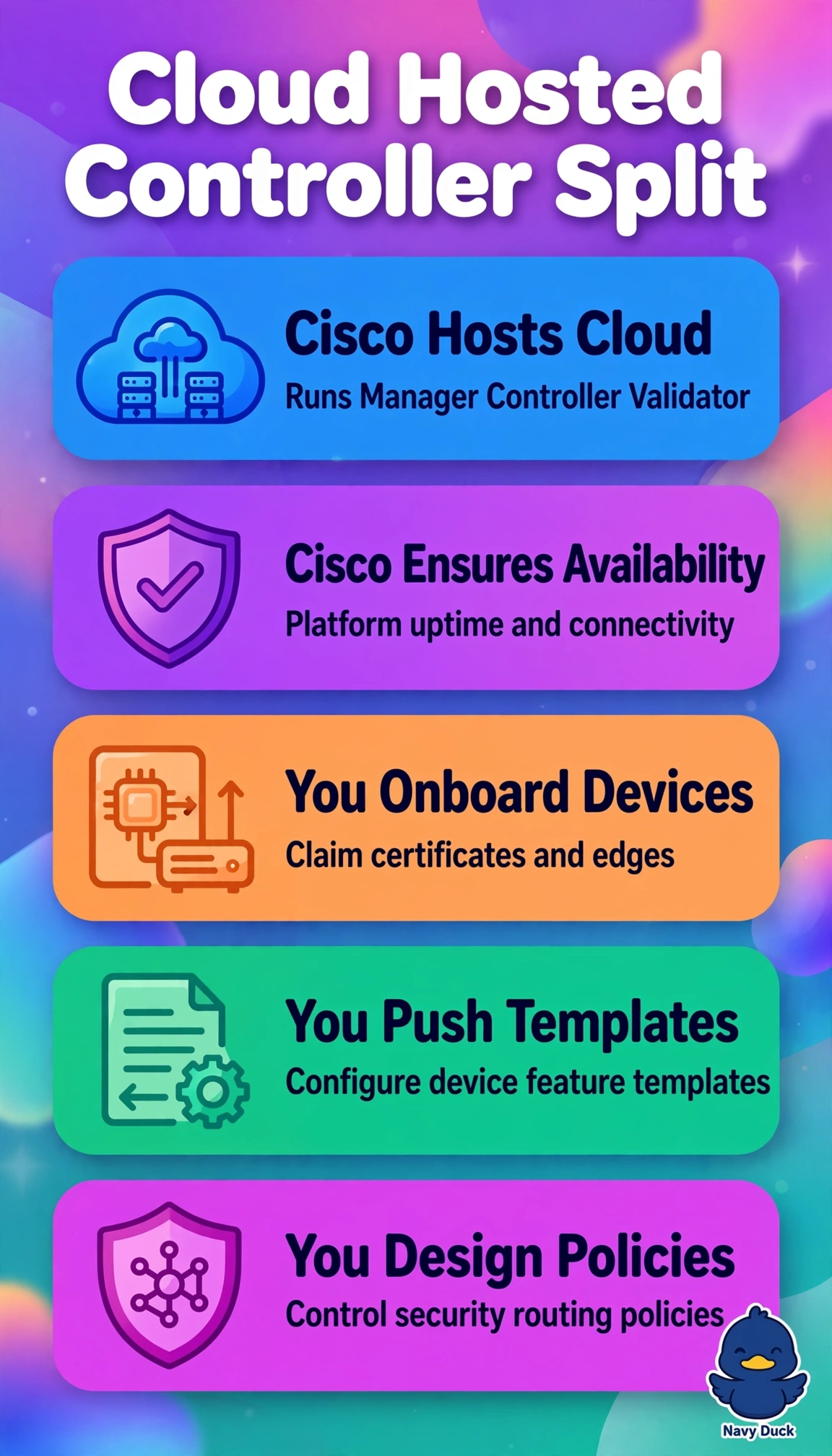
With Cisco-hosted cloud deployment, Cisco provides and operates the Manager, Controller, and Validator control-plane infrastructure. That solves the retailer’s lack of data-center capacity and speeds rollout without requiring customer-hosted controllers, while you retain authority over device onboarding, configuration templates, and routing and security policy design for compliance. Hosting all three components on premises would reintroduce the capacity and lifecycle burden the scenario rules out, even though you would retain the required operational responsibilities. Having Cisco design templates and routing and security policies would transfer authority that internal IT must keep, despite correctly placing the infrastructure with Cisco. Retaining responsibility for patching would misstate the hosted service’s lifecycle split: Cisco handles controller maintenance, upgrades, and OS patching, while you operate devices and define intent. Exam caveat: distinguish where controllers run from who defines intent; hosted infrastructure does not automatically transfer policy ownership. Practical check: confirm Cisco-hosted entitlement in the contract, then verify in Manager that your tenant administrators own onboarding workflows, templates, and policies and that controller upgrade tasks do not appear in your queue.