
A logistics firm ships 40 unconfigured WAN Edge routers to branches with only DHCP internet and no onsite CLI skills. Each router must power on, reach Plug and Play Connect, authenticate, and become fully managed without manual login. Which zero-touch provisioning flow from device boot describes the correct WAN Edge onboarding sequence?
Select an answer to reveal the explanation.
Short Explanation
You're watching a new hire check in at reception before meeting the team. The orchestration order matters because authentication must happen before management can take over.
Full Explanation
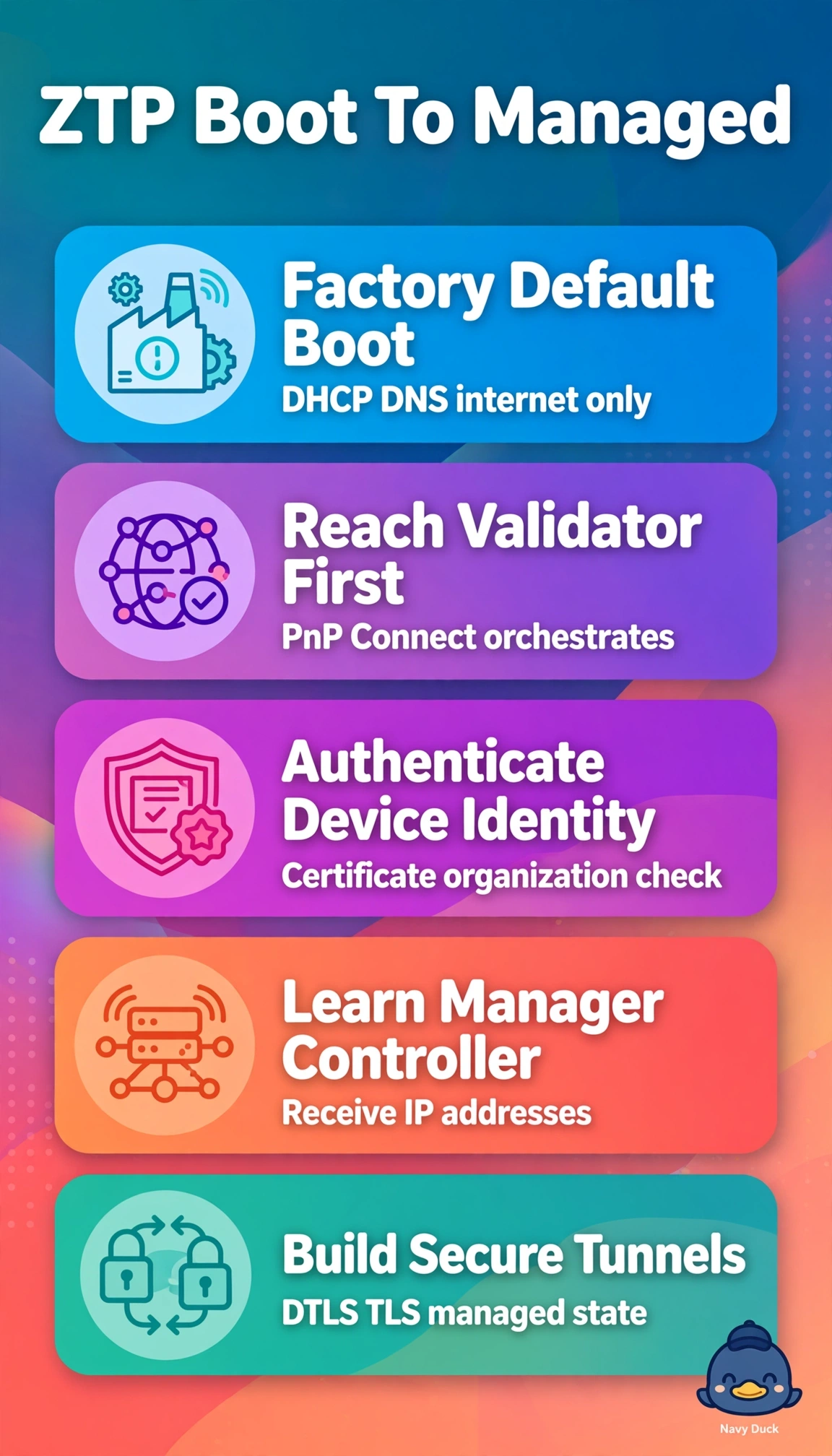
Zero-touch provisioning starts from factory defaults where the edge obtains local network access, resolves the SD-WAN Validator (formerly vBond) via Plug and Play Connect or DNS, presents its chassis and certificate for authentication and organization validation, learns the SD-WAN Manager and SD-WAN Controller addresses from the validator, then establishes secure DTLS or TLS sessions to be authorized and receive templates and policy. Contacting the controller directly first fails by concept because the edge cannot know which controller is legitimate or traverse NAT without validator orchestration and introduction. Using a manual bootstrap first fails by concept because bootstrap preconfigures validator, organization and certificate details via CLI or USB, which by definition is not zero-touch and requires onsite skill. Forming DTLS to the manager first fails by concept because management and orchestration planes are separated, so the manager does not perform initial authentication and NAT discovery. For the exam remember validator always comes before manager and controller in ZTP, and in practice confirm the device serial is synced in Plug and Play Connect and shows authorized in the manager.