
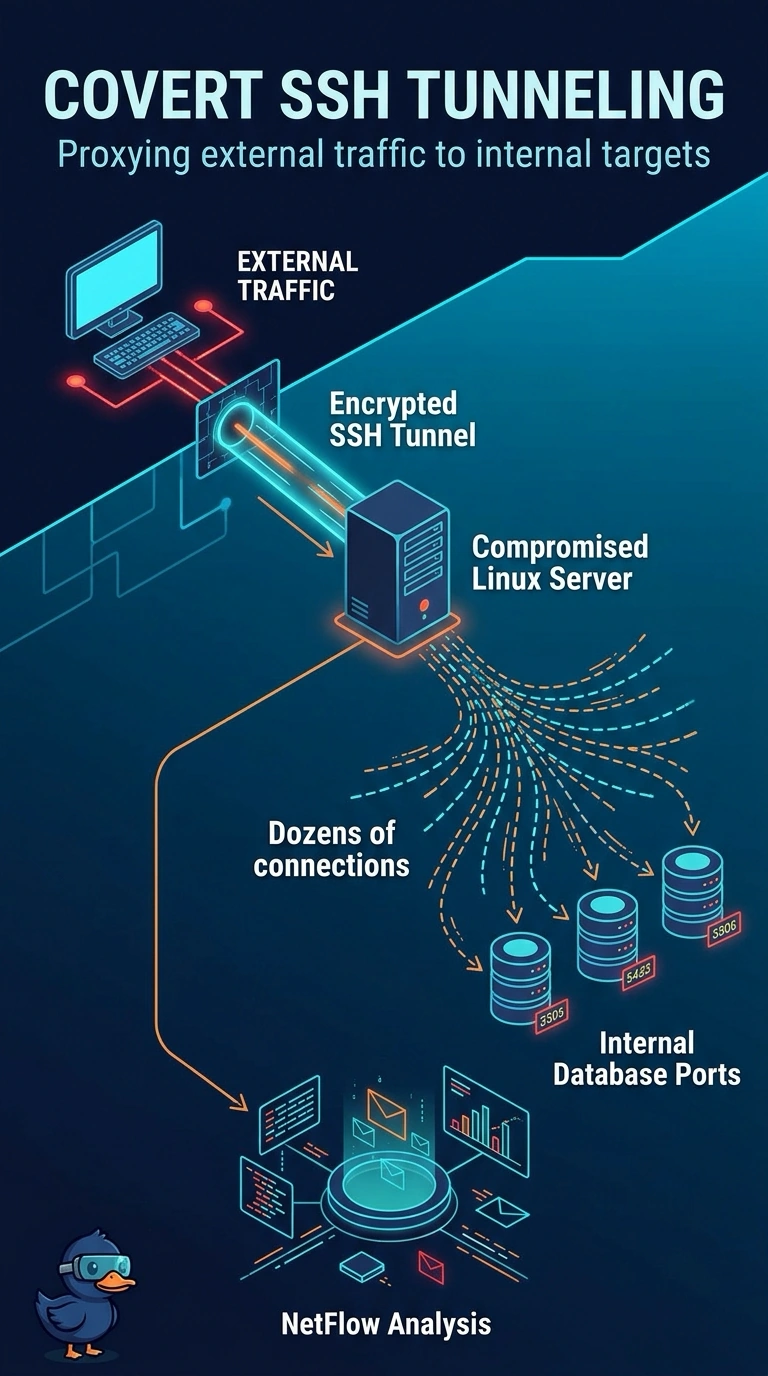
A threat hunter inspects NetFlow and session metadata on a compromised Linux jump host and observes a single long-lived outbound encrypted SSH session to an external address coinciding with dozens of simultaneous short-lived connections from that jump host to internal database ports. What does this session pattern indicate?
Select an answer to reveal the explanation.
Short Explanation
Think of a tunnel like a secret subway line: you see one doorway from the street, while dozens of riders emerge across the neighborhood. When you see one long-lived encrypted SSH session alongside many internal database connections, don’t assume you’re looking at a single administrator command.
Full Explanation
A single persistent encrypted SSH session coinciding with many short-lived connections to internal database ports strongly indicates covert SSH tunneling that proxies external traffic to internal targets. An outbound SSH client can establish reverse forwarding, including remote dynamic SOCKS forwarding when supported, so external connections can reach internal targets through the jump host; two physical interfaces are not required if routed reachability exists. Normal nightly operating system package updates from a vendor repository do not explain why the jump host simultaneously initiates dozens of connections to internal database ports. Automated DNS zone transfers between authoritative internal name servers do not fit the observed encrypted SSH protocol or the database destination ports. A benign hardware health check polling local disk temperatures does not account for either the persistent external SSH session or the internal database connections. As an exam caveat, authorized administrators may use SSH tunnels for legitimate maintenance, so this pattern alone does not establish malicious intent; verify the source account and change ticket before isolating the host. As a practical check, correlate the outbound SSH client, reverse-forward configuration, account owner, and internal socket activity; inspect sshd if the SSH session is inbound.