
A manufacturing plant suspects several network-connected environmental sensors are compromised, but the devices run proprietary firmware that cannot support endpoint detection agents. Which hunting technique provides the most effective visibility into potential malicious activity on these sensors?
Select an answer to reveal the explanation.
Short Explanation
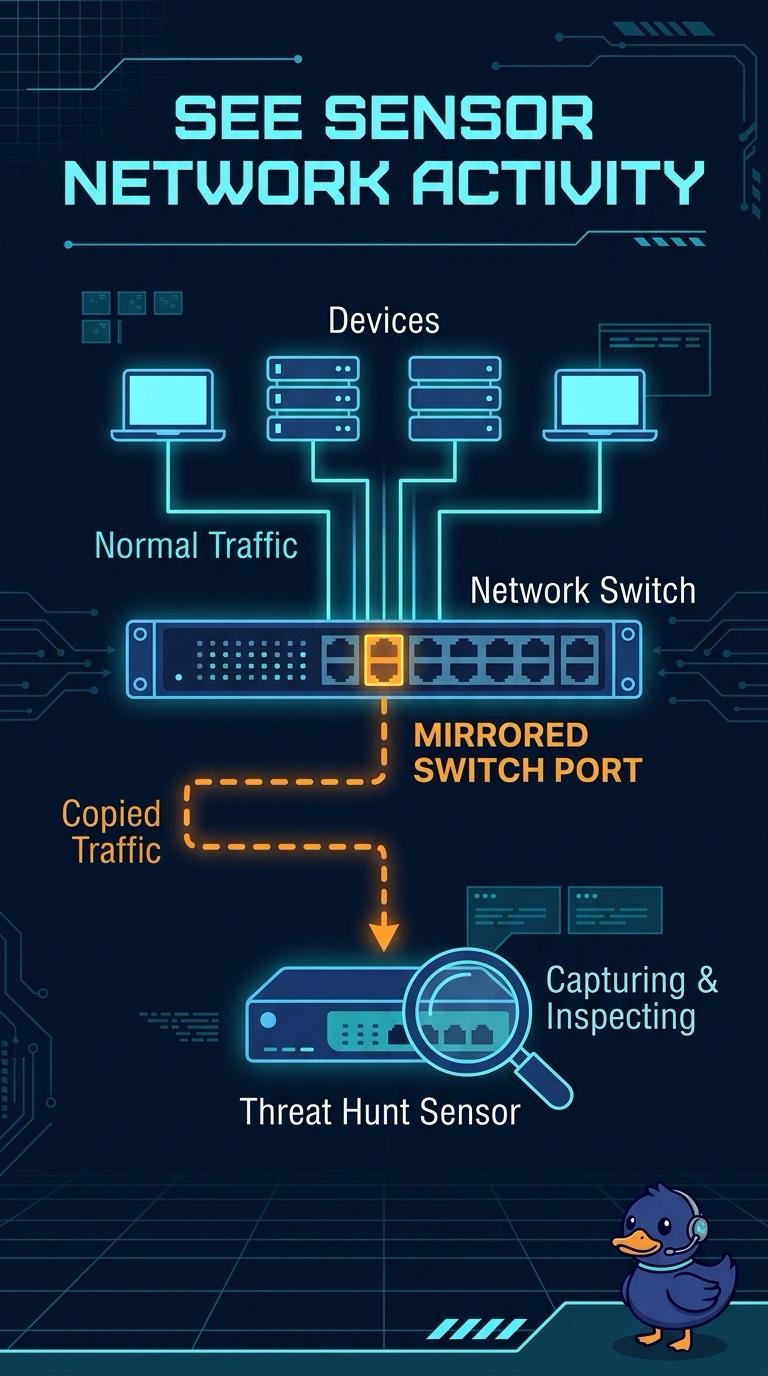
When a device cannot wear a bodycam, you watch the hallway instead. For agentless IoT hardware, the trap is trying to force endpoint tools onto closed firmware when passive network observation reveals every connection the sensor attempts.
Full Explanation
Because proprietary IoT sensors lack support for host-based monitoring agents, Capturing and inspecting network traffic from a mirrored switch port gives hunters non-intrusive visibility into unexpected outbound connections, protocol anomalies, and command-and-control traffic. Passive network capture operates outside the device, avoiding stability risks to sensitive industrial hardware. By contrast, Installing a host-based antivirus package directly onto the sensor firmware is unsupported on closed proprietary devices and risks bricking operational equipment. Similarly, Running PowerShell memory inspection scripts across the sensor operating system fails because embedded IoT firmware does not run standard desktop shells or expose compatible management interfaces. Likewise, Enabling local Windows event logging on each environmental sensor is inapplicable to proprietary embedded operating systems. As a caveat, encrypted payloads on the wire may limit deep packet inspection, requiring metadata analysis of destinations, timing, and session volumes. For an operational check, configure a switch span port on the sensor VLAN and baseline normal destination IP addresses, ports, and communication intervals.