
A threat hunter inspects a suspicious Windows executable in PE Checker without running it and observes abnormally high entropy across its primary code section alongside very few readable strings. What does this finding indicate?
Select an answer to reveal the explanation.
Short Explanation
High entropy in an executable is like a locked briefcase—it tells you something dense is hidden inside. The trap is assuming a quiet string list means a harmless file, when packers actually mask the real instructions.
Full Explanation
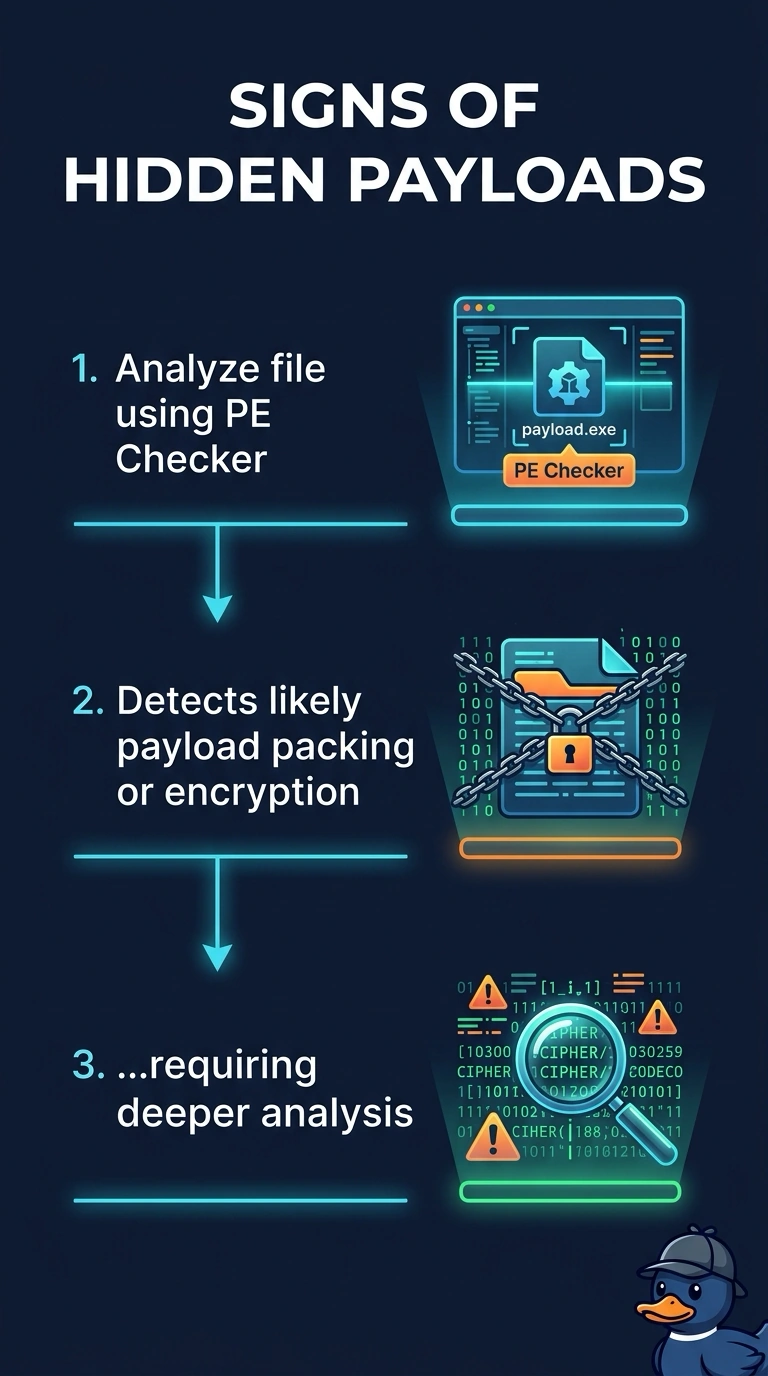
Likely payload packing or encryption requiring deeper analysis is correct because standard compiled machine code exhibits predictable byte distributions, whereas compressed or encrypted payloads appear nearly random and produce high entropy values. Combined with a scarcity of readable strings, high section entropy strongly suggests the binary unpacks or decrypts its true functionality in memory at runtime. An unpatched compiler bug that always corrupts standard headers fails because compiler defects do not systematically raise byte randomness across a code section while stripping readable strings. Normal debug symbol tables left behind during release builds fails because debug symbols increase readable metadata rather than creating high-entropy, obfuscated sections. A valid digital signature applied by an enterprise certificate authority fails because code signing appends a certificate block without altering the randomness of the executable's primary code section. Keep in mind as a caveat that some legitimate commercial software uses packers for intellectual property protection, so high entropy alone is not proof of malice. As an operational check, submit the sample to an isolated sandbox or inspect its import table for dynamic memory allocation and loader routines before clearing it.