
A threat hunting team finishes a two-week hunt that uncovered several noisy benign scripts and two unmonitored cloud logging gaps. What process step should the team complete before closing the hunt to maximize long-term program value?
Select an answer to reveal the explanation.
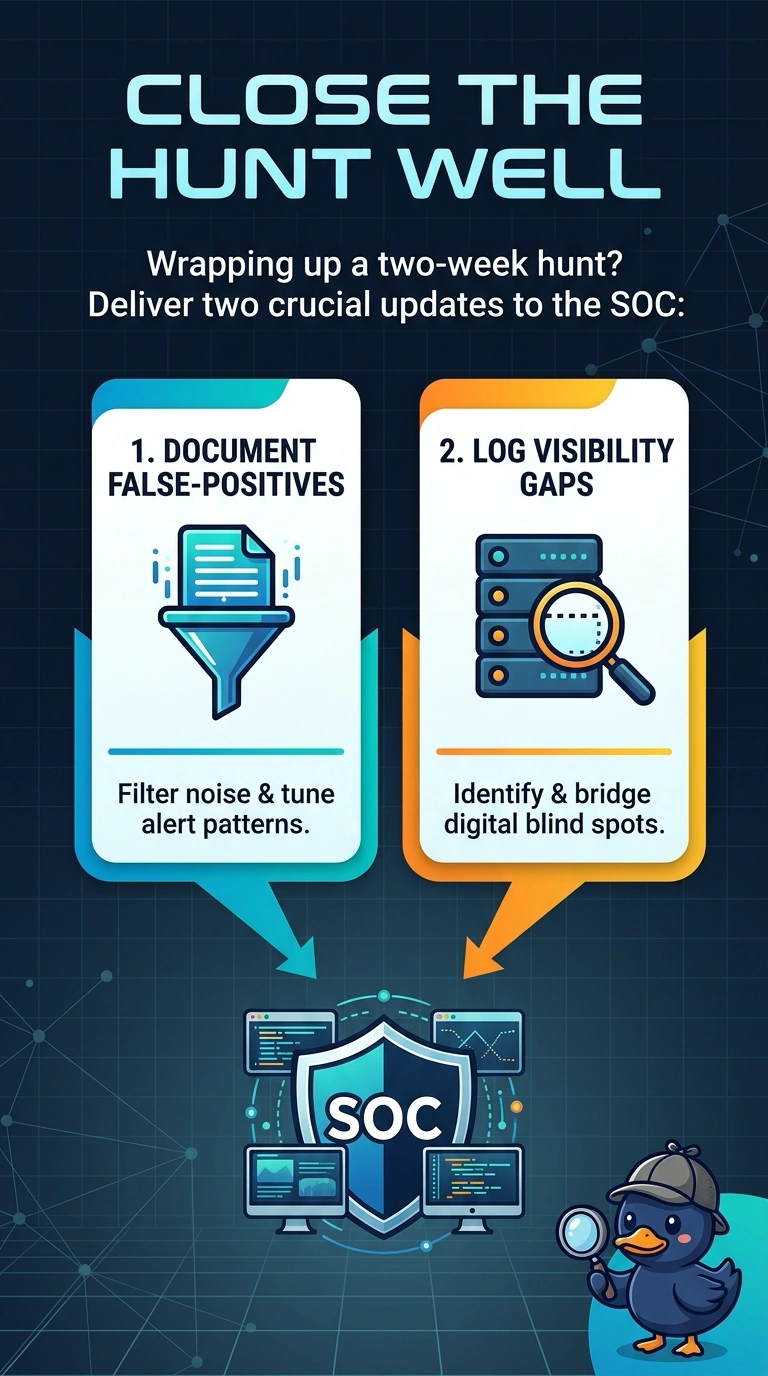
Short Explanation
A threat hunt shouldn't end like a forgotten campfire—if you walk away without recording what burned and what was missing, the next shift repeats the same mistakes. The trap is tossing out your queries or burying notes offline. Documenting benign noise patterns and logging blind spots turns every hunt into sharper detections and stronger coverage.
Full Explanation
Every threat hunt produces valuable operational intelligence even when it uncovers benign administrative noise or missing telemetry instead of an active breach. Taking time to Document false-positive patterns and log visibility gaps for the SOC ensures that detection engineers can refine rule exclusions and platform teams can onboard missing cloud audit sources. Choosing to Delete all hunt queries from the SIEM so future analysts start fresh destroys institutional knowledge and forces future hunters to reinvent baseline logic. Deciding to Archive raw hunt notes offline without notifying detection engineers prevents the SOC from closing the newly discovered cloud logging gaps or improving alert fidelity. Electing to Increase alert severity on every noisy script to force immediate triage worsens analyst alert fatigue without addressing the benign root cause. Keep in mind the caveat that post-hunt documentation should remain concise and tied to specific data sources so engineers can act on it quickly. As an operational check, review the documented visibility gaps during the next monthly SOC engineering sync to confirm tracking tickets were created and prioritized.