
A SOC manager proposes evaluating the threat hunting team's quarterly effectiveness solely by counting the total number of raw SIEM alerts generated by new hunt queries. Why is this metric flawed for measuring hunt effectiveness?
Select an answer to reveal the explanation.
Short Explanation
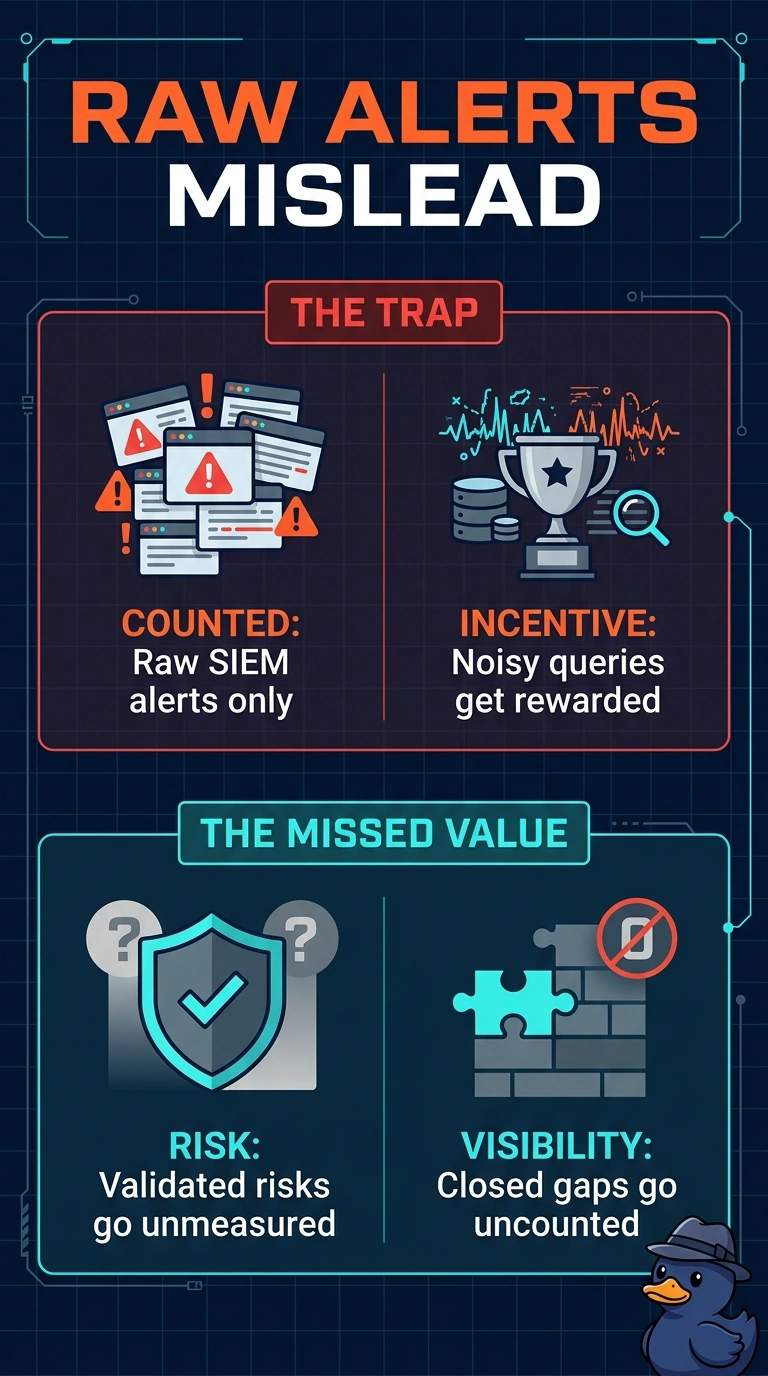
If you pay a firefighter based on how many false alarms they pull, you will soon have a very noisy station and plenty of real fires missed! The trap is mistaking high SIEM alert counts for hunting success when your metrics should reward precision, uncovered threats, and closed blind spots.
Full Explanation
Effective threat hunting improves defensive posture by finding previously undetected adversary activity, eliminating telemetry blind spots, and producing high-signal detections that analysts can act on. Measuring raw alert volume fails because It rewards noisy queries rather than validated risks or closed visibility gaps, creating an incentive to promote poorly tuned rules that overwhelm SOC triage queues. It does not fail because It guarantees all attacker persistence was removed; raw alert counts actually provide zero assurance of eradication or coverage. Claiming It measures only the speed of firewall rule updates is inaccurate because SIEM hunt queries evaluate telemetry across endpoints, identity, and networks rather than firewall change velocity. Saying It requires disabling all automated endpoint alerts is false because hunting metrics track query outputs independently of existing automated endpoint detections. Caveat: tracking alert volume can still be useful as a secondary health metric to spot overly broad rules that need tuning. Operational check: replace raw alert counts with a scorecard tracking confirmed findings, visibility gaps remediated, and the true-positive ratio of newly promoted detection rules.