
Six months after completing a threat model for an internal HR portal, an enterprise migrates authentication to a new cloud identity provider and exposes an API gateway to mobile clients. How should the security team handle its existing threat model?
Select an answer to reveal the explanation.
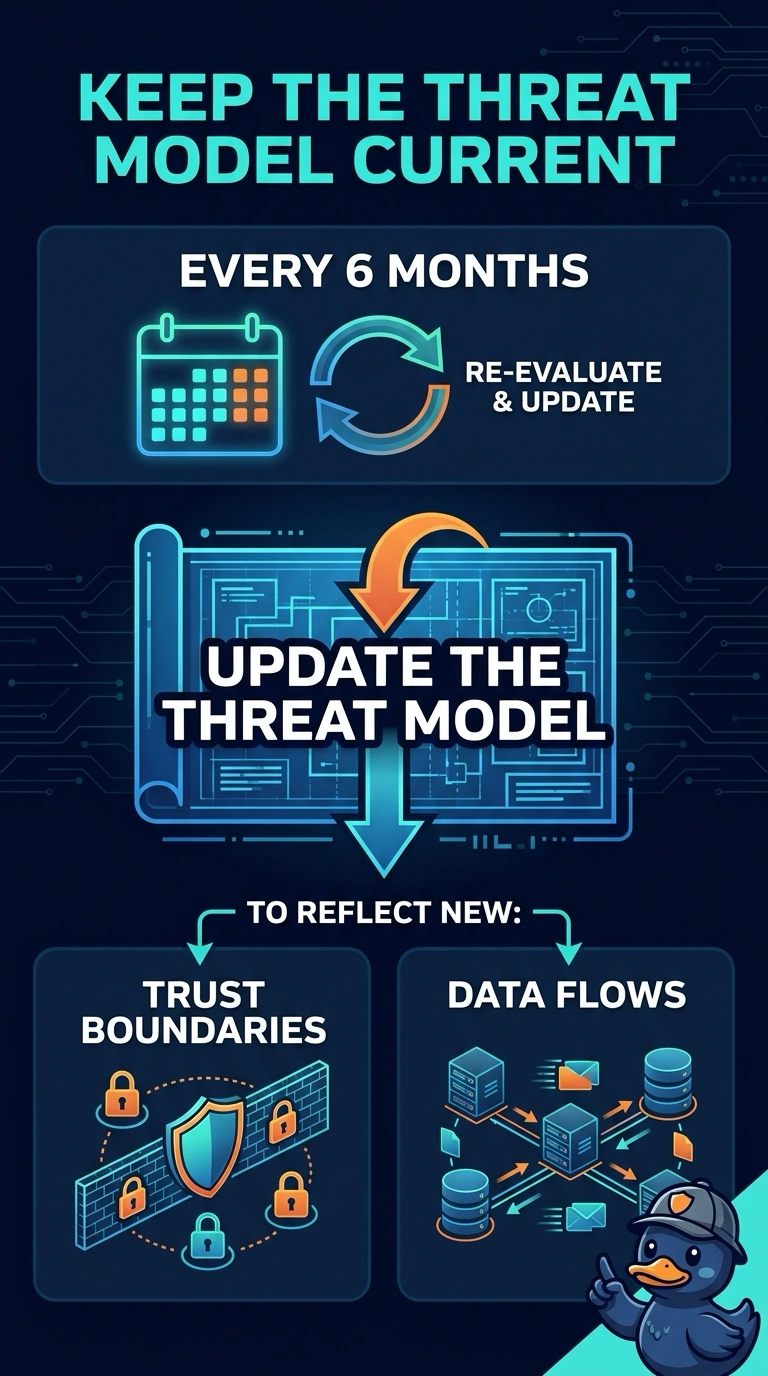
Short Explanation
Treating a threat model like a framed diploma on the wall is a classic mistake—the moment you change how users log in or expose an API, your old map no longer matches the terrain. The trap is assuming the backend database didn't move, so the risks didn't either.
Full Explanation
Threat modeling is an iterative process tied directly to system architecture, data flows, and trust boundaries. Update the threat model to reflect the new trust boundaries and data flows is right because migrating authentication to a cloud identity provider and exposing an API gateway fundamentally alters how identities are verified and where untrusted external traffic enters the environment. New attack paths, such as token-handling flaws or API authorization bypasses, must be modeled and prioritized. Archive the original threat model permanently because the core HR database stayed intact is incorrect because threats target the paths leading to the database, not just the storage tier itself. Replace the threat model entirely with raw firewall blocklists from the perimeter is false because indicator lists do not capture architectural risks, authentication flows, or application-level threats. Rely solely on the cloud provider's marketing compliance brochure for risk coverage is wrong because shared responsibility requires the organization to model its own configurations and integrations. As a caveat, minor routine patches do not require a full remodel, whereas major architectural shifts do. For an operational check, integrate threat-model reviews into your change-management gates whenever new APIs or identity integrations are proposed.