
Before sharing indicators and attack telemetry from an internal investigation with an external industry information-sharing group, what threat intelligence handling step must the team perform first?
Select an answer to reveal the explanation.
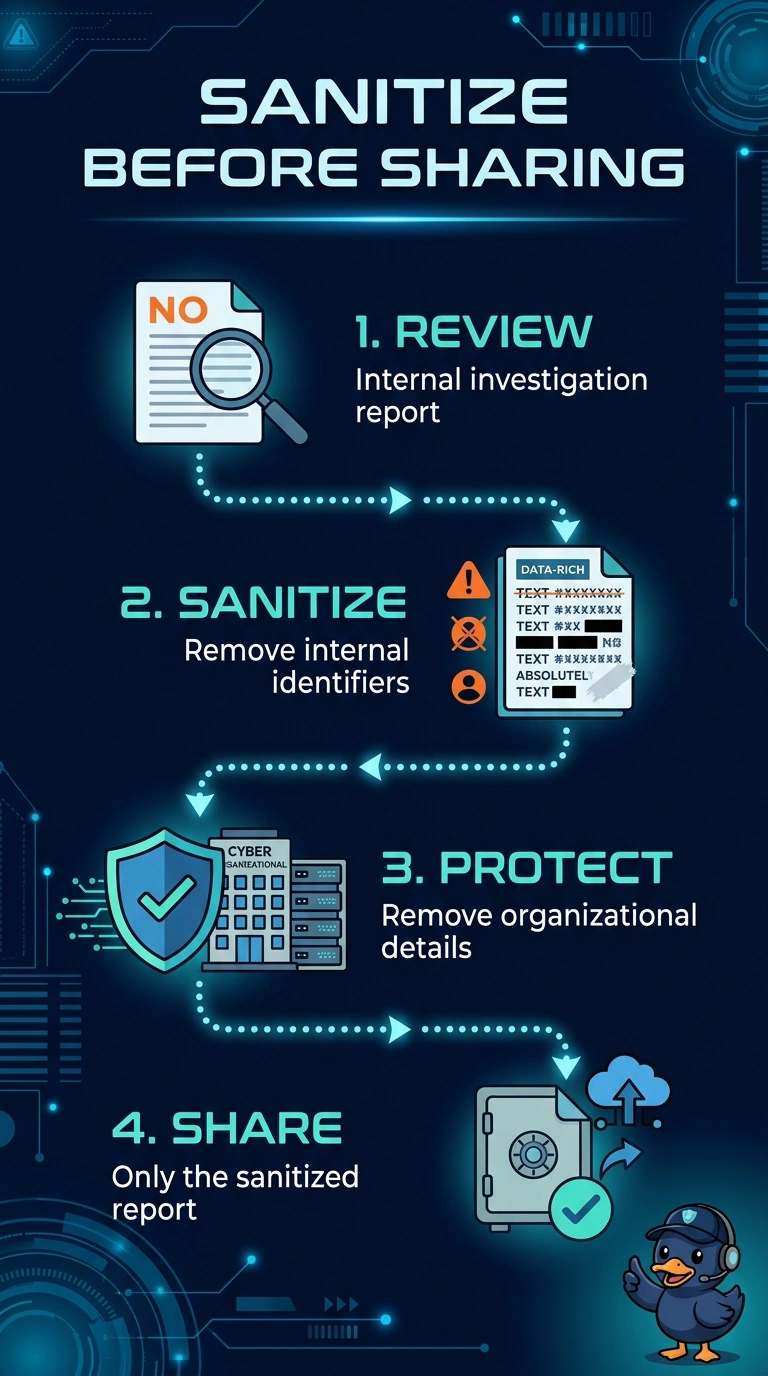
Short Explanation
Sharing threat intelligence with peers is like trading storm warnings—you want to warn your neighbors about the hail without handing them the keys to your house! The trap is rushing raw logs out the door without scrubbing your internal hostnames, usernames, and network details first.
Full Explanation
Responsible threat intelligence sharing balances timely community defense with strict protection of internal operational security and privacy. Performing a review to Sanitize internal identifiers and sensitive organizational details from the shared report ensures external peers receive actionable adversary observables—such as malicious domains, hashes, and TTPs—without exposing internal IP schemes, employee usernames, or proprietary asset names. Choosing to Publish complete unedited endpoint process logs to accelerate external community verification risks leaking sensitive credentials, command-line secrets, and architectural details to unauthorized parties. Attempting to Convert all internal hostnames into public DNS records so external peers can query them would dangerously expose private infrastructure topology to the public internet. Moving to Disable all local SIEM retention rules once the external advisory has been distributed would destroy forensic history needed for ongoing internal hunting and incident response. Caveat: over-redacting key adversary context, such as timestamps or attack sequence details, can make the intelligence too vague to be actionable. Operational check: apply an automated sanitization checklist and require a second analyst to review the outbound package for internal hostnames, usernames, and private subnets before release.