
A threat hunter receives a partner-shared intelligence brief containing sensitive adversary infrastructure details marked with strict distribution limits. Which handling practice should the team follow before acting on or sharing this intelligence?
Select an answer to reveal the explanation.
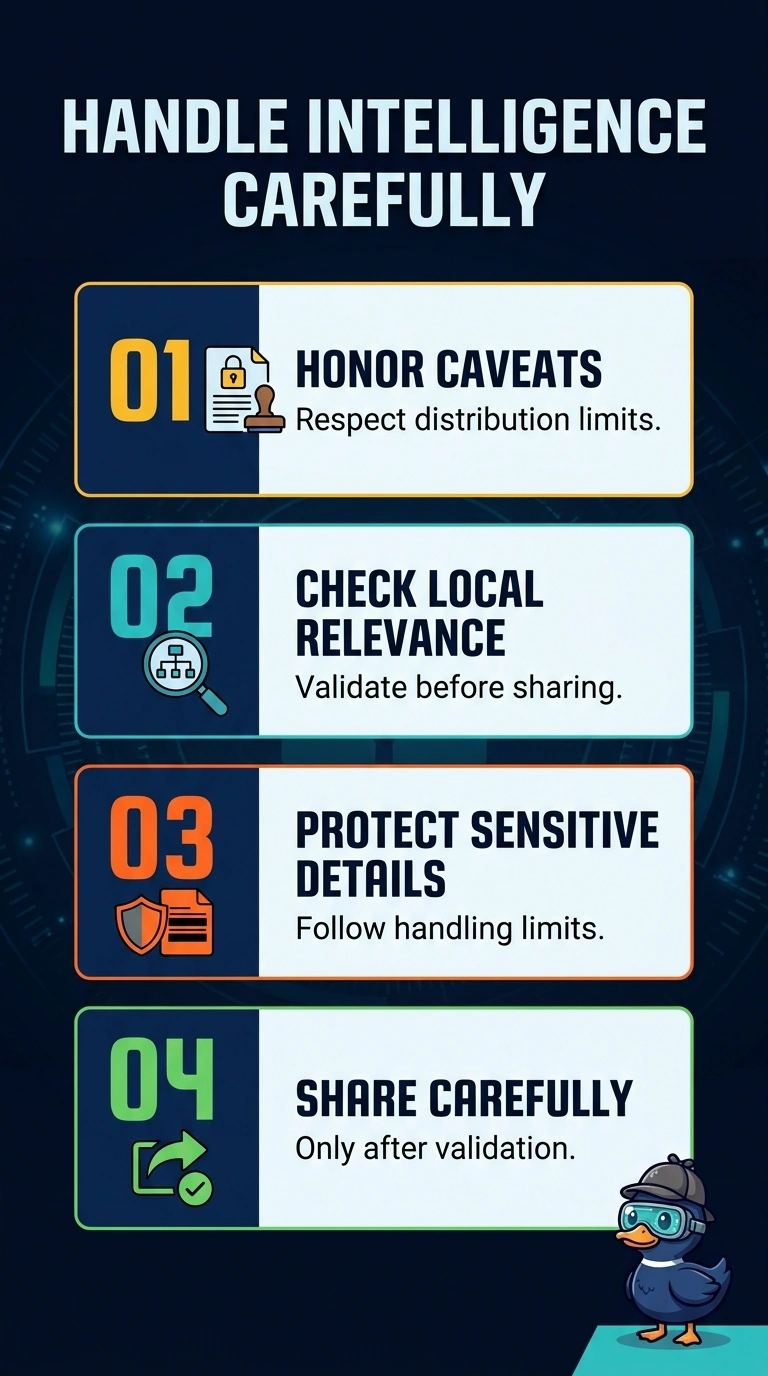
Short Explanation
Partner threat intelligence works on trust, and breaking sharing rules can burn a valuable early-warning source. Before you broadcast indicators everywhere, honor the distribution limits and confirm whether the threat actually applies to your environment.
Full Explanation
Following "Respect handling caveats and validate relevance to the local environment before sharing" is the right practice because information-sharing frameworks rely on strict handling protocols to protect sources, ongoing investigations, and victim privacy while ensuring internal teams prioritize threats that match their technology stack. By contrast, "Publish all indicators immediately to public threat feeds for community feedback" violates distribution restrictions and can tip off adversaries that their infrastructure has been discovered. Likewise, "Forward the raw report to every third-party vendor without reviewing restrictions" breaches partner trust agreements and risks exposing sensitive attribution context to unauthorized recipients. Meanwhile, "Discard the intelligence if it lacks a pre-built firewall blocking rule" wastes valuable behavioral context that hunters can translate into endpoint or log queries even without ready-made signatures. A critical caveat is that over-restricting intelligence internally can stall defense, so teams should confirm which internal groups are authorized to receive sanitized indicators. As an operational check, verify the report's handling label and document your internal distribution list before ingesting indicators into detection workflows.