
While reviewing cloud identity provider logs, a threat hunter notices twenty rejected multi-factor authentication push prompts for a finance employee within three minutes, followed by one approved prompt from an unfamiliar foreign IP address and the immediate registration of a new authenticator device. How should the hunter interpret this sequence?
Select an answer to reveal the explanation.
Short Explanation
When an attacker hammers your phone with login prompts until you tap approve just to make it stop, they don't stop there—they register their own device so they never need you again. The trap is treating a single eventual approval as normal user error without checking what happened right after.
Full Explanation
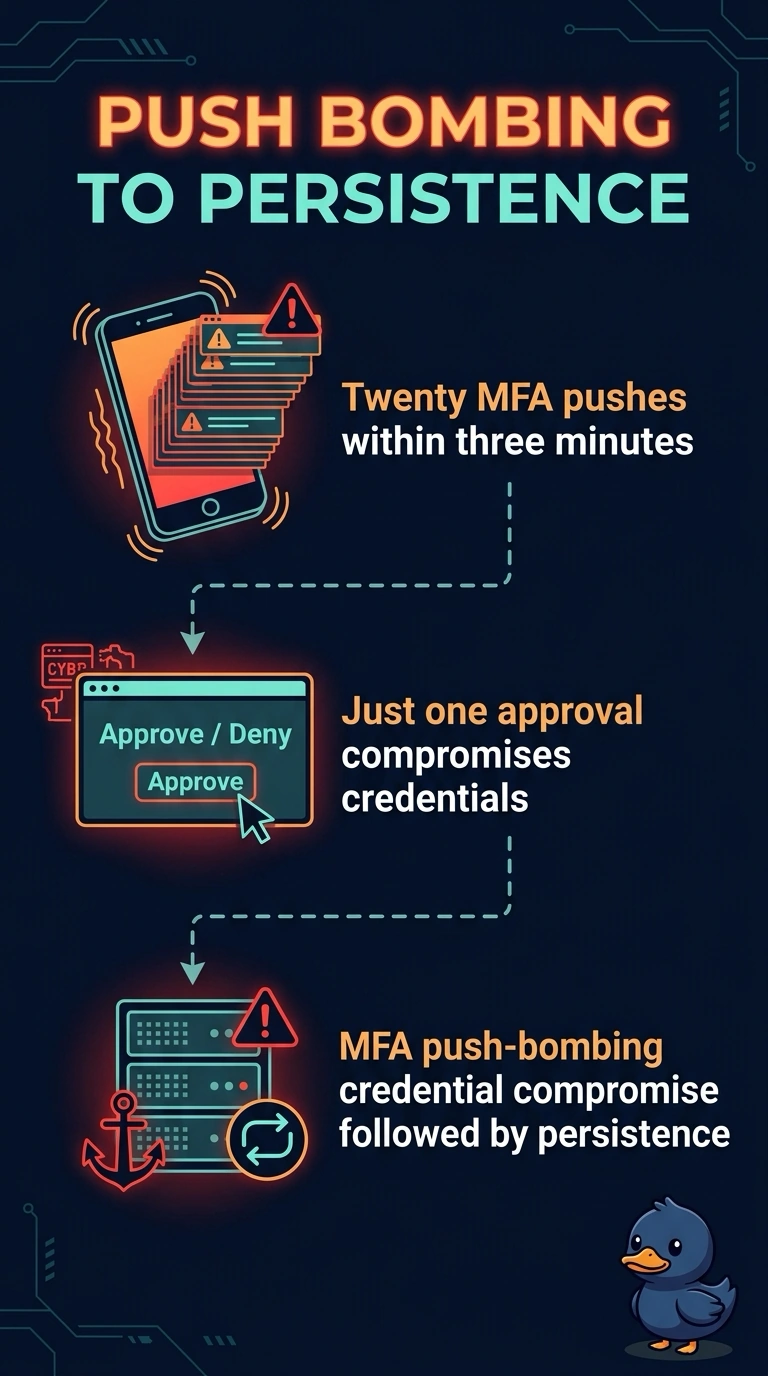
The rapid burst of rejected prompts from an unfamiliar IP followed by a single approval and immediate device enrollment is a classic signature of MFA push-bombing credential compromise followed by persistence. The sequence is consistent with MFA request abuse followed by persistence. A password may already be compromised, but some self-service reset or passwordless flows can generate requests without the attacker knowing it; correlate the actual authentication flow and device-registration actor. The adversary fatigued the user into approving a prompt, and then added a rogue authenticator to maintain independent access. Calling this Routine password synchronization across multiple corporate mobile devices ignores both the twenty rapid push rejections and the foreign IP enrolling a new MFA factor. Labeling it An automated vulnerability scanner testing firewall port configurations confuses network-layer probing with application-layer identity authentication events. Dismissing it as Expected user behavior when traveling between domestic branch offices fails to account for the anomalous push storm and the unfamiliar foreign origin. As a caveat, legitimate users occasionally trigger two or three retries when cell service drops, so correlate retry counts with IP reputation and post-login changes. For an operational check, inspect identity audit logs for newly registered MFA methods or recovery emails within minutes of any high-retry login.