
During a scheduled red team engagement, a threat hunter spots an unfamiliar administrative script and a custom executable on an internal test server. Which verification step best confirms the artifacts belong to the authorized assessment rather than a concurrent real attack?
Select an answer to reveal the explanation.
Short Explanation
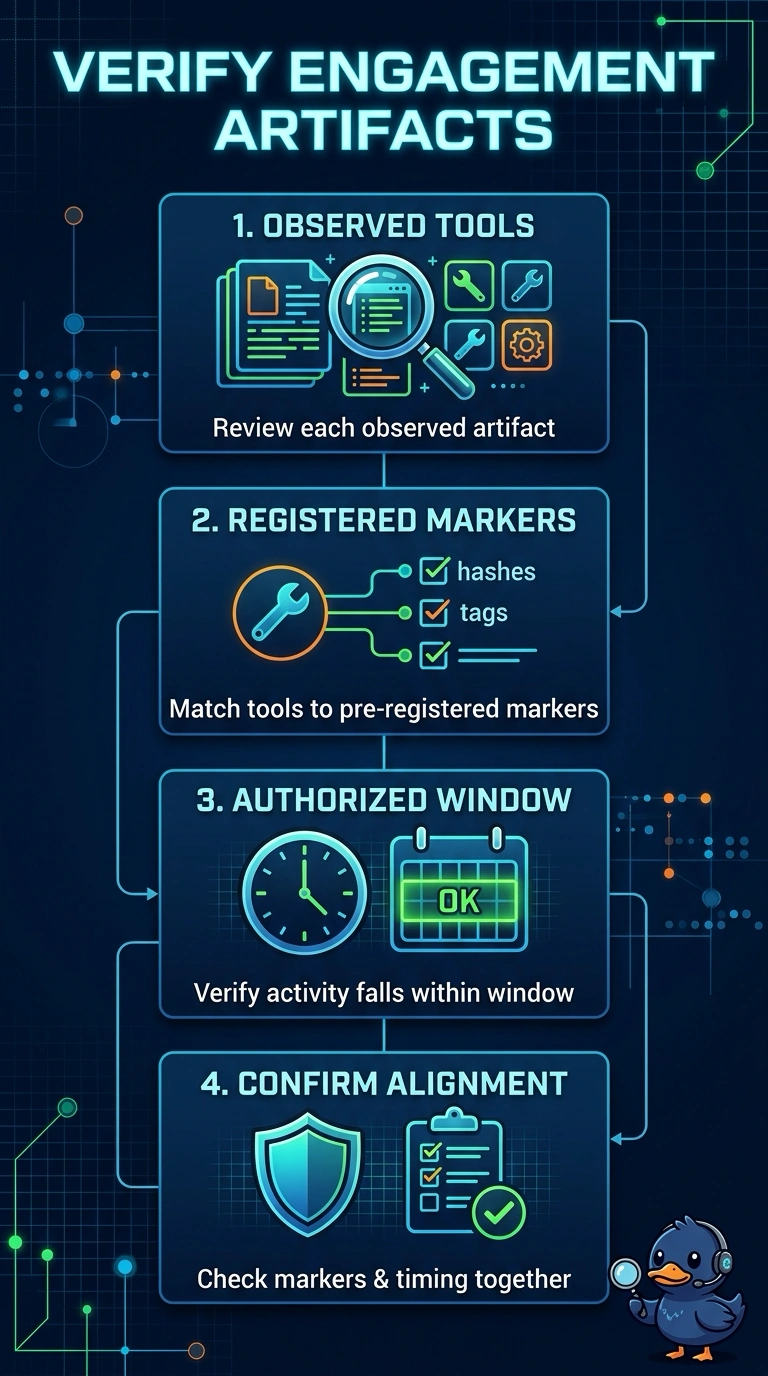
A real intruder can easily strike while your red team is on the field, hoping you will wave them through. Always verify exact tool hashes, markers, and approved time windows against the engagement log rather than assuming any suspicious traffic is part of the test.
Full Explanation
To separate a legitimate exercise from a real intrusion, analysts must focus on confirming that observed tools and artifacts match the pre-registered engagement markers and authorized window. Red team operators maintain detailed activity logs, file hashes, and designated test infrastructure so defenders can verify exact attribution out-of-band without tipping off real adversaries. Blocking every internal security scanner IP address permanently disrupts legitimate vulnerability management and assessment operations. Assuming all internal scanning traffic belongs to authorized staff creates a dangerous blind spot if an actual attacker operates during the exercise window. Ignoring all endpoint alerts generated during the entire fiscal quarter leaves the organization completely exposed to opportunistic and targeted threats alike. As a caveat, if an observed artifact does not match the assessment team's records, treat it as a potential real incident immediately. For an operational check, cross-reference the suspicious executable's hash and execution timestamp with the assessment lead's out-of-band activity log.