
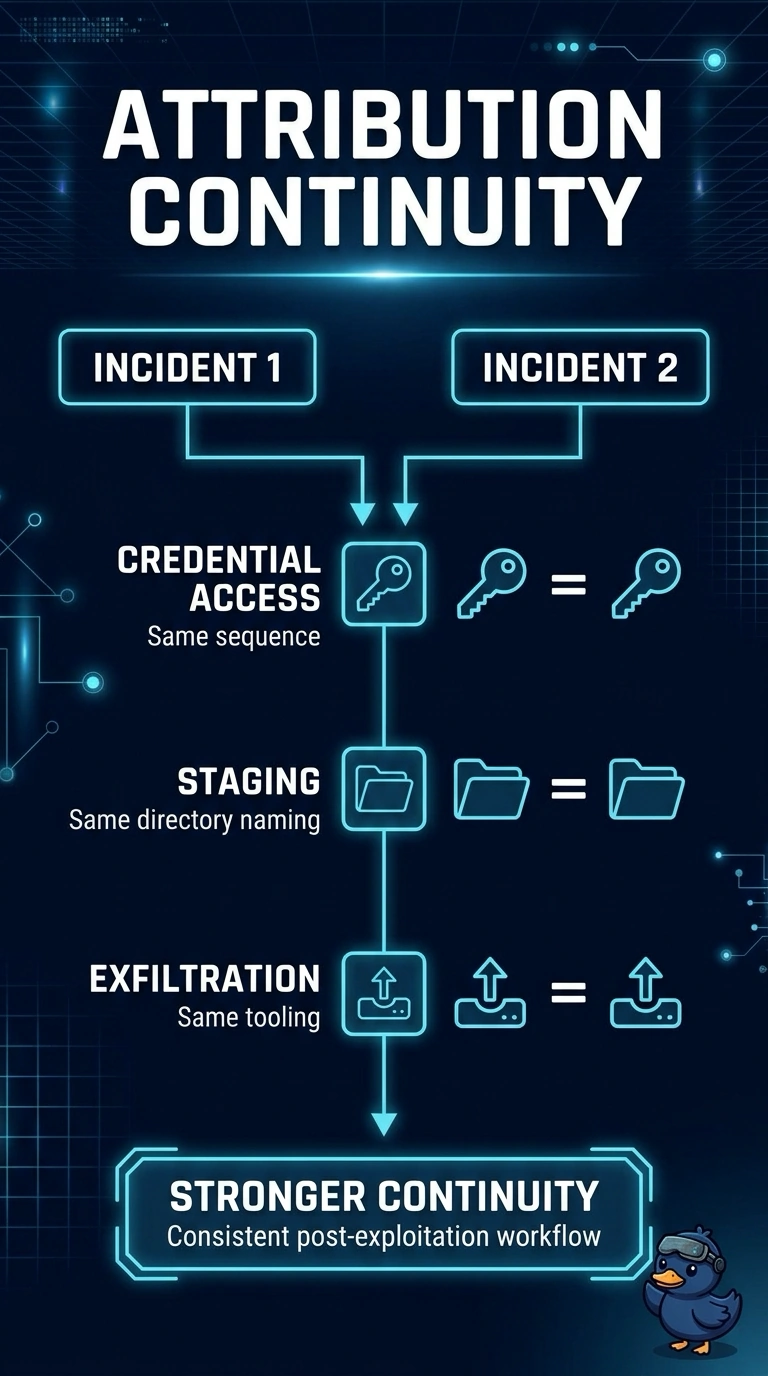
An attribution analyst is comparing two intrusions where the attackers rented short-lived cloud virtual private servers from different hosting providers in each incident, but used the exact same credential-access sequence, staging directory naming, and exfiltration tooling. Which evidence provides stronger attribution continuity?
Select an answer to reveal the explanation.
Short Explanation
Attackers swap rented cloud servers as easily as changing burner phones, so if you chase IP addresses, you will lose the trail every week. The trap is getting distracted by fresh infrastructure when your strongest clue is the repeatable habit and tooling the operator brings to every job.
Full Explanation
On the Pyramid of Pain, network IP addresses sit near the bottom because adversaries can spin up and discard cloud virtual private servers in minutes. The consistent post-exploitation workflow and tooling across both incidents sits much higher on the pyramid and reflects operator habits, playbook automation, and preferred utilities that are far harder for a threat actor to reinvent across operations. The different IP addresses assigned to the short-lived cloud virtual servers is incorrect because disposable cloud IPs are trivial to rotate and do not connect separate campaigns on their own. The geographical distance between the two unrelated victim company headquarters is false because physical distance between targets does not establish who conducted the intrusion. The default subnet mask configured on each victim organization's internal LAN is wrong because internal victim addressing reflects local network design rather than adversary behavior. As a caveat, even behavioral TTPs can be mimicked or shared among affiliates using common playbooks, so analysts should avoid single-factor certainty. For an operational check, document recurring command sequences, staging conventions, and tooling hashes in your threat intelligence repository to correlate future intrusions.